



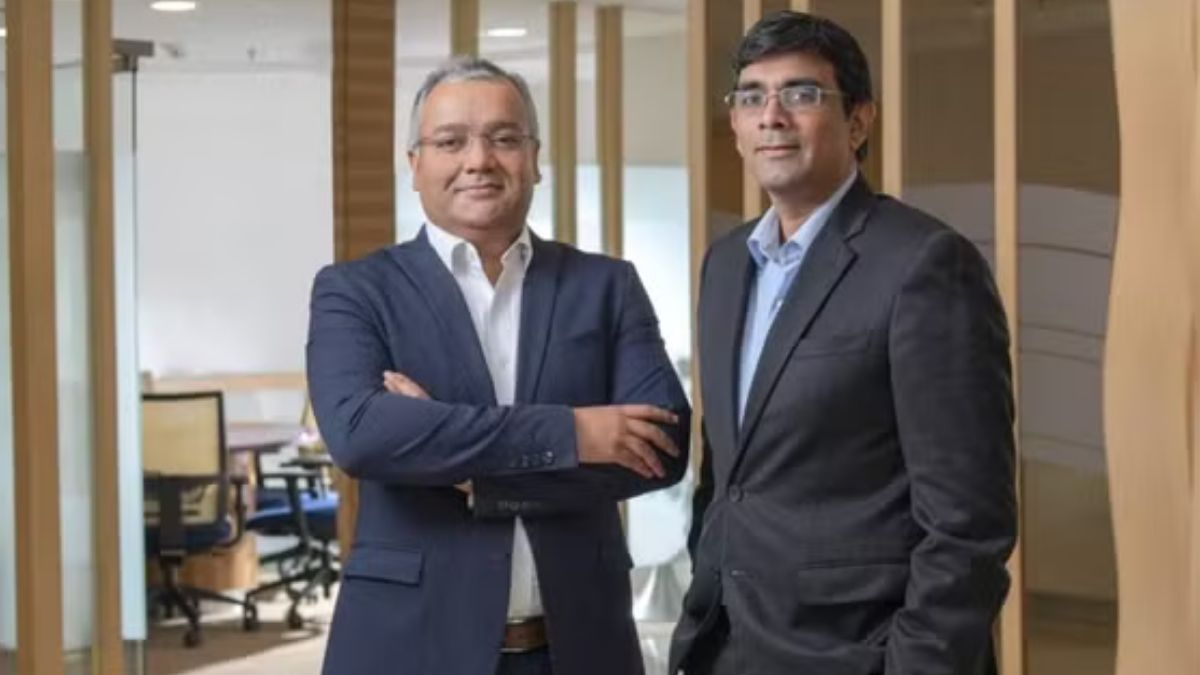
Singapore sovereign wealth fund Temasek has quadrupled its India exposure to $42 billion over the past decade, making the country one of its best-performing markets over the period. India now accounts for about 7% of its global portfolio, and the investment firm remains bullish on opportunities across sectors, with plans to deploy billions of dollars more over the next few years. Vishesh Shrivastav and Mohit Bhandari, managing directors, India, Temasek Global Investments, speak to Raghavendra Kamath about the fund’s India strategy, emerging investment opportunities and the evolving deal landscape. Excerpts:
India’s share in Temasek’s portfolio has fallen from 9% to 7%. What led to the decline, and where do you see it heading in the coming years?
Shrivastav: It has come down primarily because we had a large exit from Schneider Electric, which was extremely attractive. There are other drivers as well, though relatively small.
India has been Temasek’s best-performing market over the last 10 years. It is only natural that Temasek would want to increase its exposure to India rather than reduce it. If you take a longer-term view, the direction of travel is very clear. Ten years ago, India accounted for just 3-4% of Temasek’s portfolio. As long as we continue to find the right opportunities, we will want to grow our portfolio here.
You are looking to invest another $10 billion over the next two to three years. How confident are you of meeting that target?
Shrivastav: Investing is difficult even at the best of times. Three years ago, we had indicated that we would invest $8-10 billion, and we have actually deployed $9 billion. So, we were able to estimate the deal velocity fairly accurately.
At this point, we are seeing similar traction and some very good opportunities, which we are pursuing with conviction and enthusiasm. Of course, investment activity depends on a combination of factors, only some of which are within our control. But we see no reason to change our view on how much we can deploy. We remain quite constructive.
Temasek has said AI could account for 10-15% of its global portfolio, while private credit and infrastructure could contribute 5% each by 2031. Do you expect the India portfolio to broadly mirror this allocation?
Shrivastav: Our endeavour is to make the India portfolio increasingly resilient. There are multiple facets to artificial intelligence. We see AI as a foundational technology with the potential to fundamentally transform a number of industries.
The nature of our AI investments globally may be somewhat different from what we do in India. In India specifically, we believe the application layer could be much more relevant.
Why has Temasek largely stayed away from private credit in India?
Shrivastav: We do have some exposure to private credit through InnoVen Capital and EvolutionX. These companies provide venture debt to growth-stage businesses.
Do you have any direct exposure to private credit?
Shrivastav: So far, we have not made such investments directly. We are not averse to the idea if the right opportunity comes along and meets our risk-return criteria. We would be open to it, though we are not seeing anything compelling at this point.
Several new investment segments, including the AI value chain and defence components, have emerged. Does investing in such areas require more extensive due diligence and longer deal timelines?
Mohit Bhandari: There has been no change in our approach. We remain interested in any new sector with strong growth potential. But, as Vishesh said, we follow a thorough process to understand a sector from a long-term perspective because we are not investing for the short term.
We need to develop a clear view of how the sector is likely to evolve, who the key players are and which companies have the potential to emerge as champions.