



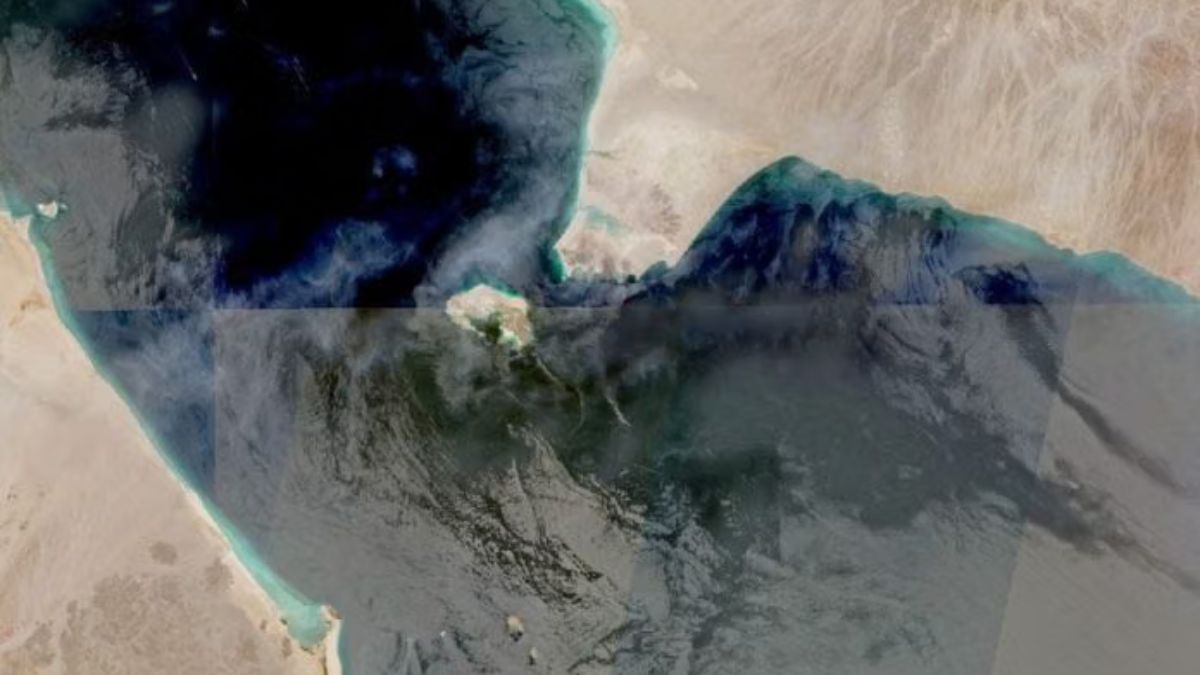
India’s crude supplies and import bill may face a fresh shock after a Houthi threat to blockade Saudi Arabia put the kingdom’s oil moving through Bab el-Mandeb at risk. The threat comes just as Saudi Arabian crude sharply regained share in India’s import basket over the last two weeks.
Kpler data showed Saudi supplies to India rebounded to 586,000 barrels per day (bpd) through July 19, doubling from 293,000 bpd for the whole of June, Kpler data showed. The kingdom ranked third after Russia at 2.45 million bpd and the UAE at 617,000 bpd.
Saudi Arabia supplied India an average 700,000 bpd between July 2025 and April 2026, accounting for 14.5% of imports. Its share slipped to 7% in May-June before recovering to around 10% in July, increasing India’s exposure to Riyadh’s Red Sea route.
The threat comes as India’s crude basket climbed to $85.51 a barrel on July 20 from $76.28 on July 13 and $68.21 on July 3. Every $10-a-barrel increase adds roughly $42 million a day to India’s crude import costs.
Prashant Vasisht, senior vice-president and co-group head at ICRA, said sustained disruption would hit India through, senior vice-president and co-group head at ICRA, freight, insurance and longer delivery times before shortages emerge.
“For India, this would mean higher landed costs for crude oil, LPG, fertilisers and industrial inputs, alongside costlier exports and increased working-capital requirements,” Vasisht said.
Riyadh has diverted about 70% of its energy exports through the Red Sea as Hormuz remains constrained. It is exporting 4 million bpd from Yanbu through its East-West pipeline, with nearly 2.5 million bpd moving south through Bab el-Mandeb, Rystad Energy vessel-tracking data showed.
“While the Houthis have not yet clarified how the blockade would be enforced, their previous campaign against commercial vessels demonstrates both the capability and willingness to disrupt Red Sea shipping,” Jorge León of Rystad Energy said.
The threat currently appears confined to Saudi-linked shipping. Bab el-Mandeb operations remain normal and India’s crude imports have not faced physical disruption, Kpler’s Sumit Ritolia said.
“There is no immediate disruption to India’s crude imports, with the current impact largely limited to higher freight, insurance costs and market volatility,” Ritolia said.
India’s risk would rise sharply if the threat spreads to wider Red Sea traffic. Russian shipments are expected to ease to 2.45 million bpd from 2.64 million bpd in June, but remain above the 12-month average of 1.73 million bpd. Russia, barely 2% of India’s crude basket before February 2022, became its largest supplier between 2023 and 2025, contributing roughly one-third of imports.
Imports from Iraq, Kuwait and Qatar, whose exports rely entirely on Hormuz, remain negligible and are unlikely to recover in late July after renewed US-Iran hostilities disrupted shipping.
“Any prolonged disruption would directly affect India’s largest source of crude imports, increasing voyage times, freight costs and forcing refiners to seek more expensive alternative barrels,” Ritolia said.
If tensions persist and the threat expands beyond Saudi-linked vessels, ships could avoid the Red Sea and reroute around Africa’s Cape of Good Hope, adding 10-14 days to transit schedules and increasing freight and insurance costs by 30-50%, an analyst tracking the sector said.
Vasisht said some oil cargoes redirected around Africa could face delays of up to a month. Longer voyages would consume more fuel, tie up vessels and reduce effective fleet availability.
“If Red Sea disruption coincides with constrained flows through the Strait of Hormuz, crude could climb back above $100 a barrel and, under a severe scenario, move towards $115-120,” Vasisht said. The pressure would spread to inflation, the import bill, the current account and the rupee.
“The risk for India is therefore not only a higher oil price, but also a more expensive, slower and less reliable supply chain,” he said.
Oil prices have eased below $88 from around $91 as traders focus on Qatar’s proposed ten-day ceasefire. Rystad said the decline reflects diplomatic optimism, not improved supplies.
Two Indian state-run refiners have suspended crude oil loadings from Iraq as mounting security risks in the Strait of Hormuz make it increasingly difficult to ensure safety of vessels, according to people familiar with the matter.
Indian Oil Corp. abandoned plans to load the supertanker Lila Jamnagar, which can hold as much as 2 million barrels of oil, the people said, asking not to be identified because the matter is private. The refiner concluded it was too risky for a fully laden tanker to attempt a Hormuz crossing, after several freighters were struck by projectiles in recent days.
Mangalore Refinery & Petrochemicals Ltd., controlled by state-owned Oil and Natural Gas Corp., has also suspended lifting from Iraq because of the deteriorating security situation, the people said. Indian Oil, Mangalore Refinery and India’s oil ministry didn’t immediately respond to requests for comment.