



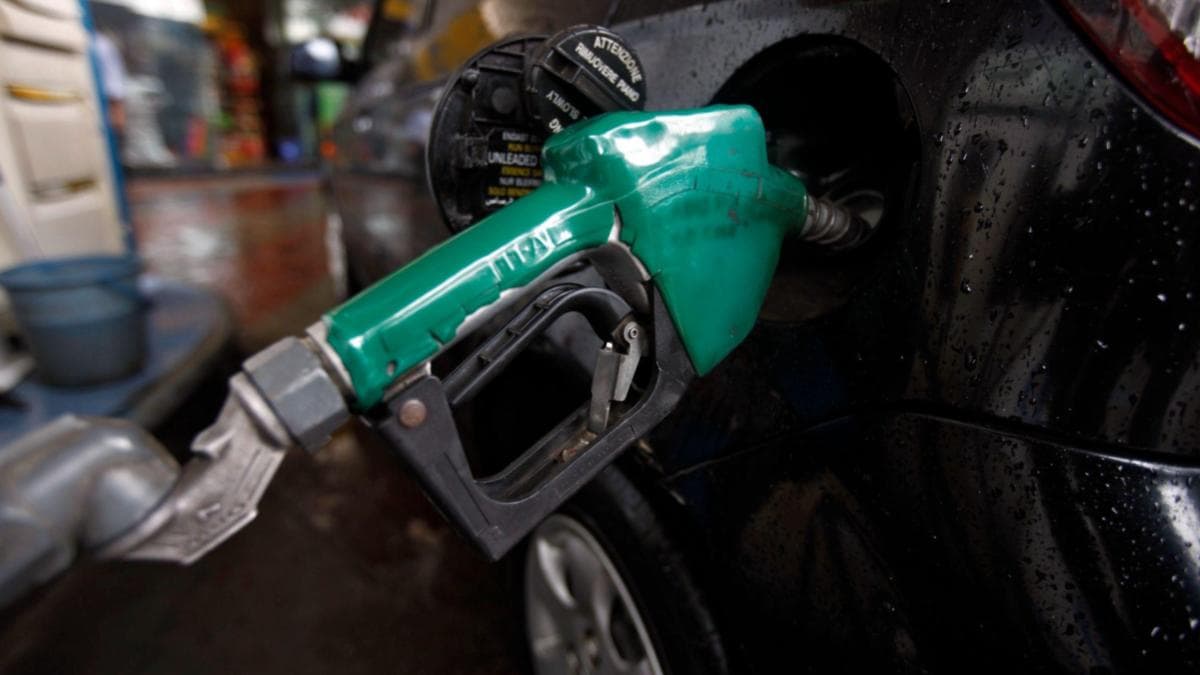
After successfully blending ethanol with petrol, India is now eyeing its next big move in clean fuels — mixing isobutanol with diesel. Ministry of Road Transport and Highways Secretary V Umashankar, speaking at a Confederation of Indian Industry (CII) summit in Delhi recently, said the government is taking this “very seriously” and a formal blending mandate could arrive before the end of 2026.
Bharat Petroleum Corporation Limited (BPCL) is already conducting strategic research on it and Umashankar said that “the results are very encouraging”.
What is isobutanol?
Isobutanol is an alcohol-based biofuel, a close chemical cousin of ethanol, but with some important differences that make it more diesel-friendly. It is produced through fermentation of sugarcane, grain or agricultural biomass, essentially the same feedstock used for ethanol.
According to the Automotive Research Association of India (ARAI), unlike ethanol, isobutanol blends more easily and uniformly with diesel. Ethanol blends poorly with diesel and requires stabilising chemical additives, while isobutanol does not need those same additives for basic miscibility. Isobutanol has a higher flash point (meaning it’s less likely to catch fire accidentally) and lower volatility.
How can blended diesel impact your car?
Not everyone is on board without reservations on blended diesel. Automobile expert Tutu Dhawan, speaking to Financial Express Online, acknowledged that isobutanol-blended diesel may not be perfectly suited for engines currently on the road but stopped short of dismissing it entirely. “We have to switch gradually to alternate fuel options in order to tackle the global disruptions better,” he said. Dhawan called it a necessary transition despite its imperfections.
He drew on India’s experience with E20 petrol, where some vehicle owners reported compatibility issues, to argue that carmakers must get ahead of the curve. He stressed that engine development cannot be an afterthought and must precede the rollout of blended diesel. He also flagged a practical concern. “If blended fuel sits in an unused vehicle for a month, it could corrode or damage internal engine components,” he said.
Manufacturers need to get the engine metallurgy right for these blended fuels in order to make them less susceptible to corrosion and degradation, Dhawan added.
Economics adds another layer of complexity. A January 2026 analysis by Avalon Consulting found that isobutanol was priced higher than pre-tax diesel in the market, creating what the firm called a “viability gap”. Without direct government price support, much like the procurement guarantees that underpinned the ethanol blending programme, the fuel is unlikely to attract the private investment needed to scale commercially.
Why is India moving towards alternate fuel options?
India is the world’s third-largest oil importer and diesel accounts for nearly 39% of all petroleum products consumed in the country. The consumption of diesel touched 91.4 million tonnes in FY 2024-25, according to data released by the Petroleum Planning and Analysis Cell (PPAC) of the oil ministry.
While addressing the Parliament in March, PM Narendra Modi said that the ethanol blending program for petrol has helped reduce India’s dependence on imported oil. He added that it has resulted in a cut in crude oil imports by 4.5 crore barrels a year. But that programme only covers petrol, leaving India’s vast diesel economy almost entirely dependent on imported crude. From April 2026, all petrol sold in the country has a 20% blend of ethanol. The government is now considering increasing that percentage to E85 and E100.
Road Transport Minister Nitin Gadkari has also confirmed that the government is actively working on biofuels (ethanol, isobutanol and bio-CNG), calling it part of its larger clean fuel and energy diversification roadmap.
The government is expected to announce the blending percentage of isobutanol for diesel and its timeline later in 2026. If the ethanol blending story is any guide, India has demonstrated it can execute its biofuel policy at scale. The isobutanol push, if handled carefully, could replicate that success for the diesel economy. But getting the science, economics and rollout sequencing right will be the real test.