



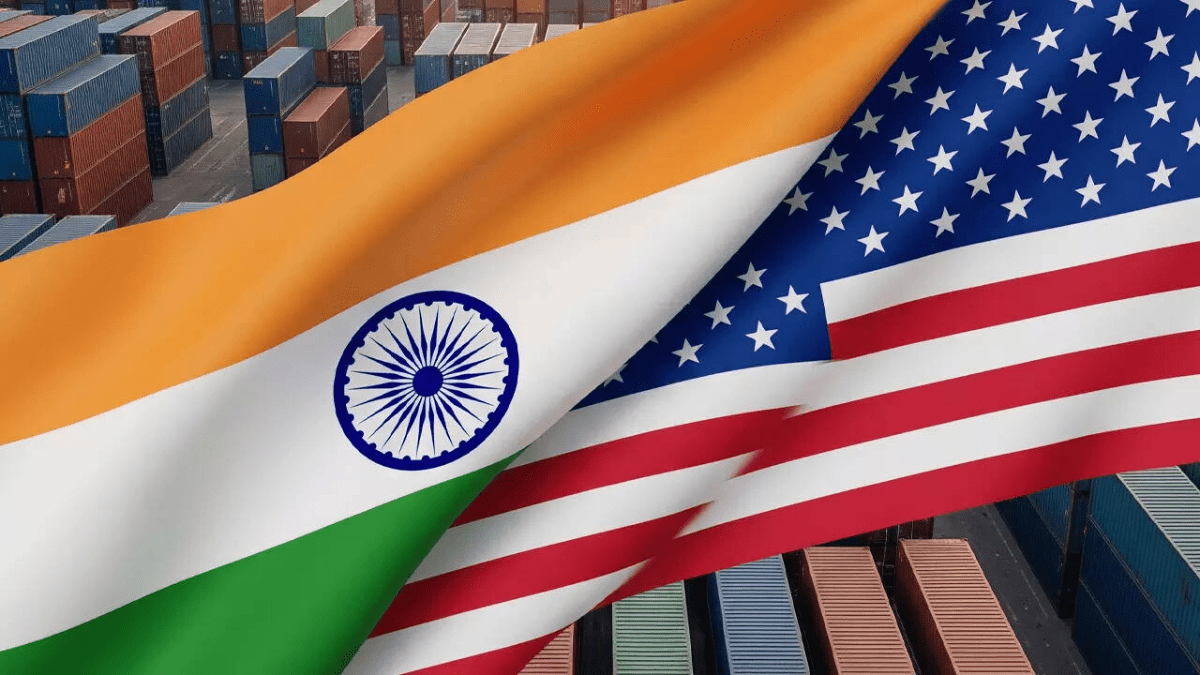
The US has turned to Section 122 of the Trade Act to levy 15% tariff on global imports after its Supreme Court struck down the reciprocal duties that invoked the national economic emergency law. Banasree Purkayastha looks at how Section 122 works, the tariff options the US has, & the impact on India’s exports
What has the US done now?
US President Donald Trump announced a 10% across-the-board tariff on all imports into the country on February 20 invoking Section 122 of the Trade Act, 1974. This followed the US Supreme Court ruling that Trump did not have the authority to bypass Congress and invoke the 1977 International Emergency Economic Powers Act to impose the tariffs on imports announced on April 2, 2025.
That ended the country-specific “reciprocal” tariffs which has roiled the world for almost a year. A day later, Trump upped the Section 122 tariff to 15% with immediate effect, with the threat that the new set of tariffs could prove to be even more painful and lasting than the ones they would replace.
How & when Section 122 works
Section 122 gives the US President the temporary power to impose tariffs (up to 15%) or implement import quotas without long investigations or detailed reviews. This tariff is meant to deal with situations where the US faces a “large and serious balance-of-payments deficit”, that is, a situation where its imports exceeds its exports so much that it hurts its international financial position.
It is valid for only 150 days, post which it needs approval from the Congress. In case the Congress does not vote on an extension, the tariffs would lapse. However, the US administration could again declare a new balance-of-payments emergency and impose a fresh set of tariffs under the same section.
Can this also be legally challenged?
THIS IS THE first time that Section 122 has been invoked. So its application, especially to global tariffs, may face legal challenges. An Indian Express report quoted a Cong-ressional Research Service report of April 2025 that noted that the “balance-of-payments deficits” as under Section 122 did not specifically refer to trade deficits, but focused on more inclusive measures of international payments, which include trade in invisibles (services) and capital flows.
Also, the balance-of-payments crisis, as originally envisioned by Section 122, is no longer relevant as a concept.
How does this impact India?
MOST IMPORTS INTO the US will be subject to most-favoured nation tariff rates plus the Section 122 surcharge of 15% for at least 150 days. However, in the short-term, uncertainty persists among Indian exporters on when the additional tariff will take effect, since the formal order is still awaited.
The US had imposed a 25% reciprocal tariff on India in August 2025. Later, an additional 25% duty was imposed for buying Russian crude oil. Earlier this month, the two nations had agreed on a framework to finalise an interim trade deal, under which the US will cut down the reciprocal tariff to 18%. The punitive 25% has been removed.
The 18% tariff was yet to take effect when the Supreme Court ruling came. To finalise the first phase of the trade agreement, an Indian team was scheduled to meet its counterparts in Washington this week. But this visit has now been postponed.
Section 301 is another option
The US does have other legal options. It can invoke Section 301 of the Trade Act to punish countries it accuses of engaging in “unjustifiable,” “unreasonable” or “discriminatory” trade practices. The US has used this section to impose tariffs on Chinese imports.
There are no limits on the size of Section 301 tariffs, they expire after four years but can be extended. The only condition is that the US Trade Representative must first investigate and hold a public hearing on whether the practices are “unjustifiable” and burden US commerce, before imposing any duties.
Section 232 of the Trade Expansion Act
This is another way to impose tariffs on imports deemed a “national security” threat. There is no cap on the tariff rate nor any expiry date. However, here also a probe is mandatory, the report of which must be submitted within 270 days. The President then has 90 days to decide whether to use his statutory authority.
The President also has to write to the Congress within 30 days explaining why the action was taken. Congress has a veto here only in the case of oil and petroleum product imports. Trump has used this section to impose duties on steel and aluminium imports.
Section 338 of the Tariff Act, 1930
THIS SECTION AUTHORISES the US President to impose up to 50% in tariffs on any country that “discriminates” against the US compared to other nations. It authorises the US International Trade Commission (USITC) to “ascertain and at all times to be informed” of purported discrimination and to “bring the matter to the attention of the President, together with recommendations.”
This section also empowers the President to impose tariffs “whenever he shall find as a fact” that discrimination exists. This law, enacted during the Great Depression of 1930, raised duties on roughly 25% of imports to protect farmers and businesses, but resulted in a retaliatory trade war.