



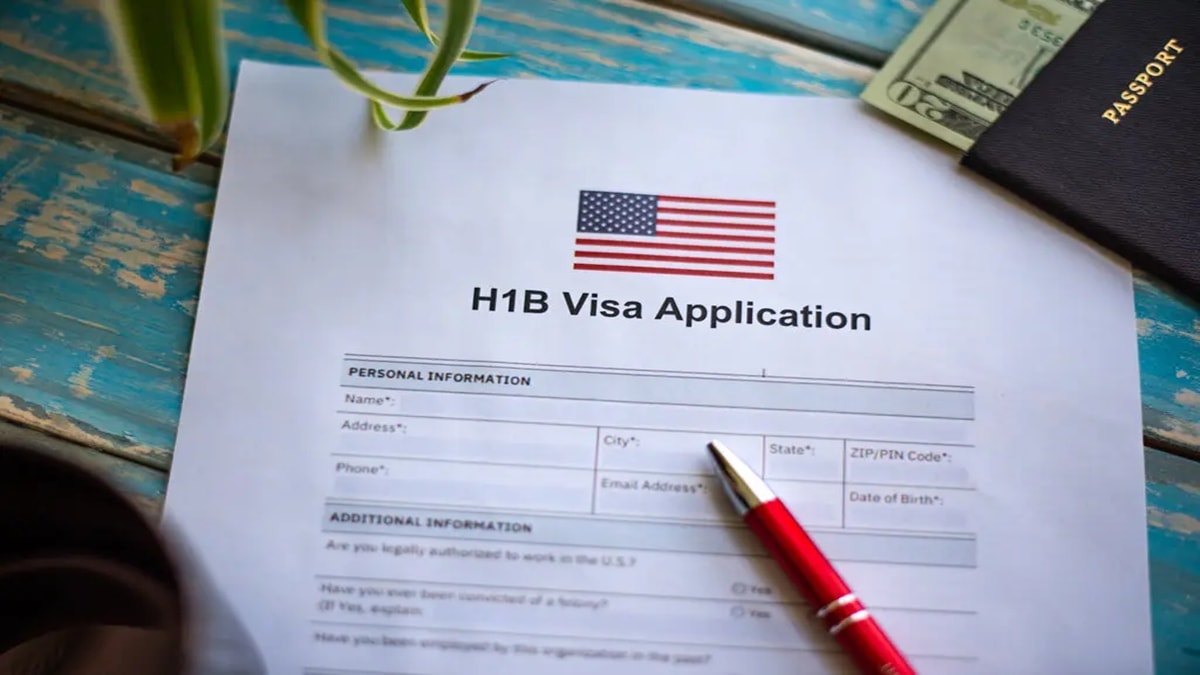
H-1B visa holders need to be careful with the rules and regulations that allow them to stay and work legally in the US. According to the H-1B visa rules, if a nonimmigrant worker’s employment terminates, either voluntarily or involuntarily, they must leave the United States within 60 days or when their approved validity period expires, whichever is shorter.
However, the stay can be extended provided they have filed an application for a change of nonimmigrant status or an application for adjustment of status within the 60-day grace period.
In that case, the nonimmigrant’s legal stay in the United States may exceed 60 days, even if they lose their previous nonimmigrant status. The stay beyond 60 days is legal, provided the individual has filed an application for change of status within the 60 days. This maximum 60-day grace period only applies to workers in E-1, E-2, E-3, H-1B, H-1B1, L-1, O-1, or TN classifications (and their dependents).
While the USCIS rules allow foreign nationals to apply for ‘change of status’, there’s a key element that needs to be understood. USCIS calls it a ’60-day discretionary grace period’.
If someone submits the ‘change of status’ application after the end of the 60 days, their applications are likely to be denied by USCIS. The USCIS regulations mandate nonimmigrants to prove they have maintained their status until the application for a change of status is filed.
So, if your authorized stay expires before your application was submitted, and no justifiable reason for the delay has been provided, the USCIS may deny your application due to your failure to maintain status.
USCIS may still allow you to rebut the issues affecting your application. For that, you may submit any favorable evidence, such as proof of good standing or participation at your former employer or in the community, affidavits of good character, or any other relevant evidence supporting a favorable discretionary decision.
The 60-day grace period allows nonimmigrant workers to maintain their status or request a change, enabling them to continue their job search within the US. Still, some H-1B visa holders who are being removed from jobs are also receiving ‘Notices to Appear’.
The possible reason could be the discretionary power provided under the same regulations. The same rule states, “DHS may eliminate or shorten these 60 days as a matter of discretion. Unless otherwise authorized under and the alien may not work during such a period.”
Individuals holding E-1, E-2, E-3, H-1B, H-1B1, L-1, and O-1 visas in the US and facing unemployment or job changes should note the new measures implemented by the Trump administration.