



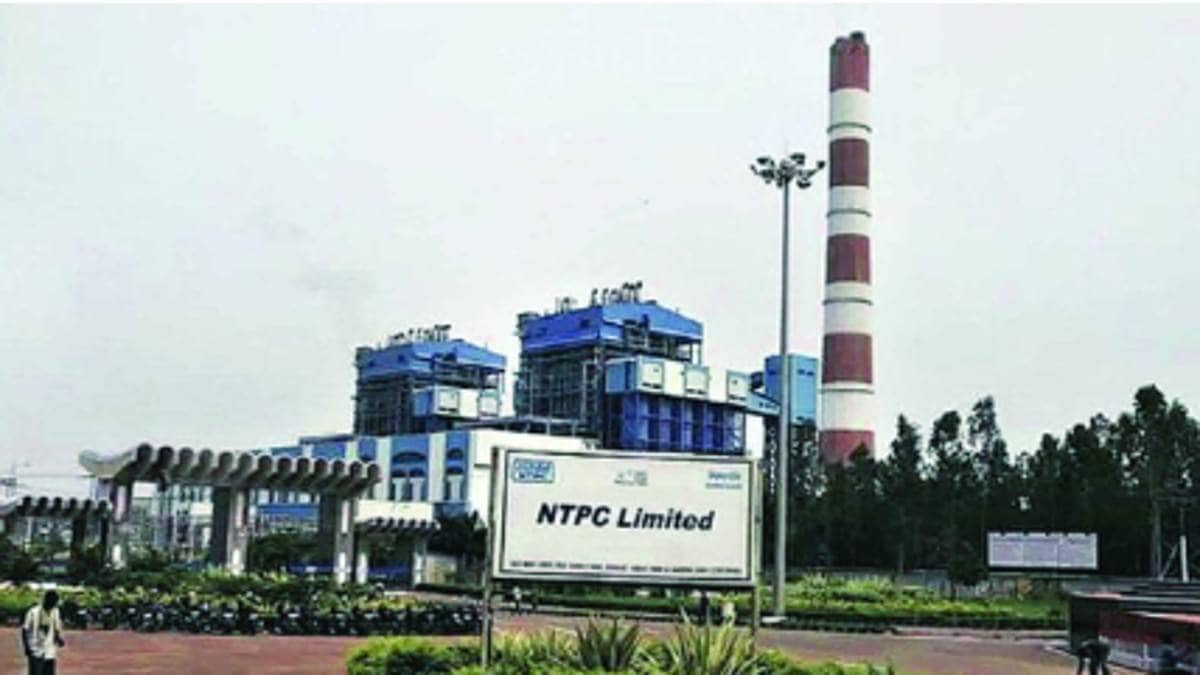
A proposed ₹15,000-crore expansion of Rajasthan’s Chhabra Thermal Power Plant by NTPC is unlikely to move forward, with regulatory records indicating that the Memorandum of Understanding (MoU) signed between NTPC and Rajasthan Rajya Vidyut Utpadan Nigam Limited (RVUNL) has been reviewed and is “likely to be cancelled due to persisting critical issues”.
The development, revealed through official documents examined by The Financial Express, casts uncertainty over plans to add 1,320 MW of coal-based capacity — through two units of 660 MW each — at one of Rajasthan’s key thermal power hubs, underscoring growing regulatory reluctance to treat intent-based agreements as firm capacity in power planning.
Red flags in regulatory review
The status of the Chhabra expansion came up during deliberations of the Energy Assessment Committee (EAC) in August, 2025, when the committee reviewed whether projects backed only by MoUs with central public sector undertakings (CPSUs) could be counted as assured capacity under resource adequacy assessments.
According to the records, RVUNL informed the committee that MoU-based CPSU projects remain at an early stage of development and are affected by unresolved regulatory approvals, fuel transfer arrangements and coal logistics, making their execution uncertain.
The EAC, after considering these submissions, resolved that such projects should not be automatically assumed as tied-up capacity and must be examined individually. In the case of Chhabra, the committee noted that the MoU signed with NTPC for extending the thermal power station had been reviewed and was “likely to be cancelled due to some persisting critical issues”.
What the MoU was — and wasn’t
The documents make a clear distinction between an MoU and a binding project agreement. An MoU, they note, is only a preliminary expression of intent between a state government and CPSUs, aimed at facilitating land availability, statutory clearances, coal arrangements and other enabling infrastructure.
It does not, however, constitute a concluded commitment on project commissioning, tariff outcomes or assured capacity availability for distribution companies. “The viability of such projects depends on subsequent techno-economic studies, regulatory approvals, coal logistics and power purchase agreements,” the submission states.
Treating MoUs as firm capacity for planning purposes, the documents caution, is neither technically sound nor consistent with prudent resource planning norms — a position that has now found formal backing within regulatory deliberations.
A stalled expansion with high stakes
The Chhabra Thermal Power Plant, located in Rajasthan’s Baran district, currently has an installed capacity of 2,320 MW, comprising four units of 250 MW and two units of 660 MW, operated by RVUNL. The proposed NTPC-led expansion was expected to significantly scale up the site, strengthening Rajasthan’s baseload power portfolio.
The proposed investment of ₹15,000 crore for the additional 1,320 MW was among the largest coal-based expansion plans in the state in recent years. However, the project has remained stuck at the planning stage for several years.
People familiar with the matter said discussions repeatedly ran into roadblocks over the ownership and control structure of the proposed joint venture, with NTPC seeking management control. At the same time, uncertainties around coal linkage, fuel transfer mechanisms and evolving environmental compliance requirements complicated the project’s financial viability.
“Without clarity on fuel security and governance, committing capital of this scale became increasingly difficult,” said a senior official, speaking on condition of anonymity.
Queries sent to NTPC seeking comment on the status of the Chhabra MoU and the issues flagged in the regulatory review did not receive a response till the time of publication.
Rajasthan’s shifting thermal strategy
The likely cancellation of the Chhabra MoU comes at a time when Rajasthan is reassessing its thermal power strategy even as it pushes aggressively on renewable energy. While the state has approved additional coal-based capacity in recent years — including expansion at the Kalisindh Thermal Power Project — regulators are now tightening scrutiny on projects that lack execution certainty.
Officials pointed out that assumptions around future coal capacity directly affect long-term power procurement planning and investment signals. “Counting projects that may never materialise distorts resource adequacy assessments and masks real supply risks,” said an official aware of the discussions.
The expansion was originally planned and approved as a fully state government–owned facility under RVUNL. It was reported that due to financial constraints, the govt later considered it as a JV with NTPC.
“As this public sector project faces uncertainty and RVUNL planning to retire 1.3 GW of coal capacity in the next 5 years, and no other investment announced, the share of public sector generation is expected to significantly reduce in Rajasthan. It appears that Rajasthan government is committed to building a favourable environment to encourage private investments in the state’s power sector,” said an expert on the condition of anonymity.