



The automobile retail industry closed FY2025-26 at a historic high of 29.6 million units, clocking a broad-based 13.3% year-on-year growth and coming close to the 30 million milestone, according to the Federation of Automobile Dealers Association (FADA).
March capped the year on a high note, emerging as the best-ever monthly performance. “March 2026 has been the best-ever March in the history of India’s auto retail sector, while FY2026 has also emerged as an all-time high year for the industry,” said Sai Girdhar, Vice President, FADA.
Split in momentum
The year was marked by a clear split in momentum. The April–August period saw muted growth of 2–5% as buyers held back purchases ahead of anticipated GST revisions. Demand accelerated sharply from September after tax cuts improved affordability, with the festive season setting the tone.
October recorded retail volumes of over 4.0 million units, and the momentum sustained through the final quarter with strong double-digit growth, indicating a structural demand recovery rather than a seasonal spike.
“Growth was relatively muted at around 3% between April and September, but we ended the year with a strong 13.3% expansion. This was largely aided by GST-led price corrections of nearly 10% in some cases, which significantly improved affordability,” Girdhar said.
PV sales
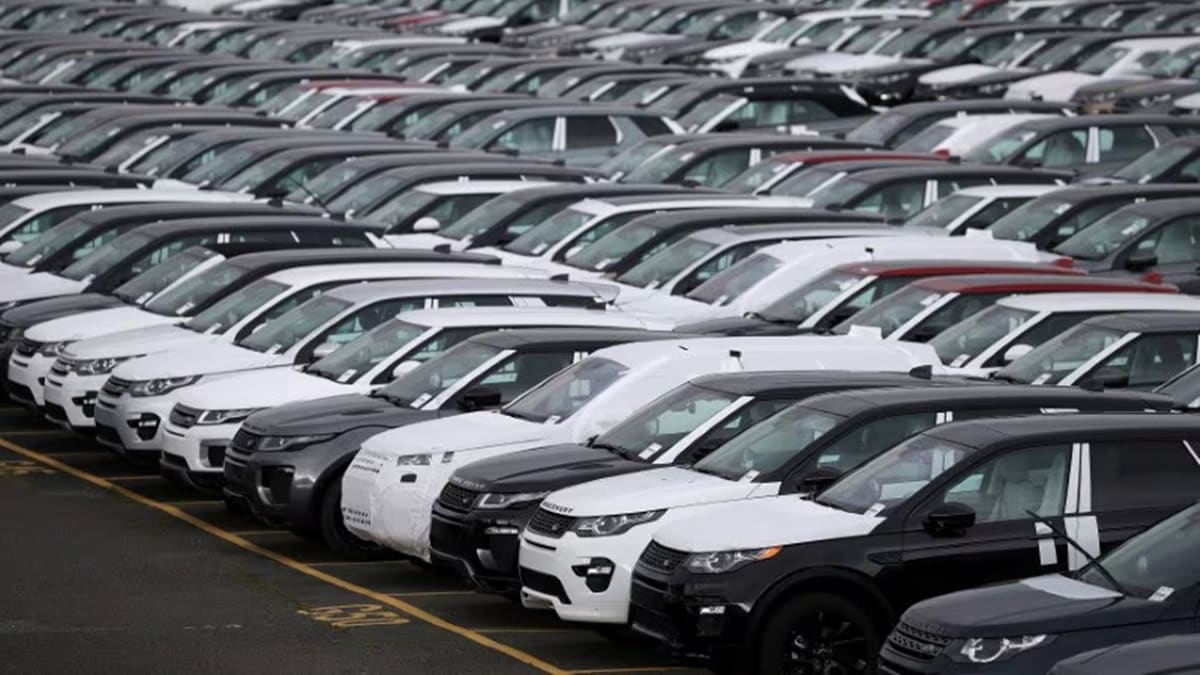
Passenger vehicles crossed the 4.7 million mark for the first time at 4,705,056 units, growing 13%. The segment benefited from a strong new-model pipeline, continued urbanisation and a shift towards SUVs and alternative powertrains.
Inventory levels also normalised sharply from about 52 days in March 2025 to around 28 days by March 2026 reflecting tighter alignment between wholesale dispatches and retail demand. Electric vehicles (EVs) gained further traction across segments. Passenger vehicle EV penetration rose to 4.25% for FY26 and crossed 5.11% in March.
Two-wheelers led the recovery, growing 13.4% to reclaim pre-Covid levels, supported by improved rural cash flows and better affordability.
Commercial vehicles staged a strong comeback, crossing 1.0 million units after several years on the back of infrastructure-led demand. “The CV segment recorded its highest-ever annual sales in FY2026. For March, it was the third-best performance on record. The last comparable peak was in March 2020 at around 123,000 units,” Girdhar said.
Commercial vehicle retail stood at 1,060,906 units, up 11.74%, with medium and heavy CVs driving growth. In March, the segment recorded a sharp 25.5% increase.
The tractor segment emerged as the fastest-growing category, crossing the 1.0 million mark for the first time at 1,050,077 units, up 18.95% year-on-year. The growth was driven by a strong monsoon, robust rabi sowing and improving farm economics.
Three-wheelers continued their record run, posting their third consecutive annual high at 1,363,412 units, growing 11.68%, with EVs accounting for over 60% of sales. Construction equipment remained the sole laggard, declining 11.7% to 71,227 units due to project delays and a high base.
Rural demand gains traction
Rural markets continued to narrow the gap with urban demand, supported by improved farm incomes and affordability gains. “Rural demand is currently outpacing urban markets, supported by GST adjustments. However, any upward pressure on prices due to input costs or exchange rates could dampen sentiment,” Girdhar said.
Risks and outlook
The sector is, however, navigating emerging risks from geopolitical tensions. “While there are concerns around supply chain disruptions due to the Middle East crisis, the government has done a commendable job in insulating the domestic market, particularly on fuel prices and lending rates.
However, the key question is how long this cushion can be sustained,” Girdhar said. He cautioned that prolonged disruptions could weigh on demand. “Any prolonged disruption has a direct correlation with vehicle sales first impacting two-wheelers and passenger vehicles, and subsequently the CV segment,” he added.
Looking ahead, FADA expects the growth cycle to continue. “FY2027 is expected to be another growth year. We expect high single-digit growth, though it could have been higher in a more stable environment,” Girdhar said.
| Category | Mar-26 | Mar-25 | YoY | FY26 | FY25 | YoY |
| Two wheelers | 1.95 mn | 1.52 mn | 28.68% | 21.42 mn | 18.89 mn | 13.40% |
| Passenger vehicles | 4,40,144 | 3,62,304 | 21.48% | 4.71 mn | 4.16 mn | 13.00% |
| Comm. vehicles | 1,02,536 | 89,067 | 15.12% | 1.06 mn | 0.95 mn | 11.74% |
| Three wheelers | 1,09,777 | 99,325 | 10.52% | 1.36 mn | 1.22 mn | 11.68% |
| Tractors | 82,080 | 74,032 | 10.87% | 1.05 mn | 0.88 mn | 18.95% |