



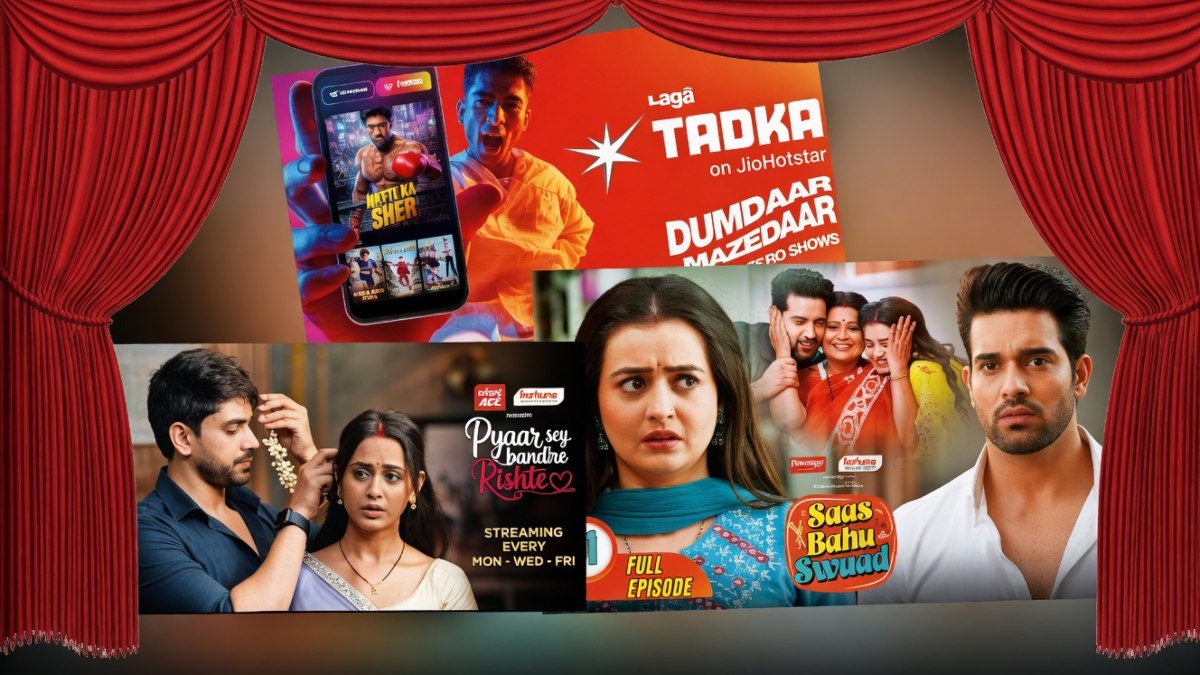
Entertainment production house Balaji Telefilms has been creating shows across long and short formats, completely funded by brands, including its YouTube Originals. Nitin Burman, group chief revenue officer at Balaji Telefilms says brands are now working with scriptwriters to be part of the content storyline.
OTT platform JioHotstar recently made its way into short-form entertainment with the launch of TADKA, a micro-content vertical featuring episodic stories as short as 60 to 120 seconds. The platform says it is working with brands “that think about integration at the story level, rather than the placement level”.
Balaji Telefilms and JioHotstar are simply responding to a global trend — moving toward “stealth” placements—such as a specific luggage or fizzy drinks brand appearing naturally in multiple scenes without a verbal callout. Nitin Burman, group chief revenue officer, Balaji Telefilms, says brands are now working with scriptwriters to be part of the content storyline.
With 2025 seeing viewership top 600 million and premium brands prioritising digital, the move from standard advertising to integrated branded content is imperative for high-impact reach.
“We pitch the stories to brands and seamlessly integrate them within our shows. While we have been working with long formats, there has been increasing demand for branded micro dramas in the last few months for both, integrations within existing shows as well as advertiser-funded programming,” says Burman.
Economics of Micro-Dramas
Nearly 70-80% of Balaji Telefilms’ YouTube content earnings come from brand collaborations. Burman points out that in terms of cost and effort, one 30-episode long-form YouTube Original is equal to 10-12 micro dramas. “Profit margins are the same, but the effort is much more in micro dramas,” he adds.
For JioHotstar the shift is about audience engagement. Ambuj Kashyap, executive vice- president for micro content at JioStar says when a story resolves in 60 to 90 seconds, the audience has chosen to be there, and that quality of attention is something brands rarely get elsewhere. Brands go by viewership data to place products in specific genres that match their audience, such as health brands appearing in fitness-oriented web series or food delivery apps appearing during late-night scenes. Regional platforms like Hoichoi, Aha, and Sun NXT are also attracting local brands for high-engagement, niche placements.
Deeper integrations
The trend is not new though. TVF Tripling’s first season that premiered on ZEE5 in 2016, for instance, featured Tata’s new launch, Tiago, as the vehicle the protagonist and his siblings drive during a road trip in. Both web series and stealth placements were new back then but the momentum has picked up in recent years.
But despite the growing audience affinity for short-form content, experts caution that it would be unwise for brands to write off long-form content or large Bollywood productions. Says Sudeep Subash, partner & chief revenue officer at Collective Artists Network and CEO at Big Bang Social, “A well-made film or series still has the ability to build credibility and create a lasting emotional connection, which shorter formats can struggle to achieve at the same scale. Short-form is effective in keeping a brand consistently visible in environments where attention is constantly shifting. Each comes with its own challenges, but the most effective strategies bring both together cohesively and purposefully.”
In any case, while brands are moving away from passive product and logo placements in big-budget films and popular TV shows, they’re not writing movies or traditional content off entirely but instead looking at deeper integrations. Case in point – the recent Dhurandhar sequel, which saw over 70 brands advertise.
Brands are however making a significant shift from talking to audiences to creating something for them. “The reality is that consumers don’t dislike brands, but they dislike interruptions from them. That is why advertisers are now trying to become part of the content that people engage with, whether it is a podcast during their commute or a short-form series one can watch on their phone,” says Shabbir Motiwala, chief content officer at Epidemik Content, the content arm of Infectious Advertising.
According to Shradha Agarwal, co-founder and global CEO of Grapes Worldwide, big formats like movies and TV shows still work when a story needs scale but these are no longer the first choice for brand campaigns. There are also distinct advantages that come with curating short-form content on easy-to-consume formats videos, podcasts and micro dramas. “These formats make it easier for brands to stay present more regularly in a way that feels natural to each platform. Working with production partners also helps brands improve the quality of storytelling while moving faster,” adds Agarwal. She notes that smaller formats allow brands to test ideas without taking on the time and expense that come with larger productions.