



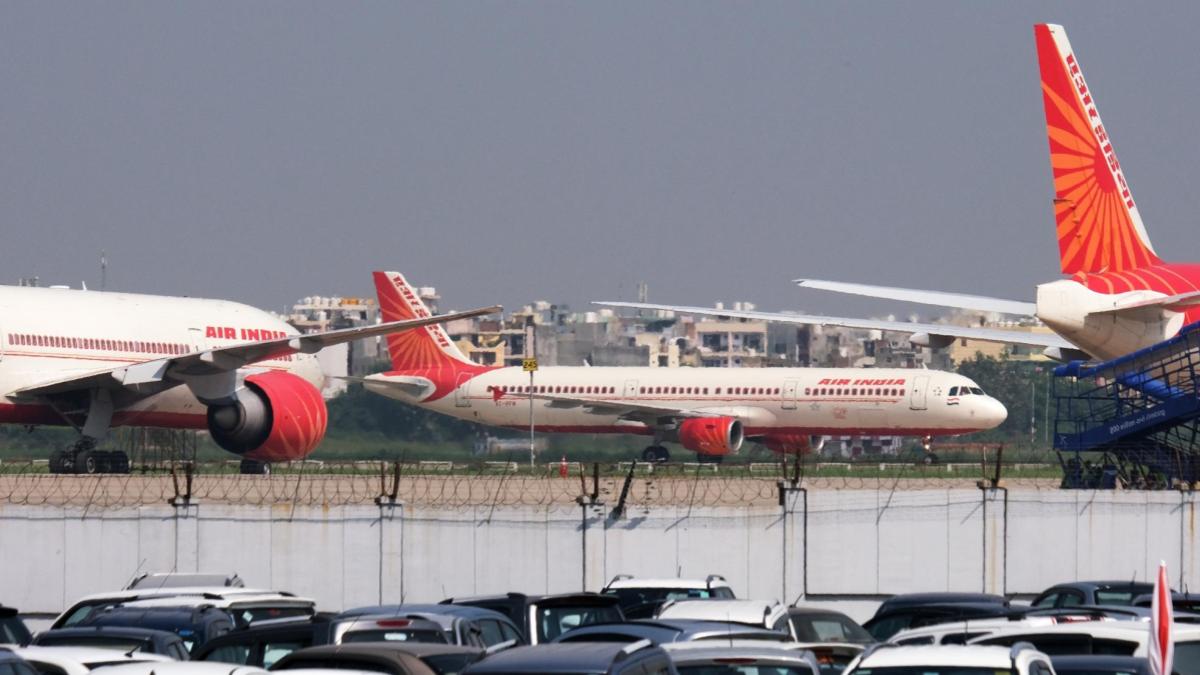
Air India has scheduled the resumption of its primary international flight operations to Europe and North America, following the disruption caused by the closure of West Asian airspaces.
“Air India is closely monitoring and assessing the evolving situation in the Middle East and has commenced scheduled operations to all its destinations in the USA, Canada, Europe, and the UK, giving the highest priority to the safety and security of our customers and crew,” the airline said in a statement on Tuesday.
The Tata Group-run carrier is implementing a comprehensive rerouting strategy that bypasses the high-risk zones over Iran and the Persian Gulf, utilising a combination of southern corridors and technical refueling stops to restart its flights to cities on the East Coast of North America and Europe.
What do airline execs say?
“Europe, the US, and Canada-bound services are being routed through airspace over the Red Sea, Saudi Arabia, Egypt, and the Mediterranean to bypass constrained zones,” a senior executive from the airline told Fe.
He added that all Air India flights to Europe and North America will enter European airspace via Egypt and Greece.
“Westbound flights to New York and Toronto, which previously operated non-stop or via the now-unviable Vienna Bridge, will utilise technical stops in cities such as Vienna or Rome to account for the additional flight time added by these detours,” the executive added.
The airline, which had cancelled nearly 200 flights since February 28, plans to operate around 50 weekly flights between India and North America, comprising about 35 India–USA and 15 India–Canada flights.
Domestic carriers forced to take significantly longer routes
The airspace restrictions will force domestic carriers to take significantly longer routes, avoiding the entire stretch from Pakistan through Iraq, which poses a challenge for domestic carriers as international operations are a crucial revenue source for airlines, at a time when the Indian rupee has seen a depreciation against the US dollar, and airlines earn a natural hedge against the depreciating rupee by earning revenue in the dollar on international flights.
Air travel between India and the UK, Europe, the Middle East, and North America is likely to face significant disruptions, with flights being delayed, cancelled, and rerouted, as airlines grapple with substantial operational challenges due to the closure of airspaces over Iran, Iraq, Israel, Jordan, Lebanon, Kuwait, Saudi Arabia, the United Arab Emirates, Bahrain, Qatar, and Oman.
Domestic carriers have been avoiding Iranian airspace for several weeks before the latest escalation, and with Pakistan maintaining its airspace closure to Indian airlines since May 2025, airlines are left with minimal viable flight paths to Europe and North America, should they look to restart services in the coming weeks.
Analysts warn that the potential fallout from ongoing disruptions could be just beginning. If these issues persist, airlines may face an additional financial burden estimated at “hundreds of crores” due to increased operating costs and lost revenue. This compounds the expected net loss of Rs 17,000-18,000 crore that the aviation industry is projected to incur in the ongoing financial year.
“These reroutes can add 60–120 minutes to certain legs and require airlines to burn up to four extra tonnes of fuel per sector, which impacts crew duty hours, fuel economics, and aircraft turnaround times,” Lokesh Sharma, a senior defence and aviation analyst, said.
“Detours of two to three hours on wide-body aircraft could add approximately $6,000 to $7,500 per flight hour in operating costs,” Ernest Arvai, aviation analyst at AirInsight, said in a statement.