



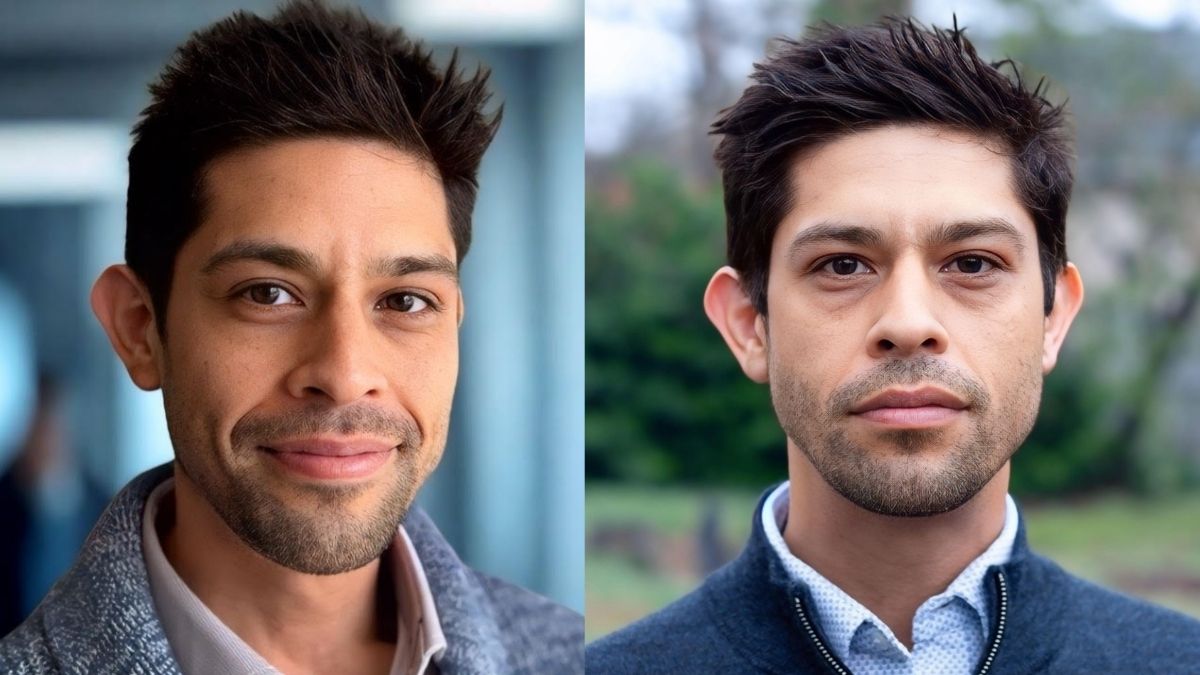
An immigration attorney who spent nearly two decades at a law firm lost his job after openly embracing artificial intelligence. Within 48 hours of being fired, he had already launched his own law practice, secured malpractice insurance, opened trust accounts, and signed his first client.
Kevin Andrews, a Baltimore-based immigration lawyer who handles EB-1A, O-1, National Interest Waiver and H-1B cases, says AI did not just help him survive after losing his job. It helped him rebuild his entire career.
In an exclusive interview with Financial Express Digital, Andrews said he had no coding background when he first started experimenting with AI in 2025. At the time, he had practiced immigration law for 15 years and spent most of his days buried in repetitive legal work and endless meetings.
“I got fired in an email on a Monday morning,” Andrews told Financial Express Digital. “By Thursday, my law practice was formed. I had my first consultation and my first case within a week,” he added.
How did veteran immigration lawyer suddenly lose his job?
Andrews said his growing interest in AI became difficult for his former firm to ignore. His LinkedIn posts about prompt engineering and AI workflows started gaining attention online. Eventually, he lost his position after 18 years at the firm.
At the time, Andrews faced enormous pressure outside work too. He had two children, very little savings, and no backup plan. But instead of spending weeks updating his resume and applying for jobs, he turned to AI systems he had spent months learning.
“The thing that got me fired became my client engine,” he said.
How did Kevin Andrews first enter the world of AI?
Andrews said he first heard about ChatGPT in early 2023 but did not take it seriously. “Back then, it seemed more like a novelty,” he said. “Just another chatbot that could also make weird videos of six-fingered people,” he added.
Everything changed when he found “vibe coding” in early 2025. The idea fascinated him. Non-programmers could use natural language to build functioning applications with AI.
In April 2025, he bought a laptop and opened ChatGPT with a simple question. “I asked how I could build my own chatbot,” he said. “Not whether it was practical. I just wanted to know if I could do it,” he added.
That weekend, Andrews connected an open-source language model called Mistral Mini to a library of legal resources. The system returned basic legal answers inside a computer terminal after several minutes. “It was functional and I built it,” he said.
What projects helped Andrews learn AI without a technical background?
After building his first chatbot, Andrews started searching for practical AI use cases around him. One night, he looked inside his refrigerator and used Gemini on his phone to ask what meal he could cook from available ingredients. Gemini asked to see his spice cabinet before suggesting easy and nutritious recipes.
“That’s just features,” he said. “I wanted to build my own solutions,” he added.
He later built an app that turned his children’s household chores into a fantasy game. His kids could “slay the trash dragon” and earn points for rewards.
After suffering rain damage at home, Andrews watched a remediation company take handwritten notes during a property inspection. When he learned existing software was expensive, he built his own application using GPT Vision 4. The tool calculated damages, generated insurance PDFs, and tracked inventory using QR codes.
“I kept looking for little projects like that until the systems got advanced enough that the workflows could apply to my knowledge work,” he said.
What was the hardest part about learning AI?
According to Andrews, the biggest challenge was psychological rather than technical. “Lawyers are trained to never appear uncertain, and that instinct is poison for learning anything new,” he said. “The breakthrough came when I let myself be a complete beginner again,” he said.
He admitted the process felt humbling after spending 15 years as an attorney. “I also have ADHD and a genuine fear of being left behind by this technology,” he said. “Those two things drove me to log hundreds of hours with AI in less than a year. It was obsession, not discipline,” he added.
Andrews believes most professionals still underestimate how early the AI revolution remains. “On Earth, there are about 2 million power users of AI,” he said. “Most people have only used it casually.”
How did AI help Andrews build a law firm in just two days?
After losing his job, Andrews opened up to Claude and asked for help rebuilding his career. According to him, Claude created several AI “sub-agents,” each assigned to specific tasks. One handled malpractice insurance. Another focused on business formation. Another managed website development.
“The malpractice agent gave me numbers to call and suggested coverages and premium rates,” Andrews said. “The business formation agent helped me form the law practice and recommended banks for the trust and operating accounts,” he added.
By following those AI-generated task lists, Andrews completed what normally takes weeks in only a few days. “AI didn’t really automate anything,” he said. “It augmented everything,” he added.
Why does Andrews call himself ‘natural language coder’?
Andrews describes himself as a “natural language coder.” “It means wordsmiths are the new programmers,” he said. “If you can get over the psychological hurdles of dealing with AI, it can build some really useful things,” he added.
He compared his relationship with AI to the partnership between Apple founders Steve Jobs and Steve Wozniak. “I think of myself as a really dumb Steve Jobs, and the AI is a really smart, but incredibly naive, Steve Wozniak,” he said.
How does AI now shape immigration practice of Andrews?
Andrews runs Kevin J. Andrews Law, LLC as a solo immigration practice in Baltimore, Maryland. He primarily handles visas for researchers, physicians, engineers, founders, academics and artists. He said AI transformed the depth and speed of his legal research.
For academics applying under EB-1A, Andrews uses AI tools connected to Google Scholar data to study publications and generate targeted recommendations for reference letters.
He also scrapes Administrative Appeals Office decisions and loads them into retrieval systems that help prepare responses to Requests for Evidence and immigration lawsuits.
“For a denial, I can test the government’s reasoning against case law and help assess the best legal strategy,” he said. “The AI decides nothing. It just makes me a more thorough version of the lawyer I already was,” he added.
Why do clients still pay thousands despite AI making work faster?
Andrews said clients are not paying lawyers for the number of hours spent typing petitions. “Speed doesn’t determine value, outcome does,” he said.
He spoke about immigration uncertainty under the Trump administration and continues to push demand for strong legal representation. “EB-1A denial rates under the Trump administration have nearly doubled in recent quarters,” he said. “Until outcomes become more certain, pricing will not adjust solely as a function of AI innovation,” he added.
What risks does AI create for lawyers?
Andrews warned that hallucinations remain the biggest danger. “AI will invent a case citation with total confidence, and in law that can be catastrophic,” he said.
Several lawyers in the United States have already faced sanctions for submitting fake AI-generated legal citations in court filings. “My rule is inflexible,” Andrews said. “Verification is always a separate step from creation,” he said.
He built what he calls a “hallucination verification layer” into his workflows. The system checks whether AI-generated claims rely on actual legal sources or unsupported inference. “An AI cannot be admitted to the bar,” he said, adding, “I can.”
Why does Andrews believe the biggest barrier is psychological?
According to Andrews, many people misunderstand how AI systems behave. “AI works by mimicking human intelligence,” he said. “It is designed to be helpful,” he added.
That creates problems because AI often tells users what they want to hear. “Claude might tell me, ‘Kevin, this is the great American novel you’re writing,’” he said. “If I push back slightly, it immediately changes direction to please me again,” he added.
He believes careless interaction between humans and AI systems can become dangerous. “Two unaware decision-making entities working with each other can lead to malpractice and psychosis,” he said.
Andrews compared AI to a high-performance vehicle. “If AI was a car, understanding the features helps you drive fast,” he said. “Understanding the psychological guardrails prevents crashing,” he added.
What advice does Andrews have for Indian H-1B and EB-1A applicants?
Andrews said anxiety among Indian professionals in the United States is justified, especially under tighter immigration scrutiny. “Uncertainty is not hopelessness,” he said.
For EB-1A applicants, he believes many denials stem from weak presentation rather than weak qualifications. “Pre-2024, petitions needed recommendation letters that read like the back of a novel,” he said. “Now they need letters that read like the back of a baseball card. Stats over narrative, metrics over adjectives,” he added.
He said the H-1B situation appears more complicated because of higher fees, stricter wage rules, and visa processing problems. “AI is a double-edged sword,” he said. “It creates market disruption and job volatility while also expanding the government’s surveillance and tracking of nonimmigrants,” he added.
Still, Andrews urged professionals not to wait until a crisis arrives. “Don’t wait until you get the Monday morning email to open Claude and build your strategy,” he said.
For Andrews himself, the experiment already changed his life. “The barrier was never technical,” he said. “It was psychological,” he added.