



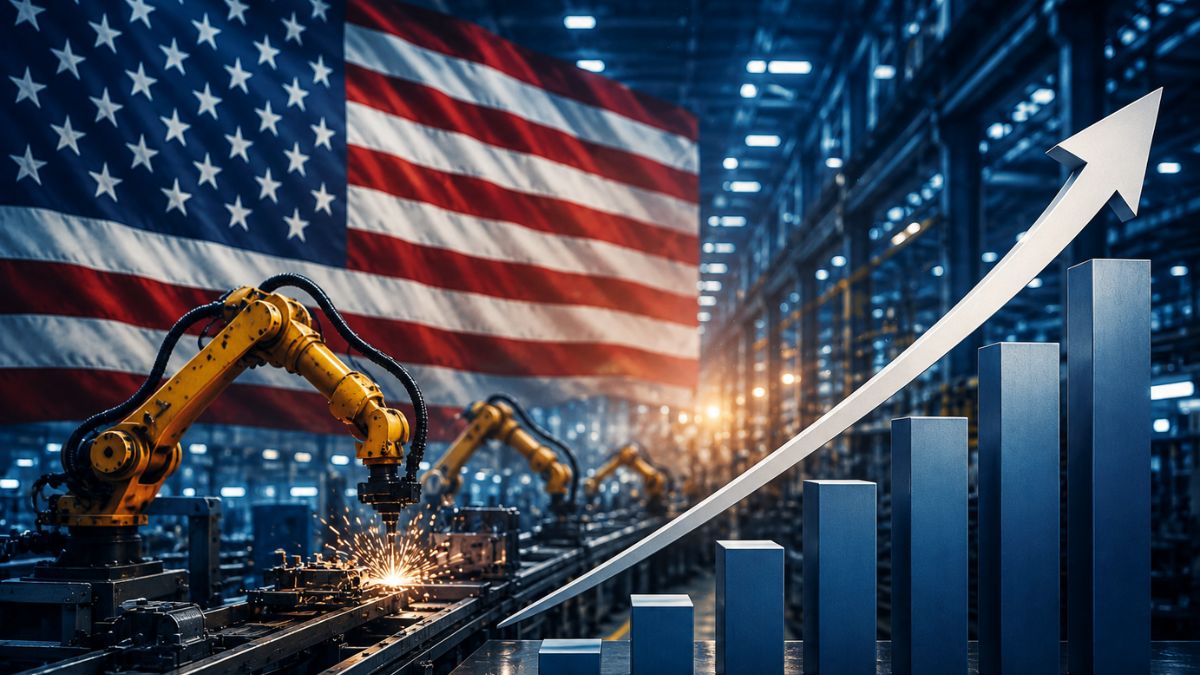
US manufacturing activity grew at its fastest pace in four years in May. The Institute for Supply Management’s manufacturing PMI rose to 54.0, its highest level since May 2022, marking the fifth straight month of expansion. The stronger-than-expected growth suggests US factories are holding up well regardless of higher costs, supply chain disruptions and ongoing economic uncertainty.
AI investment continues to power factory demand
A major reason behind the manufacturing rebound has been the ongoing surge in artificial intelligence-related spending. Demand tied to data centres, semiconductor infrastructure and advanced technology equipment has helped support production activity and order books across the industrial sector.
The AI investment cycle has emerged as a crucial pillar for manufacturing growth, providing companies with a steady stream of business even as other parts of the economy contend with elevated borrowing costs and inflationary pressures.
Businesses rush to get ahead of rising prices
Part of May’s strength appears to indicate a growing effort by businesses to secure supplies before costs climb further. New orders rose at the fastest pace in four months, however backlogs also increased, which indicates that customers are placing orders earlier than usual.
The rush comes as companies brace for higher input costs linked to disruptions in global trade flows and commodity markets. Manufacturers appear increasingly focused on building inventories and securing materials before additional price increases filter through supply chains.
Iran conflict is reshaping global supply chains
The ongoing US-Israel conflict with Iran has become a significant factor behind the manufacturing surge. The effective closure of the Strait of Hormuz has disrupted one of the world’s most critical shipping routes, complicating the movement of energy products and industrial commodities.
The fallout has extended well beyond oil markets. Producers are facing higher costs for materials including energy, aluminium and fertilisers, while longer shipping times have added fresh strain to already stretched supply chains.
Costs remain elevated
Although factory input inflation eased modestly in May, cost pressures remain intense by historical standards. Manufacturers continue to report sharp increases in material expenses, showing that the combined impact of geopolitical disruptions and higher commodity prices.
The persistence of elevated input costs raises the risk that producers will eventually pass more of those increases on to consumers, adding to broader inflation concerns across the economy.
Recent inflation data already show price growth running at its fastest pace in several years, reinforcing expectations that interest rates could remain elevated for an extended period.
Manufacturers have also benefited from a more stable trade environment compared with the uncertainty that dominated previous years. However, supply chains remain under pressure, businesses are operating with greater clarity around trade rules and industrial policy. More favourable tax provisions and ongoing efforts to strengthen domestic manufacturing have further supported investment decisions, helping sustain the sector’s recovery.
Hiring remains the missing piece
Regardless of the stronger production and rising orders, factory hiring has yet to follow suit. Employment in the manufacturing sector remained in contraction territory during May, extending a prolonged period of workforce restraint.
Many companies continue to manage labour costs through attrition, selective hiring and workforce reductions rather than expanding payrolls aggressively. The disconnect highlights a manufacturing recovery that is being driven primarily by productivity, investment and demand growth rather than broad-based job creation.