



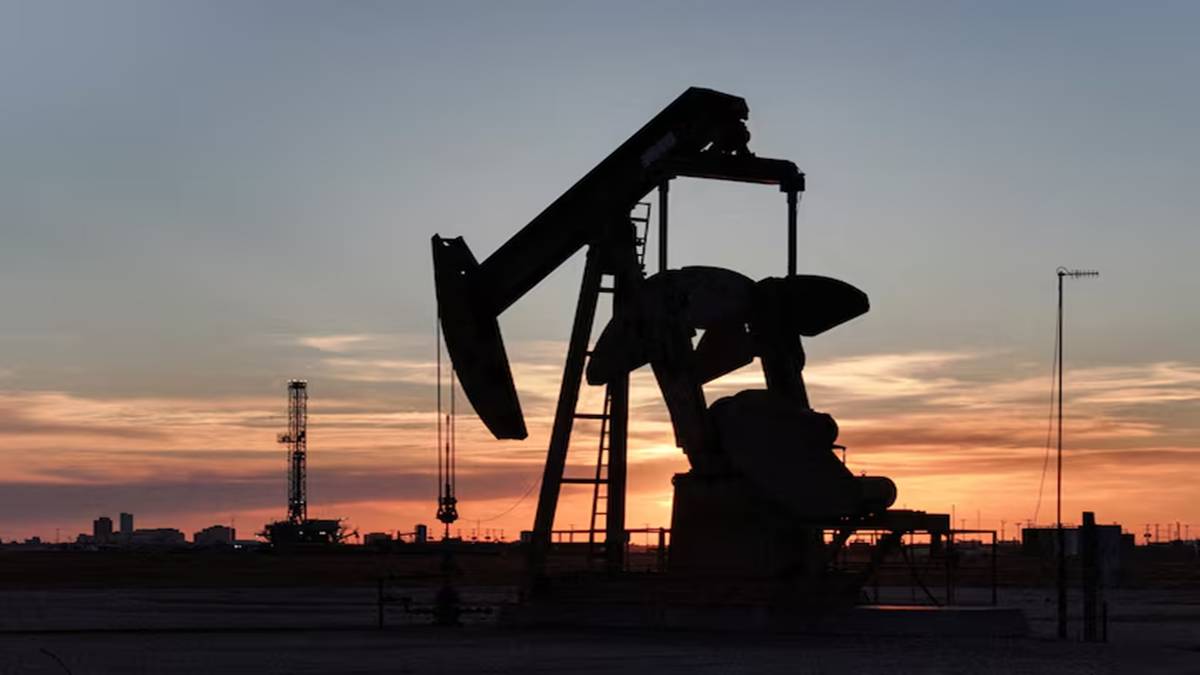
Oil prices saw a sharp fall on Friday, dropping by nearly 9 per cent, as tensions in the Middle East showed signs of easing. The decline came after Iran confirmed that the Strait of Hormuz would remain open for commercial vessels during the ongoing ceasefire period linked to the Israel-Lebanon conflict.
U.S. crude oil fell 12%. It traded near $83 per barrel. International Brent crude dropped more than 11%. It traded around $88 per barrel. US West Texas Intermediate crude also dropped steeply, losing $8.87, or 9.4 per cent, to trade at $85.82 per barrel, reported Reuters. Heating oil futures fell 13%. Traders use heating oil as a proxy for jet fuel. Wholesale RBOB gas futures fell 7%.
The Strait of Hormuz plays a key role in global oil supply. A large portion of the world’s crude passes through this narrow waterway. Any threat to its operations usually pushes oil prices higher. However, Iran’s latest move reduced fears of disruption and eased pressure on energy markets.
Iran FM’s major announcement
The decline in oil prices followed an announcement from Iran’s Foreign Minister Abbas Araqchi. In a post on X, he said, “In line with the ceasefire in Lebanon, the passage for all commercial vessels through Strait of Hormuz is declared completely open for the remaining period of ceasefire.” He added that ships can move along coordinated routes already announced by Iran’s Ports and Maritime Organisation.
This came after a ceasefire agreement between Israel and Lebanon. The truce, announced by US President Donald Trump, took effect on Thursday evening.
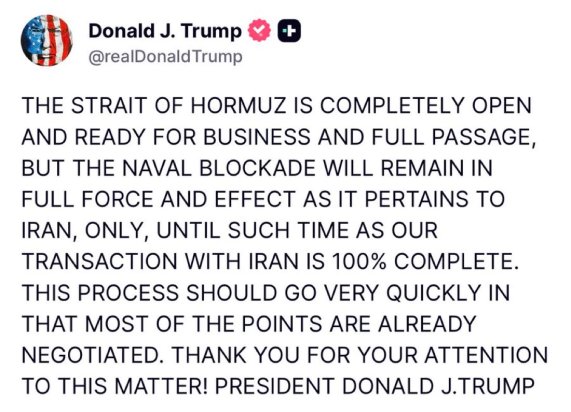
Trump welcomed Iran’s move and said, “The Strait of Iran is fully open and ready for full passage.” He said that the Iran-related tensions “should be ending pretty soon.”
Meanwhile, Trump also announced US blockade of Iran will remain ‘in full force’ until peace deal. In a post on Truth Social, he stated, “The Strait of Hormuz is completely open and ready for business and full passage, but the naval blockade will remain in full force and effect as it pertains to Iran, only, until such time as our transaction with Iran is 100% complete. This process should go very quickly in that most of the points are already negotiated. Thank you for your attention to this matter!”
Impact on global markets
Global financial markets responded positively to the developments. Futures linked to the Dow Jones Industrial Average jumped by 524 points, or 1.1 per cent. S&P 500 futures rose by 0.8 per cent, while Nasdaq 100 futures gained 0.9 per cent.
Over the week, the Dow has risen by 1.4 per cent, while the S&P 500 and Nasdaq have gained 3.3 per cent and 5.2 per cent, reported the Wall Street Journal.
Disclaimer: This article provides factual analysis only and is not, and should not be construed as, an offer, solicitation, or recommendation to buy or sell securities. Investors must conduct their own independent due diligence and seek advice from a registered financial advisor in the respective jurisdiction.