



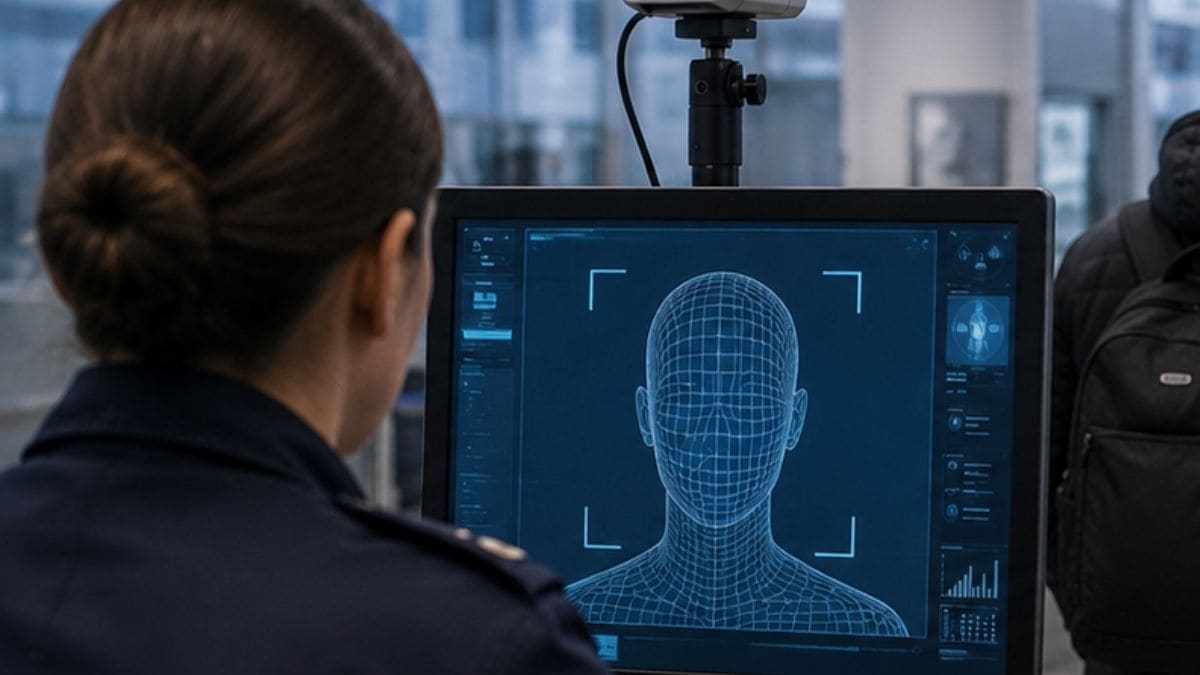
UK government will deploy a new Artificial Intelligence (AI) facial age estimation tool at the country’s borders next year to detect adult migrants who claim to be children while seeking asylum. Officials say the technology will help stop misuse of the asylum system and protect resources meant for vulnerable minors. Human rights groups and social workers, however, have raised serious concerns over the reliability of the technology and the risks of wrongful decisions.
The Home Office awarded a £322,000 contract to Harlow-based IT supplier Akhter Computers Ltd to develop and test the software over the next three years, reported BBC News. The system will estimate a person’s age by studying photographs taken at border processing centres. The technology is expected to enter live trials in 2027 at Western Jet Foil in Dover, one of the main centres processing migrants arriving across the English Channel.
The move comes after years of pressure on the UK asylum system due to rising migrant crossings in small boats. According to government data, 111,084 people claimed asylum in the UK in the year ending June 2025. That number marked a 14% rise from the previous year, reported BBC.
According to BBC report, officials say age disputes have become a major challenge at the border. In the year ending March 2026, more than 6,400 migrants who claimed to be children underwent age assessments. The Home Office said 43% of them were later found to be adults.
Unaccompanied child migrants receive special legal protections in Britain. Local councils place them in the care system instead of asylum hotels or detention-style accommodation. Children also receive education, welfare support, and legal safeguards that may improve their chances of remaining in the country.
Government officials argue that false age claims put pressure on already stretched services and can create safeguarding risks for real children housed in the same facilities as adults.
Why does UK want AI at border?
The government first announced plans to use AI-based facial age estimation technology last year. Since then, the Home Office tested the software using photographs from different ethnic groups and genders, including images from asylum seekers already within the immigration system.
Officials say the results from early testing showed “promising performance and accuracy,” although the technology has not yet been used to make real-life asylum decisions.
Minister for Border Security and Asylum, Alex Norris, defended the plan and said the government wants to stop abuse of the asylum process, reported BBC.
“Adult migrants making false age claims have exploited the system and diverted vital support away from children at risk,” Norris said.
“That is why we are rolling out AI technology to put a stop to this, ensuring those who game the system are identified, detained and removed without delay, and those who deserve support and protection are given it,” he added.
At present, border officers estimate a migrant’s age through interviews, document checks, and physical appearance. Social workers conduct detailed assessments if officials dispute a migrant’s claimed age. The new AI tool will act as an extra layer in that process rather than replace human assessments entirely, reported BBC.
In 2025, the government concluded that facial age estimation was the most cost-effective method available for age checks. Officials say that similar technology already operates in retail stores and bars for age verification.
Could technology put child migrants at risk?
Human rights organisations and social work groups fear the technology could wrongly classify children as adults, leaving vulnerable minors without legal protections. According to BBC report citing a report by the UK government’s independent immigration inspector, in 2025, cases were found in which adults entered the child protection system and cases where actual children were mistakenly treated as adults.
The report warned that no “foolproof” age assessment system exists. It added that errors remain “a cause for concern, especially where a child is denied the rights and protections to which they are entitled.”
The British Association of Social Workers (BASW) opposed the use of AI in such sensitive cases. Professor Sam Baron, interim chief executive of BASW, said trained social workers should remain responsible for age assessments, reported BBC.
“Assessing the ages of migrants is a complex process which social workers are best placed to do,” Baron said. “This important task should not be open to shortcuts through artificial intelligence, especially as the pitfalls of getting it wrong can lead to major safeguarding risks,” he added.
Human Rights Watch also criticised the plan and called for the scheme to be scrapped entirely. Anna Bacciarelli, senior AI researcher at the organisation, said governments should not rely on technology that lacks long-term evidence in refugee processing, reported BBC.
“The government needs to scrap this deeply flawed approach to assessing child refugees,” Bacciarelli said. “Experimenting with unproven technology to determine whether or not a child should be granted protections they desperately need and are legally entitled to is cruel and unconscionable,” she added.
Bacciarelli also questioned whether facial age estimation technology works accurately in real-life refugee situations. She said the technology has mainly been used in shops and bars rather than asylum centres.