



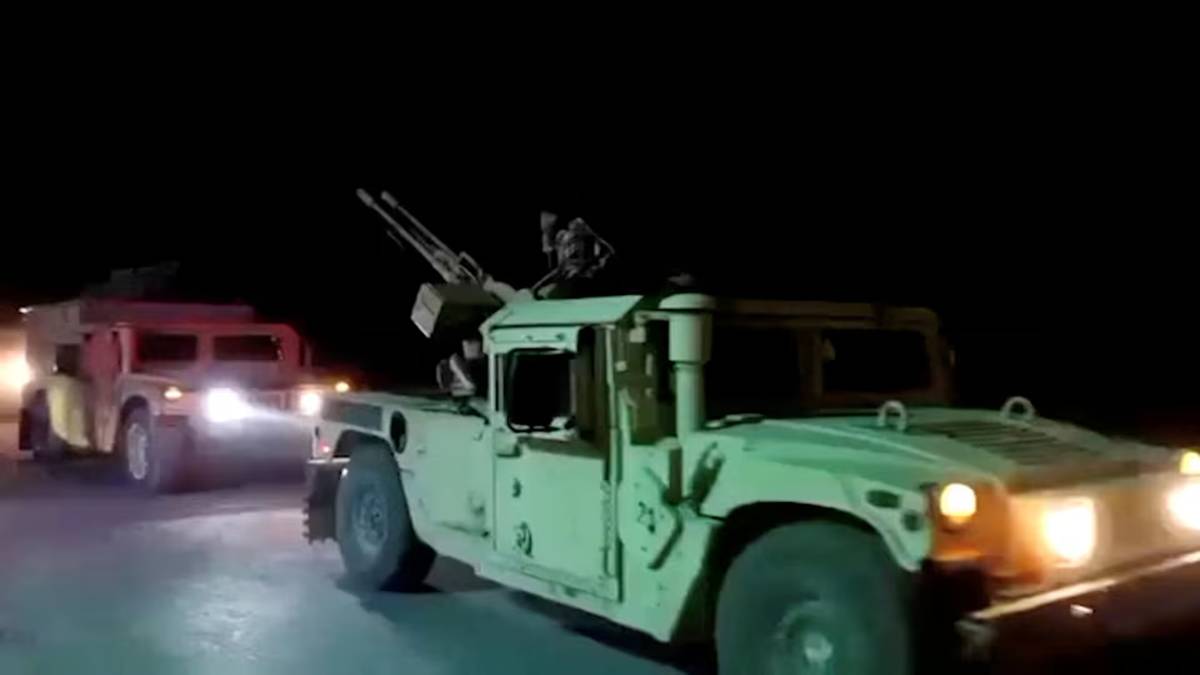
Months after Operation Sindoor, Pakistan is at war yet again. This time with Afghanistan‘s Taliban-led government.
Pakistan launched Operation Ghazab lil-Haq in the early hours of Friday, after the two countries had been engaged in months of clashing intermittently over what Pakistan calls attacks on its soil. Defence Minister has now declared an “open war” after the cross-border fighting.
Pakistan says the airstrikes were a response to unprovoked firing on multiple locations and targeted military installations in Kabul, Kandahar, and Paktia. Dawn further added that the strikes destroyed two brigade headquarters in Kabul, a corps headquarter and an ammunition depot in Kandahar.
Afghanistan has claimed to have killed 55 Pakistani soldiers in what it described as revenge for Pakistani airstrikes. It has also taken control of 19 Pakistani military positions during a crucial operation near the Durand Line.
Meanwhile, Pakistani state media has reported that its Air Force has destroyed an ammunition depot in the Nangarhar province of Afghanistan.
Heavy cross border firing along Durand Line
Heavy fighting is being reported from across several sectors in Khyber Pakhtunkhwa, including Chitral, Khyber, Mohmand, Kurram, and Bajaur, according to a Dawn report.
“Heavy retaliatory offensive operations” were conducted at various locations along Afghanistan-Pakistan border, as per Hamdullah Fitrat, the Taliban government’s deputy spokesperson.
Fitrat then also reported significant seizures and gains on the battlefield. “Nineteen outposts and one headquarters have been taken so far; four outposts were vacated and abandoned and the positions were totally destroyed by fire. There have been upto fifty-five Pakistani soldiers killed, 23 of them have been taken alive and placed in the Mujahideen’s hands. One tank has been destroyed, dozens of light and heavy weapons have been taken as loot, and one International Harvester truck has been taken prisoner. Operations for retaliatory offensives are still in progress,” the post mentioned.
The major headquarters of the Pakistani regime located at Anzar Sar, under the Babrak post in the Alisher–Terezi district of Khost Province, has just been captured. Dozens of soldiers are killed and wounded, and a large quantity of weapons has fallen into the hands of the Afghan…
— Hamdullah Fitratحمدالله فطرت (@FitratHamd) February 26, 2026
“The major headquarters of the Pakistani regime located at Anzar Sar, under the Babrak post in the Alisher-Terezi district of Khost province has been captured,” Fitrat stated in another post.
What Pakistan said about why the attacks were launched?
Pakistan has rejected Taliban’s account and has stated that it was the Afghan side that initiated the conflict. According to a report by Reuters, Pakistani officials reported that fighting lasted for over two hours before Pakistani troops reacted to Afghan firing on installations in the country’s northwest.
According to Pakistan’s Information Ministry, forces provided an “immediate and effective response to “unprovoked fire” at several areas, and the country would take all necessary precautions to safeguard its population and territorial integrity, as reported by CNN.
Pakistan has defended the strikes by claiming that these attacks on Afghanistan are a response to recent relentless violence in the country.
On February 6, a suicide bomber killed at least 36 people. Days later, an explosives-laden vehicle killed 11 soldiers and a child in Bajaur. A demarche was also issued to the Afghan deputy head of mission in Islamabad after the Bajaur incident.
But it was again followed by a suicide attack on a security convoy in Bannu, killing two soldiers.
Those attacks, Pakistan claims led to launching its first round of strikes inside Afghan territory, targeting what it claimed were hideouts and safe havens populated by armed groups, particularly the Tehreek-e-Taliban Pakistan, or Pakistan Taliban.
The Taliban government disputes Islamabad’s claim that TTP leaders utilise Afghan territory as a safe haven from which to organise strikes inside Pakistan. The Taliban have warned that additional strikes may result in more retaliation and have justified the most recent attack as a reaction to “repeated” Pakistani attacks.
What is Operation Ghazab Lil Haq?
Operation ‘Ghazab Lil Haq’ is the name Pakistan has given to its retaliatory military action following the latest Afghanistan–Pakistan border clashes. Pakistan initiated the operation after Afghan Taliban attacks along the Durand Line, carrying out counter-operations in several border areas and targeting Taliban positions. The operation represents Pakistan’s military response to the recent escalation of cross-border hostilities.
Why Durand Line continues to become a conflict area
Tension has long existed along the border itself. As per a Reuters report, the Durand Line is over 2,600 km (1,615 miles) long and passes through sensitive border districts and tough terrain. It has frequently witnessed clashes over posts, shooting events and conflicting reports of cross-border activity. Even when there is a ceasefire, the distrust can return during militant attacks, airstrikes, or claims of incursions. The current escalation comes after days of hostilities and threatens a fragile ceasefire that followed deadly clashes last October.