



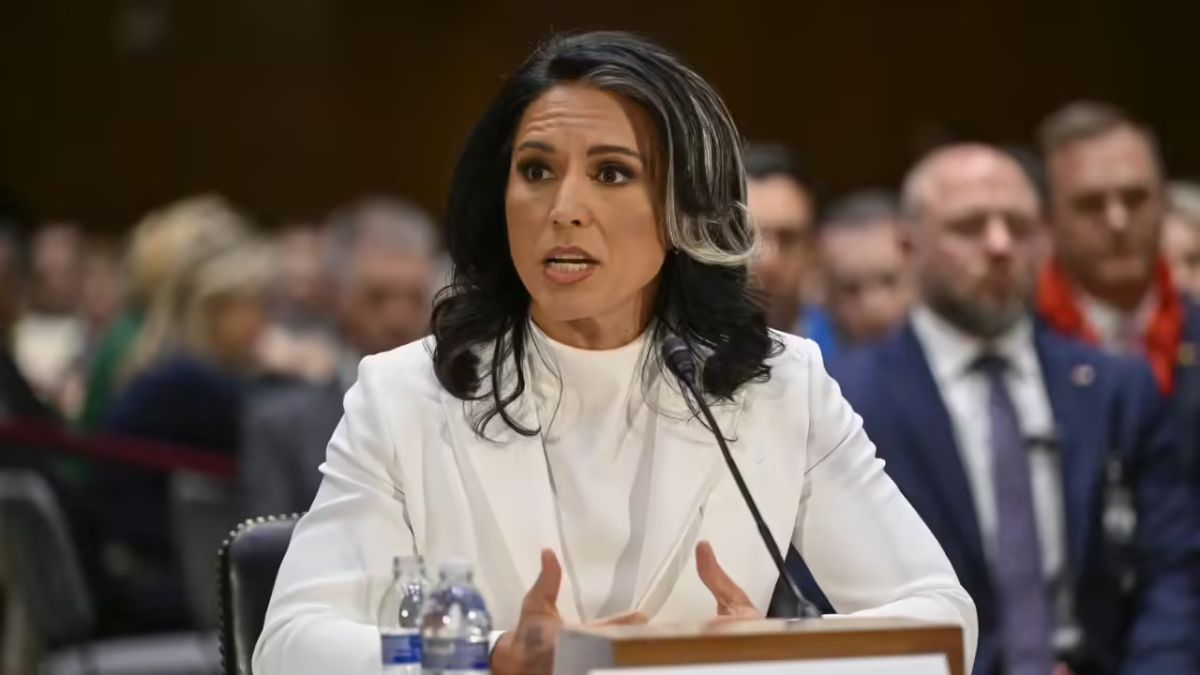
In a notable development, the United States Director of National Intelligence (DNI), Tulsi Gabbard, has identified Pakistan as one of the most pressing nuclear threats to American interests.
Gabbard’s remarks underscored a significant shift in the Pentagon’s threat perception, especially following the systematic ‘degradation’ of Iran’s nuclear and military infrastructure over the last year.
The shift from Tehran to Islamabad
Gabbard’s assessment comes at a time when the “Iranian threat,” long the centerpiece of U.S. Middle Eastern policy appears to be something that’s now already dealt with. According to the DNI, the Iranian regime remains intact but has been rendered “largely degraded” following a series of aggressive U.S. military operations.
“Iran’s nuclear enrichment program was effectively ‘obliterated’ during the precision strikes carried out in June 2025,” Gabbard told the US Senate.
She added that while Tehran and its proxies maintain the capability to harass U.S. and allied interests in the Middle East, the intelligence community has not observed any significant attempts by the regime to restore its enrichment capacity since the strikes.
Despite this, she warned that Iran could gradually work to re-establish its military strength over time.
In a broader security overview, Gabbard identified Al-Qaeda and ISIS as the most significant threats to U.S. interests overseas, particularly in parts of Africa, the Middle East, and South Asia.
It is here that she also highlighted some growing global nuclear risks, naming Russia, China, North Korea, and Pakistan as the most pressing nuclear threats facing the United States.
Gabbard noted that as Iran’s nuclear teeth were pulled, Pakistan’s evolving arsenal and its historical instability have elevated it to the top tier of the U.S. nuclear watch list. In her address, Gabbard also highlighted that North Korea is strengthening its partnerships with Russia and China, a development she suggested could complicate global security dynamics.
Political context and resignations
Meanwhile, the White House reaffirmed its support for Gabbard. Press Secretary Karoline Leavitt told reporters on Wednesday that US President Donald Trump has “full confidence” in the intelligence chief.
The statement came after a senior security official resigned in connection with the ongoing conflict involving Iran. “Iran’s government has suffered heavy blows in the US-Israeli military campaign but that it remains “intact,” she added.
Despite the internal tremors, Gabbard’s message remained firm: if the Iranian regime survives its current state of degradation, it will likely embark on a “years-long effort” to rebuild its missile and drone capabilities. In the interim, however, the U.S. is keeping a sharp eye on Islamabad.
“The threat landscape is changing,” Gabbard concluded. “With Iran’s capabilities currently suppressed, the focus must shift to ensure that other nuclear-armed nations, particularly those with a history of state-sponsored militancy like Pakistan, do not fill the void or pose a direct risk to the homeland.”