



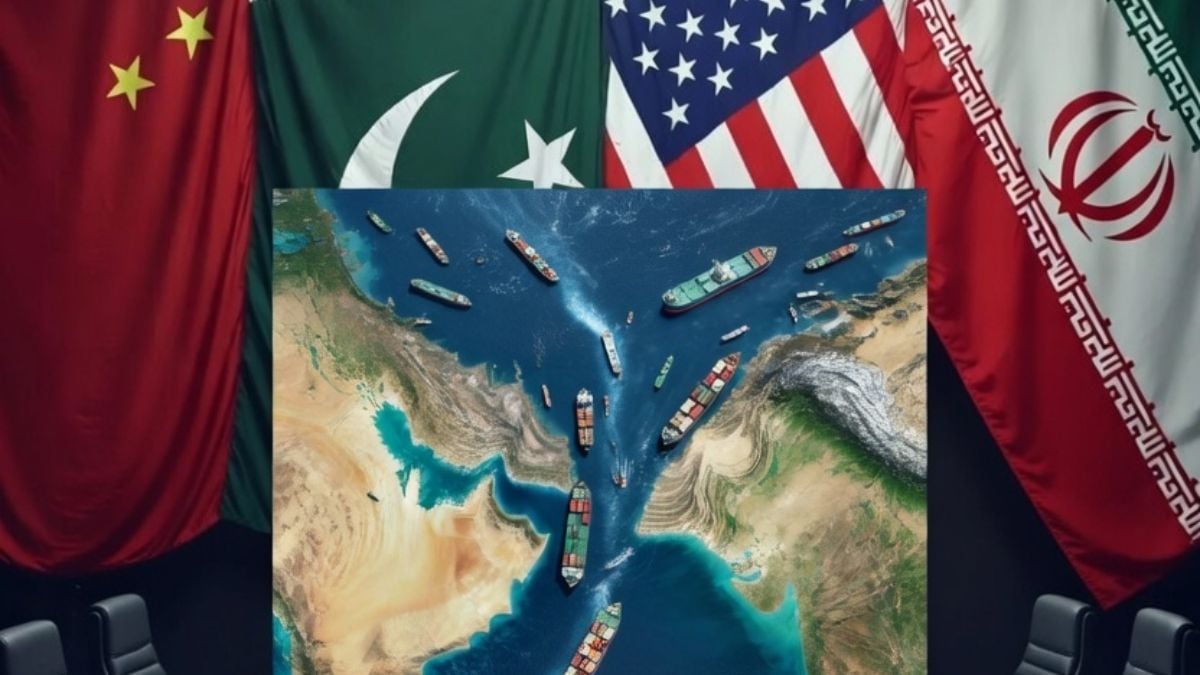
In the tense hours before a possible escalation that President Donald Trump warned could “wipe out” an entire civilisation, it wasn’t just Pakistan’s mediation that made the difference. According to The New York Times, a decisive last-minute push by China, Iran’s closest ally and biggest trading partner, was key in persuading Tehran to agree to a two-week ceasefire.
Three unnamed Iranian officials told the Times that Iran only accepted Pakistan’s proposal after “frantic diplomatic efforts by Pakistan and last-minute intervention by China,” which urged the Islamic Republic “to show flexibility and defuse tensions.”
According to Bloomberg, the deal was reached just 90 minutes before Trump’s self-imposed deadline for Iran to reopen the Strait of Hormuz or face “devastating consequences.”
Trump acknowledges China’s role in Iran ceasefire
Trump himself seemed to confirm Beijing’s influence. According to Bloomberg, in a call with Agence France-Presse shortly after announcing the truce, he was asked if China had helped bring Iran to the negotiating table. “I hear yes,” he replied.
Bloomberg reported that the ceasefire followed direct talks between Trump and Pakistan’s army chief, Field Marshal Asim Munir, a figure trusted by both Washington and Tehran. But the Iranian officials speaking to the Times pointed to China as the final persuader in the 11th hour.
Beijing’s last-minute diplomacy sealed the US-Iran ceasefire
China’s involvement wasn’t completely unexpected. For weeks, Beijing had been speaking in favour of de-escalation. Just last week, China and Pakistan jointly issued a five-point plan calling for an immediate ceasefire and safe passage through the Strait of Hormuz, the vital waterway Iran had effectively blocked.
According to Beijing’s records, Chinese Foreign Minister Wang Yi made 26 phone calls to key officials, including those in Iran, Israel, Russia, and Gulf nations.
According to the Associated Press, Chinese officials reportedly worked through intermediaries, including Pakistan, Turkey, and Egypt, to influence Tehran during the talks. Sources told the AP that Chinese officials were in contact with Iranian authorities as negotiations developed.
Why did China intervene?
Analysts told Bloomberg think that China’s leverage came from both economics and strategy. As Iran’s largest buyer of oil and a major investor in the region, China had a strong interest in keeping the strait open. A month-long closure threatened not only global energy markets but also China’s own supply chains.
Meanwhile, at the United Nations, China, along with Russia, vetoed a resolution that would have allowed force to reopen the strait. Whether China will have a bigger role in the full talks planned in Islamabad is still unclear. One analyst told Bloomberg that “some” details will likely show China and other countries had larger behind-the-scenes roles than initially visible.
What China says about peace
The Chinese foreign ministry has not issued an official statement on its role, but the Chinese Embassy in Washington said that Beijing has been working “tirelessly for peace” since the start of the war.
Mao Ning, a spokesperson for the ministry, said, “All parties need to demonstrate sincerity and quickly end this war that should not have happened in the first place.” She added that China was “deeply concerned” about the conflict’s impact on the global economy and energy security.
What comes next
Iran is treating the two-week pause as a win. Tehran says the United States has agreed to core points of its 10-point peace plan, including guarantees against future attacks and recognition of Iran’s control over the strait. Iran’s Foreign Minister Abbas Araghchi and its National Security Council credited the “tireless efforts” of Pakistani mediators, without openly naming China.