



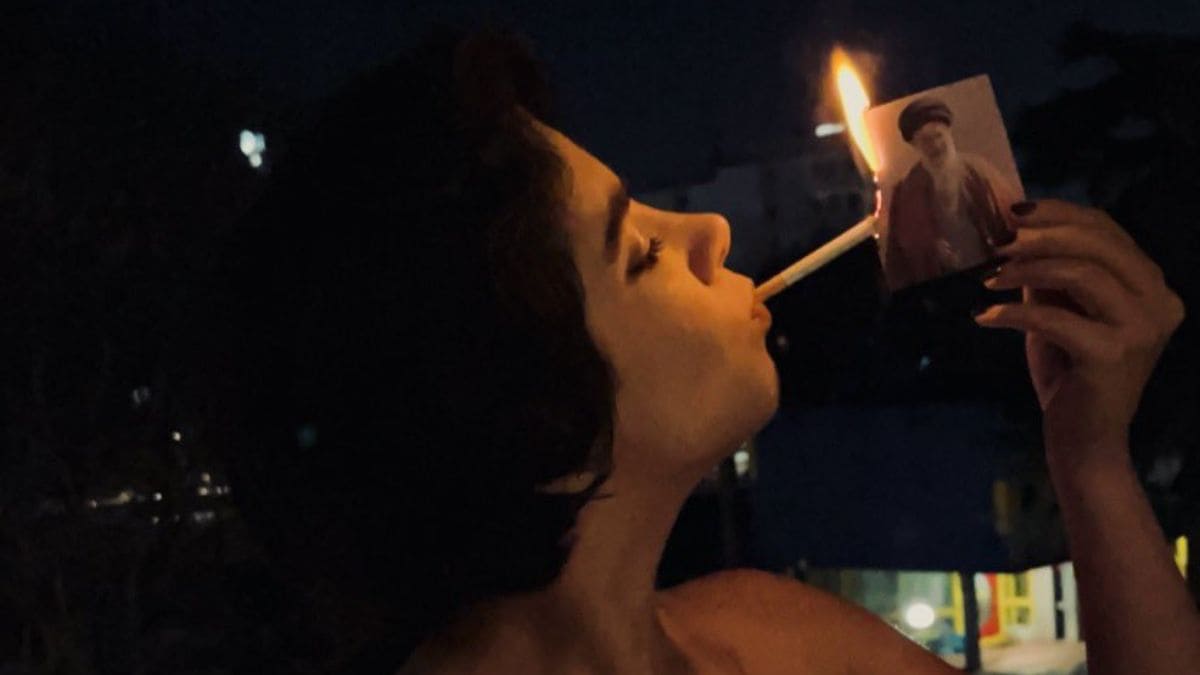
Widespread protests in Iran against the regime of Ayatollah Ali Khamenei have captivated global attention not just because of the political importance of the protest but rather because of their creative and symbolic way of agitation.
Over the past week, social media platforms have been flooded with visuals of Iranian women lighting their cigarettes from burning photographs of Supreme Leader Ayatollah Ali Khamenei.
These photographs, which have been widely shared on platforms like X and Instagram, have now emerged as one of the most vivid symbols of the nation’s widening anti-government protests that erupted in late December over the state of the Iranian economy, and have intensified into January 2026.
The trend seen in Tehran to other major cities is not merely a gesture of rebellion but an act of defiance against Iran’s political order and social restrictions.
The act of defiance puts agitators under direct radar of Iranian leadership, who, on previous occassions reportedly used force to quell pulic resentment. Interestingly, this is not the first time Iranian people have lit cigarettes with burning photographs of Khammeni as a symbol of protest.
Previously, in October 2025 a young Iranian activist named Omid Sarlak posted a video of himself burning a portrait of Supreme Leader Khamenei on social media, an act that is legally dangerous and politically provocative in Iran.
As per reports from local media outlets in Iran, hours after posting the video, Sarlak was found dead inside his car with a gunshot wound, a case authorities described as suicide. Sarlak’s family and many activists have rejected that explanation and called it suspicious.
At his funeral, mourners openly chanted “Death to Khamenei”, turning his death into a political flashpoint and a rallying symbol for opponents of the regime.
Burning the supreme leader’s image is a serious offence under Iranian law, and smoking for women, still socially discouraged despite modernising trends adds another layer of taboo to the act.
What are the protests in Iran all about?
The protests that began on December 28, 2025, were initially fuelled by economic hardship, record-high inflation (48.60% as of October 2025), rising prices, and the collapse of the national currency. The falling value of the rial has reduced purchasing power and added pressure to daily life for ordinary citizens.
As discontent spread, demonstrations morphed into broader anti-regime agitation calling for systemic change rather than incremental reform.
Slogans like “Death to Khamenei” and “Pahlavi will return” – Iran’s former Crown Prince Reza Pahlavi- have reverberated across cities, including Tehran’s Grand Bazaar and other commercial hubs.
Women stand at the forefront
Iranian women have been highly visible in these demonstrations as visuals of them lighting cigarettes from burning photographs of Khammeni takes over the internet. In the current wave, this act of resistance by Iranian women has become a powerful cultural motif expressing their disgust and frustration with Khamenei‘s regime and gendered social restrictions enforced in the state.
Previously women in Iran had taken to streets at such a scale in 2022 for a widescale protest against the death of Mahsa Amini. Mahsa Amini in morality police custody — an event that sparked months of unrest and placed gender rights at the forefront of the movement.
Amini was picked up by the police and brutally beaten in custody by state officials for allegedly violating the country’s mandatory hijab law while visiting Tehran from her hometown of Saqqez.
Crackdown and casualties
Iranian authorities have responded with force. Security personnel — including Iran’s Revolutionary Guards have engaged protesters in multiple cities, and human rights organisations report dozens of deaths and thousands of arrests.
Reports also speak of internet blackouts and communications shutdowns aimed at suppressing protest coordination and obscuring the true scope of state violence. The US-based Human Rights Activists News Agency (HRANA) reported that at least 34 protesters and four members of the security forces were killed during the recent unrest. The agency also said around 2,200 people had been arrested.
Internationally, the unrest has drawn attention and condemnation, with foreign leaders expressing concern over human rights violations and some offering diplomatic support for peaceful expression.