




For most tech entrepreneurs, a multi-billion-dollar exit is the ultimate finish line. But for Indian-origin techie Jyoti Bansal, a 2017 buyout became a life-altering turning point that generated staggering wealth for his team, while leaving him in an unexpected personal crisis.
At the time, AppDynamics was just days away from going public. The company had built huge excitement around its upcoming IPO, and many expected it to become one of Silicon Valley’s major success stories.
For Bansal, who founded the company and served as its chairman, either option would have made him extremely wealthy. However, in an interview with CNBC at the time, he revealed one choice stood out because it could immediately change the lives of many employees as well.
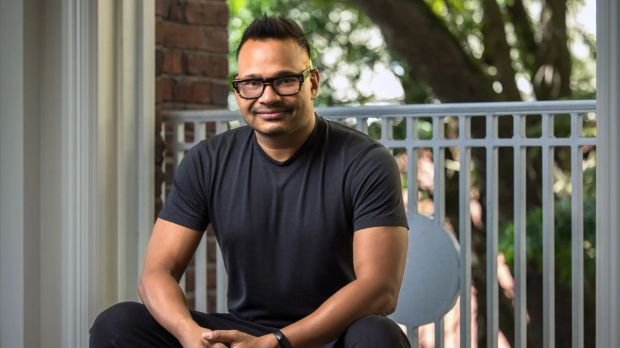
A billion-dollar deal that changed hundreds of lives
Bansal later called it “the hardest decision” of his career. At that moment, he had two paths in front of him. One was to take AppDynamics public, which could have brought higher rewards but also carried market risk and uncertainty. The other was to accept Cisco’s buyout, which guaranteed a fixed outcome for everyone involved.
He said the decision was less about money and more about people. “When weighing the options, it wasn’t about me. The biggest factor was our employees. Reaching a similar valuation through the stock market would have required another three or four years of flawless execution,” Bansal told CNBC Make It.
He compared Cisco’s offer with what AppDynamics might achieve after going public and estimated that reaching a market value of $3.7 billion through the stock market would likely have taken another “three, four years of great execution.”
“That means three to four years of risk that we … reduced for all of the employees there a significant impact,” Bansal told CNBC. In the end, he decided to accept Cisco’s offer.
400 employees became millionaires
The result was extraordinary. According to a spokesperson for Bansal, around 400 employees suddenly found their company shares worth at least $1 million after the acquisition. Many earned even more. “We had dozens of employees with $5 million-plus outcomes. These are life-changing outcomes,” Bansal said.
For many workers, the deal completely transformed their future overnight. Employees who had spent years building the startup suddenly had enough money to buy homes, purchase cars, travel, or simply live with the financial security they had never imagined before.
‘I regretted the decision for some time’
Speaking to CNBC Make It, Bansal said he regretted the decision for some time because he believed AppDynamics could have continued growing independently. After spending years running the company, he suddenly felt directionless without a startup to lead.
Despite those feelings, he says he still believes selling the company was the right move based on the information available at the time. According to an SEC filing, Bansal owned more than 14% of AppDynamics before the sale.
Back to building again
Like many entrepreneurs, Bansal did not stay away from startups for long. Today, he is the CEO and co-founder of two more software companies, Traceable and Harness. His company, Harness, reached a valuation of $3.7 billion in 2022, matching the value of AppDynamics when Cisco bought it.
How a boy from Rajasthan built a billion-dollar tech empire
Long before he became a billionaire tech founder in Silicon Valley, Jyoti Bansal was helping his father run a farming machinery business in a small town in Rajasthan.
Today, the Indian-origin entrepreneur is globally known for his software company that uses artificial intelligence to automate the complicated work of making sure computer code is secure and follows regulations. But his journey to the top of the tech world began far away from California’s startup scene.
Bansal grew up in Rajasthan, where he spent part of his childhood assisting his father in the family’s machinery business. Even at a young age, he was drawn toward technology and problem-solving.
His hard work eventually earned him a place at the prestigious Indian Institute of Technology (IIT) Delhi, where he studied computer engineering.
According to Forbes, Bansal was deeply inspired after meeting Microsoft co-founder Bill Gates, who visited IIT Delhi while Bansal was a student.
At the age of 21, Bansal moved to the United States to build a career in technology. Like many immigrants arriving in Silicon Valley, he started from scratch. For seven years, he worked as an engineer at different startups while living on an H1-B visa. He later received his green card and continued climbing through the tech industry.
Bansal is now listed on Forbes’ 2026 Billionaires ranking. His current net worth, according to Forbes, stands at $2.3 bn.
Disclaimer: Net worth figures are based on publicly available estimates, company valuations, funding data, and media reports. These numbers may fluctuate over time depending on market conditions, private holdings, investments, and other financial factors.