



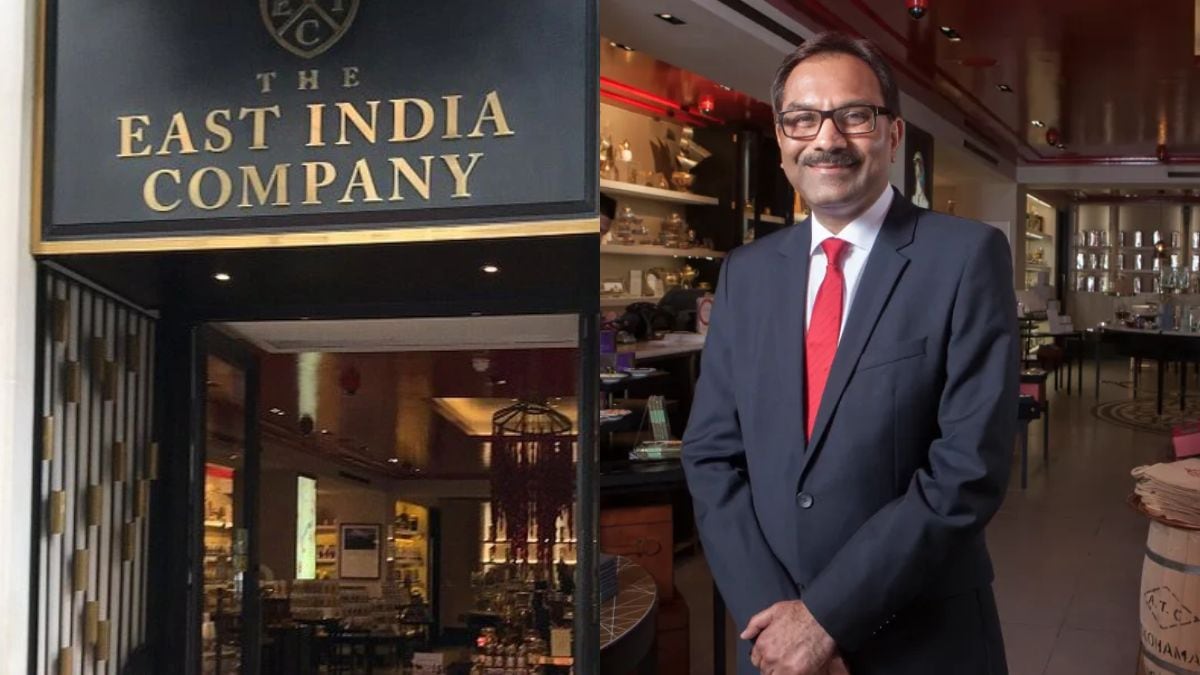
More than 160 years after it first disappeared, the East India Company has closed its doors for a second time. The first time it was dissolved, it followed the 1857 Indian rebellion, a turning point that ended the company’s rule in India. The second time has happened far more quietly. After being brought back to life in London as a luxury retailer, the company has now gone into liquidation.
Who is the current owner of East India Company
In the early 2000s, Indian entrepreneur Sanjiv Mehta bought the rights to the East India Company from a group of shareholders who had tried to revive it as a wholesale business. In 2010, Mehta reopened it as a luxury food and drink brand in London. He launched a 2,000 sq ft store in Mayfair, selling teas, confectionery and other high-end products. The goods were similar to what shoppers might find at Fortnum & Mason.
Speaking about his decision to revive the brand, Mehta said he saw it as reclaiming something for India. “The fact that an Indian now owns the East India Company means that the negative has become a positive,” he told The Guardian in 2017. “The historic East India Company built itself on aggression, but today’s East India Company is about compassion.”
According to filings at Companies House, the East India Company Limited appointed liquidators last October. The business owed more than £600,000 to its parent company, East India Company Group, which is registered in the British Virgin Islands. It also owed £193,789 in tax and £163,105 to employees.
Several other connected companies using the East India name, and linked to Mehta, have also been dissolved. The company’s website is no longer working. Its former store at 97 New Bond Street in Mayfair stands empty and is being marketed online by property agency CBRE.
Born into a Gujarati family in Mumbai, Mehta tried to rebrand the East India Company after acquiring it almost a century later. His grandfather, Gafurchand Mehta, lived in Belgium in the 1920s and started a diamond trading business there. After graduating in Mumbai, Mehta attended the Gemological Institute of America in Los Angeles and later joined his father’s diamond business.
In 1989, Mehta left India for London. His father-in-law, Jasubhai Shah, had been selling pharmaceutical products in the Soviet Union, which helped Mehta establish trade there as well in the mid-2000s.
Shutdown of strange-symbolic chapter in British and Indian business history
At its peak, the original East India Company helped reshape global trade, but at a terrible human cost. Its power ended in rebellion and political takeover. Its modern version tried to rewrite that story, turning aggression into “compassion,” as Mehta put it.
In its original form, the East India Company controlled vast parts of India and had its own private army, around 250,000 men by the early 19th century. But its story behind is not only controverisal but also haunting for many. The company faced long-standing accusations of corruption and incompetence. It played a role in the slave trade and has been blamed for policies that worsened devastating famines in India, leading to the deaths of millions.
After the 1857 rebellion, when Indian soldiers rose up against the company’s rule, the British Crown stepped in. The company was absorbed, and its reign came to an end. It left behind a complicated legacy of wealth, violence and global trade that shaped the modern world.
For now, though, the famous name has gone quiet once more. A third comeback seems unlikely.