



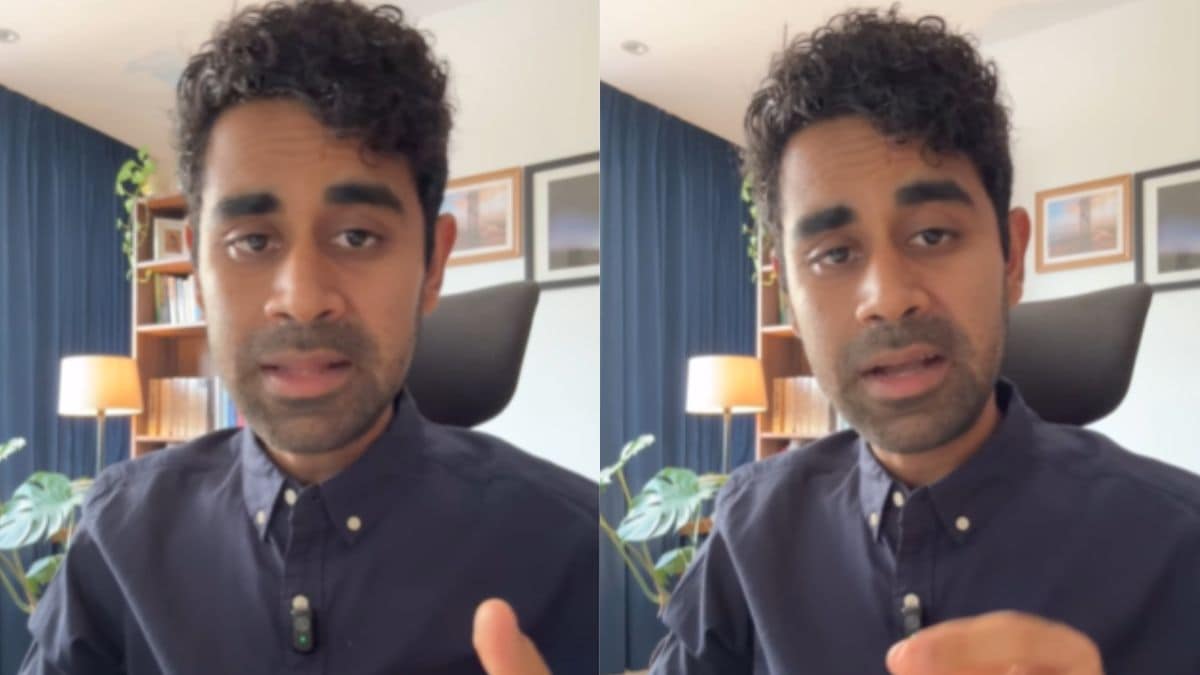
For many Indian students, moving to Canada, getting into a top MBA program, landing a high-paying job, and eventually securing Permanent Residency feels like the final dream package. That’s exactly how life looked for Sahil, too, until one injury changed everything.
In a recent Instagram reel shared on his account, bookedwithsahil, he opens up about why he still chooses to live in India despite holding Canadian permanent residency, and the reason, he says, came down to something most people don’t think about until they need it: healthcare.
Canada PR, Dream Job… and then a neck injury brought me back to India
Sahil, a Toronto-based professional, recalled that he moved to Canada about five years ago for his MBA and got into one of the country’s top business schools. After graduating, he landed a well-paying job and settled into life in Toronto. “I have a permanent residency in Canada, but I still choose to live in India, and I’ll tell you why. 5 years ago, I moved to Canada for my MBA. I got into Canada’s top MBA program, and it was great.”
He continued, “I got a high-paying job, I got a beautiful apartment in the centre of Toronto, and life seemed perfect, but it wasn’t.” But during the final stretch of his MBA, he injured his neck. What followed, he said, slowly changed his entire experience of living abroad. “I was in pain every day, and Canada’s healthcare system was just not helpful,” he shared.
Canada’s broken health-care system
Addressing his followers, Sahil explained that in Canada, the system requires patients to first register with a general physician, who then refers them to a specialist. In his case, that process became the biggest hurdle. “It took me months to find a general doctor,” he said in the reel, adding that even after finding one, he was not referred to a spine specialist.
According to him, the doctor dismissed the severity of his condition, saying he wasn’t in “extreme enough” pain to need specialist care. “He said, Sahil, you’re not crawling on the floor with pain. You see, there is such a huge shortage of doctors in Canada that unless you’re dying in pain, it’s very hard to get good treatment. Anyway, since I wasn’t getting the right care, life became very hard.”
As the condition worsened, Sahil said everyday tasks started becoming difficult, sitting, cooking, and even basic household activities. With limited progress on treatment and increasing discomfort, he eventually made a decision he hadn’t planned for: he returned to India.
‘Healthcare changes everything when you actually need it’
Sahil said that once back home, he was able to access medical care more quickly and had family support around him during recovery. Over the next two years, his condition improved significantly.
Sahil clarified that he does not hate Canada and said there are many positive aspects of the country, but in his experience, healthcare was not one of them. According to him, back in Canada he contacted at least 10 general doctors in Toronto, but all of them refused to register him. He eventually had to rely on family connections to find a doctor, who was located nearly an hour away from where he lived. Sahil added that after returning to India, he underwent an MRI which revealed a slipped disc in his neck. He said some specialists recommended surgery, while others advised physiotherapy as a first step.
He now advises people considering migration to carefully think about how accessible and fast medical care is in the country they are moving to. “So you see, healthcare seems like a small factor until it actually impacts you. So if you’re considering moving countries, please make sure that you have good healthcare wherever you move,” he added.
A bigger problem beyond one story
As of early 2026, Canada is facing massive healthcare shortages. According to the 2025 OurCare survey led by Dr Tara Kiran along with the Canadian Medical Association (CMA), around 5.9 million adults in Canada, roughly one in five people, do not have a regular family doctor, nurse practitioner, or primary care team.
At the same time, despite Canada needing more medical professionals, complex licensing rules mean many foreign-trained doctors are unable to practise, worsening the shortage.
According to Environics Research, at present, around 60% of Canadians believe the healthcare system is either getting worse or already in crisis. That feeling is shaping almost every conversation around medical care in the country. Canada is now slowly bringing in changes like AI tools and team-based healthcare models. These are meant to make the system faster and more efficient.
Disclaimer: The views and opinions expressed in this story are personal to the individual mentioned and do not constitute legal, immigration, or tax advice. Financial Express is not responsible for any decisions made based on this information. For personalized guidance, please consult a qualified immigration attorney or a certified professional advisor.