



Some knocks never leave you. Not because of the numbers. Because of the why.
January 11, 1975. Chepauk. India was trailing behind in the series. Andy Roberts was bowling like thunder wrapped in leather. India were missing their opener, their captain, their hope. And Gundappa Viswanath walked out at 24 for 2, with his team already half-beaten before the fight began.
What happened next was not cricket. It was defiance dressed as cover drives.
The boy who had to stand on the burning deck
Sunil Gavaskar was missing due to finger injury. MAK Pataudi, the captain, was there but not “there”; 41 for 4 tells you everything about where the leadership stood that morning.
Viswanath was 25 years old, a month shy of 26, already carrying the weight of being “the other one.” Not the opener. Not the captain. Just the man who made batting look like breathing.
He had scored 139 at Eden Gardens to win the previous Test. That should have been enough heroism for one series. But sport does not distribute suffering evenly. It dumps it on those who can carry it.
When Ashok Mankad joined him, Viswanath had barely started. The scoreboard said 41 for 4. The dressing room was probably already thinking about the second innings. But Viswanath did something that changed the air in the stadium. He attacked.
Not slogging. Not survival. Pure, uncut aggression against the fastest bowler on earth.
Roberts bowled short on leg stump. Viswanath hooked him for four. Standing on one foot. A ballet dancer in pads. The next ball, pitched up on leg stump, disappeared to long on before Roberts finished his follow-through.
The bowler stopped mid-pitch and watched the ball. Just stood there. Crestfallen. The fastest man in cricket, made to look like he was delivering newspapers.
The crowd of 50,000 at the partly-built MAC stadium stopped complaining about the heat. They had not come for this. They had come hoping for respectability. They were getting art.
When the lone ranger needed a sidekick
Mankad got out. Madan Lal followed him with a duck. 76 for 6. Viswanath was batting at 19. He had batted nearly two hours for those runs. Not because he was slow. Because he was the only wall in a house that was collapsing.
Then came Karsan Ghavri. Then came the tail. And Viswanath did something that separates good players from the ones we remember forever. He calculated. Not runs. Risk.
He knew Bedi and Chandrasekhar would not last against Roberts. He knew he had to farm the strike. He knew he had to score quickly enough to push the total past embarrassment, but carefully enough to not expose the numbers 10 and 11 to the pace bowlers.
The cover drive that took him past 50 , was hit off Roberts. Full ball, off stump, left foot forward, bat coming down in an arc that geometry teachers should use in textbooks. The crack of willow. Lloyd at gully did not move. The ball hit the fence before he could turn his head.
Timing so perfect it sounded like gunfire. Except it was poetry.
Bedi stayed. Added 52 for the ninth wicket. His contribution was 14. Viswanath moved from 43 to 77 during this stand. He was not just batting. He was protecting, shepherding, bullying the bowlers into giving him the strike, then hurting them when they did.
Chandrasekhar came in at 169 for 9. Tea was taken. Viswanath was 83. The crowd cheered every ball the number 11 survived. But they were really watching the scoreboard. 85, 90, 95.
97 not out.
Roberts bowled the fifth ball of his 21st over to Chandrasekhar. Fast. Too fast. The bat came up in protection, not scoring. Edge. Lloyd at gully. The innings ended.
Viswanath stood there. Not out. Three runs short. In almost four hours. Fourteen fours. 97 out of 190. Next highest score: 19.
The crowd rose. Slow clap building to thunder. Lloyd held his team back. Let the small man from Karnataka walk up the steps first. The cheering turned to a buzz.
Arguments started immediately. Was this the greatest innings by an Indian? Raj Singh Dungarpur, selector, told reporters he had never seen better. NS Ramaswami wrote poetry in the Indian Express the next morning.
Viswanath had made 97. But he had saved something bigger. Pride, maybe. Or the idea that India could fight even when everything was lost.
The numbers that lie
Here is the thing about that 97. It looks wrong. Incomplete. Like a story with the last page torn off.
But cricket is not arithmetic. It is context. And the context was this: Roberts took 7 for 64 in that innings. He was unplayable. The pitch was slow, uneven, turning. The West Indies had already ahead in the series. India were broken.
And still.
Viswanath scored at better than a run every three balls while everyone else was surviving at a run every ten. He hit 14 boundaries in an innings where the next best hit two. He faced more than half the balls his team faced. He was the first innings and the last innings and everything in between.
The second innings of the match? He made 46. India won by 100 runs. The spinners did the damage. But the match was saved in the first innings. When Viswanath refused to let his team be humiliated.
That is the difference between statistics and legacy. The 97 is remembered more than many hundreds. Because it was necessary.
What if he had got there?
Three runs. That is all. A nudge to fine leg. A misfield.
But he did not get them. And maybe that is why we still talk about this innings. The incomplete century is more haunting than the completed one. It hangs there. A what-if that never got answered.
Would 100 have made it better? Or would 97 not out be the perfect number? The score that says: I did not need the milestone. I needed to stay. To fight. To be there when everyone else had gone.
Viswanath made 14 Test hundreds. None are remembered like this 97. That tells you something about cricket. About sport. About us.
We do not remember the easy ones. We remember the afternoons where one man decided that losing was not acceptable today. Even if the match was already half-lost. Even if the series was gone. Even if the scoreboard said 41 for 4 and the fast bowler was laughing.
The photograph and the memory
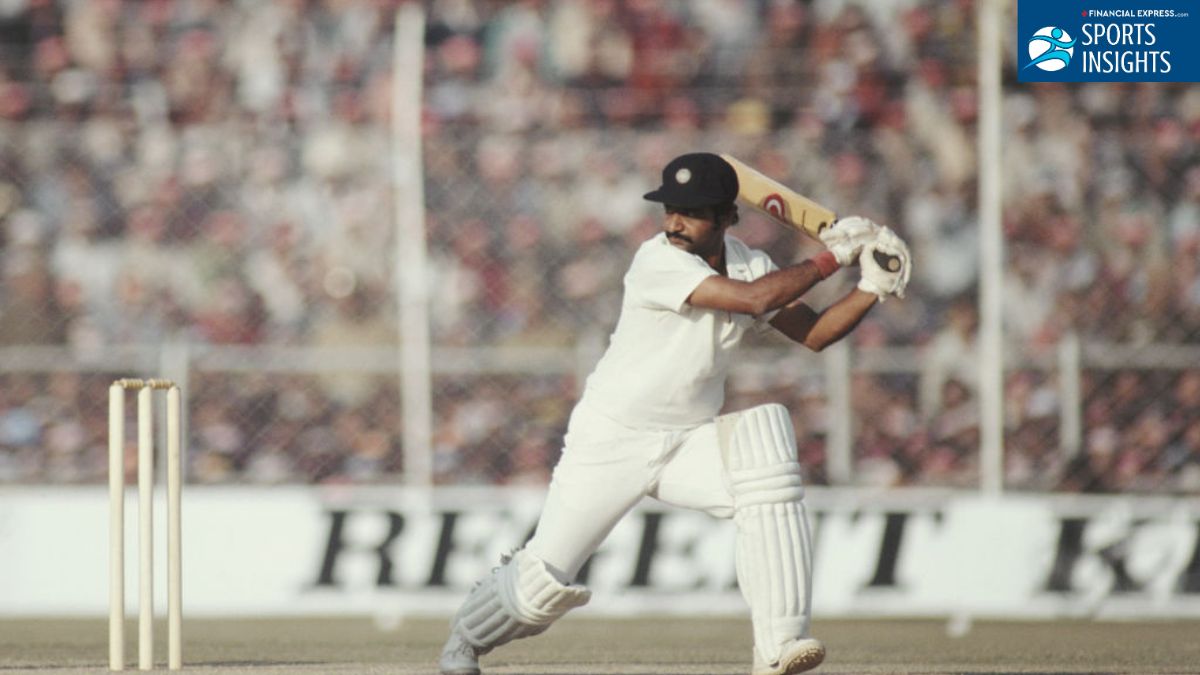
There was a photo. Next day in the papers. Viswanath, hooking Roberts, standing on one foot. The bat high. The body arched. Perfect balance. Perfect violence.
Old timers still talk about it. The ones who were there. The 50,000 who saw something they did not expect to see that January morning.
That is what great innings do. They become sense memory. The sound. The light. The heat of Chennai. The silence before Roberts ran in. The roar after Viswanath played a shot that had no business being played against that bowling, on that day, in that situation.
He was 25. He had already played the innings of his life at Eden Gardens. He would play others. But this was the one where he became more than a batsman. He became the man who stood when everyone else fell.
The aftertaste
India won that Test. Drew the series 2-2 after losing the first two. The comeback started with Viswanath’s 139 at Eden Gardens. But it was sealed with this 97 at Chepauk.
That is the other thing about this innings. It was not just resistance. It was the foundation of a victory. Without those 97, there is no 190. Without 190, the West Indies do not collapse in their first innings. Without that collapse, there is no pressure to apply, no series saved.
One man. One afternoon. One refusal to get out.
Gundappa Viswanath played 91 Tests. He made over 6,000 runs. He was wristy and magical and all the things we say about Indian batsmen from that era. But if you ask the old timers, the ones with the glint in their eye, they will talk about January 11, 1975.
Not the numbers. The noise. The crack of the bat. The small man against the fast bowler. The 97 that felt like 197.
Some knocks never leave you. This one stayed for fifty years. It will stay forever.