



Royal Challengers Bengaluru (RCB) and Gujarat Titans (GT) are sell set for a historic Indian Premier League (IPL) final at the Narendra Modi Stadium in Ahmedabad on Saturday (May 30). Sunrisers Hyderabad (SRH) and Rajasthan Royals (RR) were the other teams to seal a Playoff berth, while Mumbai Indians (MI) and Lucknow Super Giants (LSG) finished bottom two.
The difference between these groups is not talent alone. It is how franchises spent their money and whether what they spent it on actually showed up.
This season produced some of the most expensive failures and some of the most absurd value plays in IPL history. Both deserve honest examination.
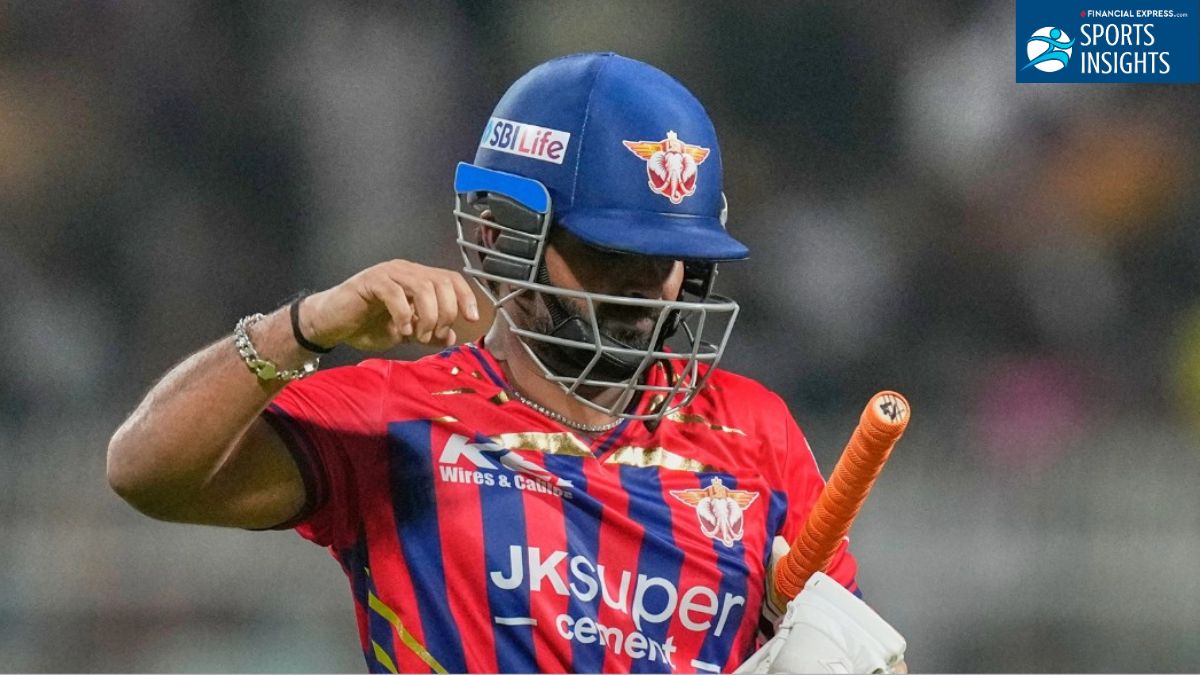
Rishabh Pant: 27 Crore, 312 Runs and a technical problem nobody fixed
Lucknow Super Giants retained Rishabh Pant at 27 crore. He made 312 runs in 14 matches at strike rate of 138.
For context, that strike rate is what you expect from a number four batter trying to build an innings in T20s 5 years ago. In IPL 2026, where scoring rates across the tournament pushed well past 200, a 140 strike rate from your most expensive player is a problem that compounds every single match.
The technical issue was specific and visible. Pant’s bottom hand was over-rotating on the grip, leaving the bat face open at contact and preventing his hands from working together properly. The result was an off-side game that essentially stopped existing.
Since the 2025 cycle, 13 of his 19 dismissals came outside off-stump. Bowlers worked this out quickly. They bowled wide of off-stump, used off-side field placements, and watched him score 62 percent of his runs on the leg side at a healthy strike rate while his off-side output collapsed to 97.
Any franchise biomechanical analyst watching his first three matches would have seen this pattern. Whether LSG saw it and had no answer, or saw it too late, the outcome was the same. A 27 crore player whose scoring options were being dictated by opposition captains using straightforward field placements.
Their second retention Nicholas Pooran at 21 crore made things worse. He averaged 8.50 with a 58 percent dot ball rate across his first six matches. LSG committed 48 crore, nearly 38 percent of their entire salary budget, to two players who between them could not cross 600 runs for the season.
They finished last. The connection is not subtle. It didn’t come as a surprise that Pant decided to step down as the captain after the end of the season.
KKR spent 43 crore on two players and got almost nothing back
Kolkata Knight Riders put 25.2 crore into Cameron Green and 18 crore into Matheesha Pathirana. Those two signings consumed 82 percent of their auction budget.
Pathirana got injured before the season started and bowled 1.2 overs. Eighteen crore for 8 deliveries, which is the cleanest possible illustration of the risk of paying premium prices for fast bowlers who run in hard and break down regularly.
Green provided 322 runs and 7 wickets across the season. These are not numbers that suggest value. They are numbers that suggest a franchise that concentrated its financial resources too heavily and had nothing left to build around when the plan partially collapsed.
The saving grace for KKR was Kartik Tyagi, bought at base price of 30 lakh, who became their leading wicket-taker and carried their pace attack for large parts of the season. The most useful bowler on their roster cost them 30 lakh. Their second most expensive player cost 18 crore and hardly played.
CSK paid record prices for uncapped players and got very little
Chennai Super Kings spent 14.2 crore each on Prashant Veer and Kartik Sharma. Two uncapped players. Combined cost of 28.4 crore, which broke historical records for uncapped signings.
Veer was brought in to replace Ravindra Jadeja as a left-arm spin all-rounder. A persistent shoulder injury prevented him from bowling. Without the bowling, he was competing for a batting spot in a top seven that already had established names ahead of him.
Six matches, 90 runs, zero wickets. 15.78 lakh per run. The numbers are brutal.
Kartik Sharma at least contributed, scoring 295 runs at 136.57 strike rate. Ravichandran Ashwin noted that his technique against spin, playing late and using his feet, suits Chepauk naturally.
But spending 28.4 crore total on two uncapped players and getting one reasonable contributor is not a strategy. It is a gamble that mostly did not pay off.
Subramaniam Badrinath made the point that stings most. In the 2025 mega auction, CSK pulled out of bidding for KL Rahul at 13.5 crore. Delhi Capitals got him for 14 crore. CSK then spent 14.2 crore each on Veer and Sharma.
Had they stayed in the Rahul bidding and spent that extra 50 lakh, they might not have needed to trade Jadeja and Sam Curran to Rajasthan Royals to get Sanju Samson.
The squad depth that disappeared in that trade was the depth they needed when their bowling attack started falling apart in the death overs.
The Impact player rule has made all-rounders nearly irrelevant
Something structural happened to the IPL when the Impact Player rule arrived in 2023 and the data from 2026 makes it impossible to ignore.
Before the rule, teams balanced their eleven carefully. A player who batted at six and bowled four overs of useful medium pace had genuine value. Teams needed those bridges between disciplines.
The Impact Player rule ended that. Now teams field seven specialist batters when batting first and substitute one out for a specialist bowler at the innings break. There is no need to compromise. The all-rounder who does both things decently is less useful than the specialist who does one thing brilliantly.
The numbers show this clearly. As per Vishal Misra analysis; overs bowled by top-seven batters fell from 11.2 per match in the pre-impact era to 3.9 overs in 2026.
Shivam Dube, retained by CSK at 12 crore, bowled three overs across thirteen matches. Venkatesh Iyer at RCB for seven crore bowled zero deliveries. Abhishek Sharma’s bowling for SRH dropped to 2.5 overs for the entire season.
These are players being paid for something they are no longer being asked to do. The franchise that keeps paying the all-rounder premium in future auctions without adjusting for this reality is essentially donating money.
What 30 lakh actually bought this season
Now the other side of the ledger.
Vaibhav Sooryavanshi. Fifteen years old. Retained by Rajasthan Royals at 1.1 crore. Finished 5th in the Orange Cap standings after league stage with 579 runs at strike rate of 232.27. Against Lucknow he made 93 off 38 deliveries. The net profit on one innings was higher than his base price.
Praful Hinge. Signed by Sunrisers Hyderabad at 30 lakh. In his debut match he took three wickets in his first over, the first bowler in IPL history to do that. Finished with 4 for 18.
His opening partner Sakib Hussain, also 30 lakh, took 4 for 24 in the same match. Two debutants. Combined cost of 60 lakh for that game. Eight wickets between them.
Prince Yadav at LSG, 30 lakh, took 16 wickets at an economy of 8.8 across the season. He was LSG’s best bowler in a season where their most expensive players produced very little.
The pattern across all of these names is the same. Teams with strong domestic scouting networks found players at base price who delivered genuine match-winning performances. Teams that spent heavily on marquee names and then had nothing left for depth paid the price in the standings.
What the 2026 season is actually saying
The lesson from this season is not that star players are worthless. Virat Kohli, Shubman Gill, Bhuvneshwar Kumar and Heinrich Klaasen all justified significant investment.
The lesson is that concentrating 80 percent of a squad budget on two or three players and filling the rest with whatever is affordable creates fragility that one injury or one technical failure can expose completely.
Pathirana got injured. KKR had no fallback. Pant’s off-side game disappeared. LSG had no plan. Veer’s shoulder went. CSK had traded away the squad depth that might have absorbed it.
Meanwhile Rajasthan found a fifteen-year-old at 1.1 crore who batted like he had been playing IPL cricket for a decade. SRH found two bowlers at 30 lakh each who took eight wickets in a single match on debut.
The auction table is not where IPL titles are won. The scouting network is. The 2026 season made that argument more clearly than any previous season. The franchises preparing for 2027 would do well to spend less time bidding wars and more time watching domestic cricket in places nobody else is watching.
The gold is there. It just costs 30 lakh.