



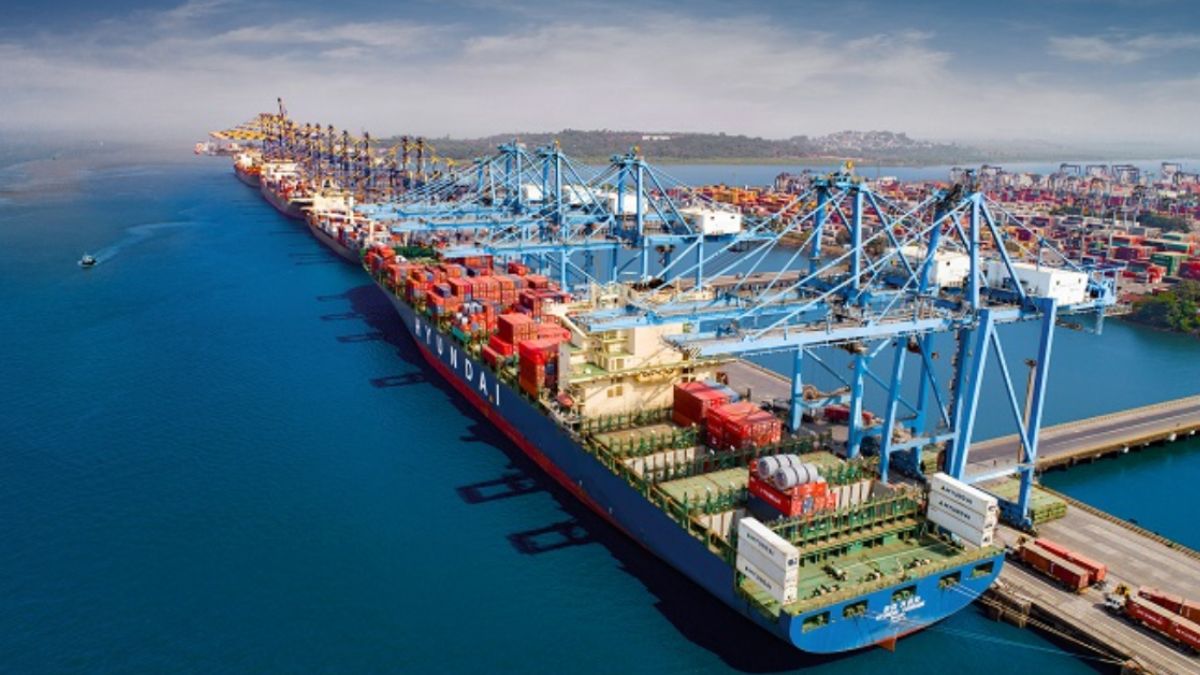
Shipments worth $ 140 million left Indian shores for the UK on the day a bilateral Comprehensive Economic and Trade Agreement (CETA) came into force. As goods from India were flagged off from different locations, a British Airways flight brought the first consignment of goods from the UK to India, British High Commissioner to India Lindy Cameron said.
Goods shipped from India included garments, engineering goods, processed food products, rice, leather products, gems and jewellery, sports goods, chemicals, tea, spices and home textiles among others, Commerce Secretary Rajesh Agrawal said.
Through CETA both sides aim to increase their trade to $ 100 billion by 2030 from $ 60 billion at present. In 2025 goods and services exports from India to the UK stood at $ 38.5 billion while imports were $ 25.8 billion.
Duties on key sectors of export interest to India like engineering goods, textile and clothing, leather, chemicals, auto parts, marine products are substantial in the UK and they will gain the most from the agreement with duties coming down to zero, the secretary said.
Balanced Access
He also allayed concerns that including a chapter on government procurement in the CETA would increase competition for small local manufacturers in public contracts saying that the agreement does not prevent the government from extending preference to the Micro Small and Medium Enterprises (MSMEs) as per the existing policy. Apart from other relaxations the government has mandated 25% of procurement from micro and small units for its departments.
Companies from the UK would only be allowed to bid as Class 2 local suppliers which have a local content threshold of 20% to 50%. Most government contracts are for Class 1 suppliers where local content must be more than 50%. Class 1 suppliers also get a 20% purchase preference margin to match the lowest bid. Moreover, state-owned companies, state governments and sensitive departments are excluded. The threshold for participation in procurement of goods and services is Rs 5.5 crore and for construction projects Rs 60 crore.
Indian suppliers on the other hand would also be able to participate in UK government contracts. “The chapter provides Indian suppliers legal access to the UK government procurement market worth around $122 billion, while India offers reciprocal opportunities of around $ 114 billion,” Agrawal said.
Intellectual Property Safeguards
Regarding concerns that the agreement might curb the government’s right to provide compulsory licensing of patented medicines because India agreed to the provision of voluntary licensing in CETA, Additional Secretary in the Department of Commerce Darpan Jain said if voluntary licensing does not work India’s right to issue compulsory licensing remains.
On the inclusion of chapters on non trade issues like gender, labour and environment in the agreement, he said Indian laws are already aligned with international treaties and since there is no dispute settlement in these chapters so UK cannot take India to dispute on any of these issues.
On the issue of carbon tax that is being introduced in the UK from January 1, 2027 impacting India’s exports in commodities like steel and cement, another official said both sides remain engaged on the issue. “We have made it very clear that if the carbon tax impacts our exports then India would seek adjustment.”