



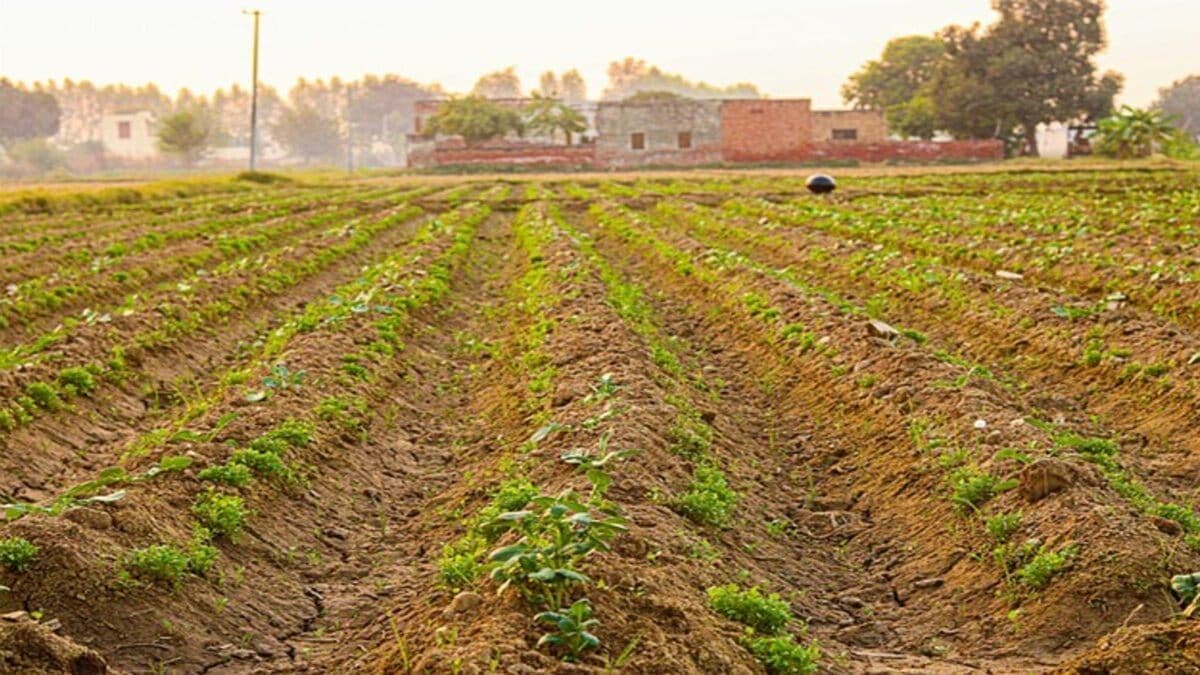
The Centre has prepared contingency measures to shield the kharif season from potential disruptions caused by the developing El Nino, Union Agriculture Minister Shivraj Singh Chouhan said on Thursday (May 28), urging states and farmers to focus on integrated farming and greater self‑reliance in pulses and oilseeds.
What is ‘Kharif season’ in India?
The Kharif season, popularly known as the monsoon or autumn crop season in India, spans from June to October and is the country’s most critical agricultural cycle, as crops are sown with the onset of the southwest monsoon and harvested at its end. Kharif crops require ample rainfall and high humidity, thriving in temperatures that range from 16–20°C during the growing phase to 18–32°C during ripening, and the season’s timing varies by region—sowing may begin as early as May in Kerala and extend to July in some northern states.
Major Kharif crops include rice (the ‘queen of Kharif crops’), maize, cotton, jowar, bajra, tur (arhar), moong, urad, soybean, groundnut, jute and pulses, which together form the backbone of India’s food security, providing staple grains, protein sources, cash crops for textiles, and oilseeds. The season sustains millions of farmers, contributing significantly to national food production, but it also poses challenges such as erratic monsoon patterns, water scarcity, pest outbreaks and market fluctuations, making timely rainfall, irrigation infrastructure and contingency planning essential for ensuring good yields and rural prosperity.
Below-normal monsoon rain and above-normal heat expected from June
The India Meteorological Department (IMD) on Friday (May 29) issued its second-stage long-range forecast for the southwest monsoon, projecting 90% of the Long Period Average (LPA) rainfall for the June–September season, with a 4% model error margin.
“We are providing the second-stage update for the June-September monsoon. Quantitatively, we expect 90 per cent of the LPA, with a 4 per cent model error,” said IMD Director General Dr Mrutyunjay Mohapatra. Regionally, Northeast India is expected to receive normal rainfall (94–106% of LPA), while Central India, South Peninsular India, Northwest India and the Monsoon Core Zone are likely to see below-normal rainfall.
For June specifically, rainfall is forecast to remain below normal across most of the country, at less than 92% of LPA, though parts of Northwest India, Northeast India and the southern peninsula may witness normal to above-normal rainfall.
#WATCH | Delhi: DG IMD Dr Mrutyunjay Mohapatra says, "There is a probability that, during the Southwest Monsoon season, the seasonal rainfall across the country will be 90% of the Long Period Average (LPA), with a model error margin of plus or minus 4%. This implies that during… pic.twitter.com/qrpnw6jl3P
— ANI (@ANI) May 29, 2026
Heatwaves, El Nino and imminent monsoon progress
IMD also warned of above-normal temperatures in June, with maximum temperatures higher than normal across most of the country and minimum temperatures also mostly above normal. An above-normal number of heatwave days is expected in Uttar Pradesh, Haryana, Punjab, Bihar, Odisha, Chhattisgarh, Gujarat and Andhra Pradesh, with increased heatwave activity also likely in parts of Maharashtra, Telangana and Tamil Nadu. On oceanic conditions, neutral ENSO is transitioning toward El Nino, with an 82% probability of El Niño conditions by June and over 90% by July–August; Indian Ocean Dipole conditions are expected to remain neutral through the monsoon. Meanwhile, the southwest monsoon advanced into the Andaman and Nicobar Islands on May 16, four days ahead of schedule, and has moved into the South Arabian Sea and Lakshadweep, with favourable conditions for arrival over Kerala and the northeast within the next week. IMD also forecast short-term relief from severe heat in Northwest India over the next three days due to western disturbances and easterly winds, accompanied by thunderstorms, gusty winds and hailstorms in several regions.
Contingency planning and district-level changes
“Rather than worrying, preparation is required. Contingency plans will be made for affected districts and crop changes will be considered wherever necessary,” Shivraj Chouhan told media on the sidelines of the two‑day National Kharif Conference. The Agriculture Ministry is mapping districts that may need alternative cropping plans and is ensuring seed availability should El Nino conditions affect sowing and crop progress, he added.
अल नीनो को लेकर घबराने की कोई जरूरत नहीं है। अभी कोई अंतिम अनुमान नहीं आया है, फिलहाल ये केवल अटकलें हैं। लेकिन जैसी परिस्थिति होगी और जिस राज्य को जैसी आवश्यकता होगी, उसी के अनुसार हम कार्य करेंगे। pic.twitter.com/FXF8VHpv6K
— Shivraj Singh Chouhan (@ChouhanShivraj) May 28, 2026
Scientific forecasts and El Nino outlook
The India Meteorological Department (IMD), in its first‑stage forecast on April 13, projected a below‑normal southwest monsoon for 2026, with expected rainfall at about 92% of the long‑period average. International agencies have also flagged a high probability of El Nino- the World Meteorological Organisation warned of a likely return as early as May–July, while the US National Oceanic and Atmospheric Administration’s May 11 ENSO update said El Nino conditions are likely to emerge during May–June and persist through year‑end. El Nino—an abnormal warming of surface waters in the eastern tropical Pacific—is typically associated with hotter, drier conditions over large parts of India.
Kharif sowing status and timing
Kharif sowing has only just begun in parts of the country and remains at an early stage, with farmers preparing fields for early sowing of short‑duration crops such as pulses, coarse cereals and some cotton in areas that received pre‑monsoon rains. Normal kharif sowing starts in June and peaks in June–July with the progress of the southwest monsoon.
Record food grain production and push for diversification
Despite weather concerns, India is on track to achieve a record 376.56 million tonnes of food grain production in the 2025–26 crop year (July–June), an increase of 18.8 million tonnes over the previous year, Chouhan said.
Supporting the push for diversification, ICAR Director General ML Jat noted that targets for rice output set for 2047 have already been met and urged redirecting land to oilseeds and pulses. “We don’t need 50 million hectares under rice. We need 35 million hectares by 2047. If we have to offload 15 million hectares, redirecting that to oilseeds and pulses could make us self‑reliant in those crops,” he said.
Soil health, fertiliser use and seed quality
ML Jat flagged excessive fertiliser use in over 100 districts and called for a multi‑pronged strategy including nutrient‑efficient crop breeding, greater use of organic and biological inputs, and improved soil health management. He stressed seed quality and a stronger agricultural data ecosystem as priorities, noting that delivering quality seeds could raise productivity by 15–20%. Jat urged state farms, agricultural universities and ICAR institutions to prioritise seed production and build data systems to support AI‑driven interventions such as the Bharat Vistar platform.
Shivraj Chouhan called for a unified approach under “Team Agriculture- One Nation, One Agriculture, One Team,” warning that lack of seriousness at state level would not be tolerated and saying he would write to chief ministers if state agriculture ministers failed to participate in such conferences. He directed officials to ensure timely seed distribution ahead of the monsoon, expand Kisan Credit Card coverage, expedite Farmer ID issuance, and take strict action against vendors selling spurious seeds, fertilisers and pesticides.
Policy focus on self‑reliance and sustainability
Agriculture Secretary Atish Chandra said crop diversification, agricultural self‑reliance and sustainability are now core government priorities and urged states to align their kharif plans with these objectives. With forecasts suggesting heightened weather risk from El Nino, the Centre’s combined emphasis on contingency planning, seed security, soil health and institutional coordination seeks to preserve the kharif crop while accelerating structural shifts toward a more diversified and resilient agricultural sector.