



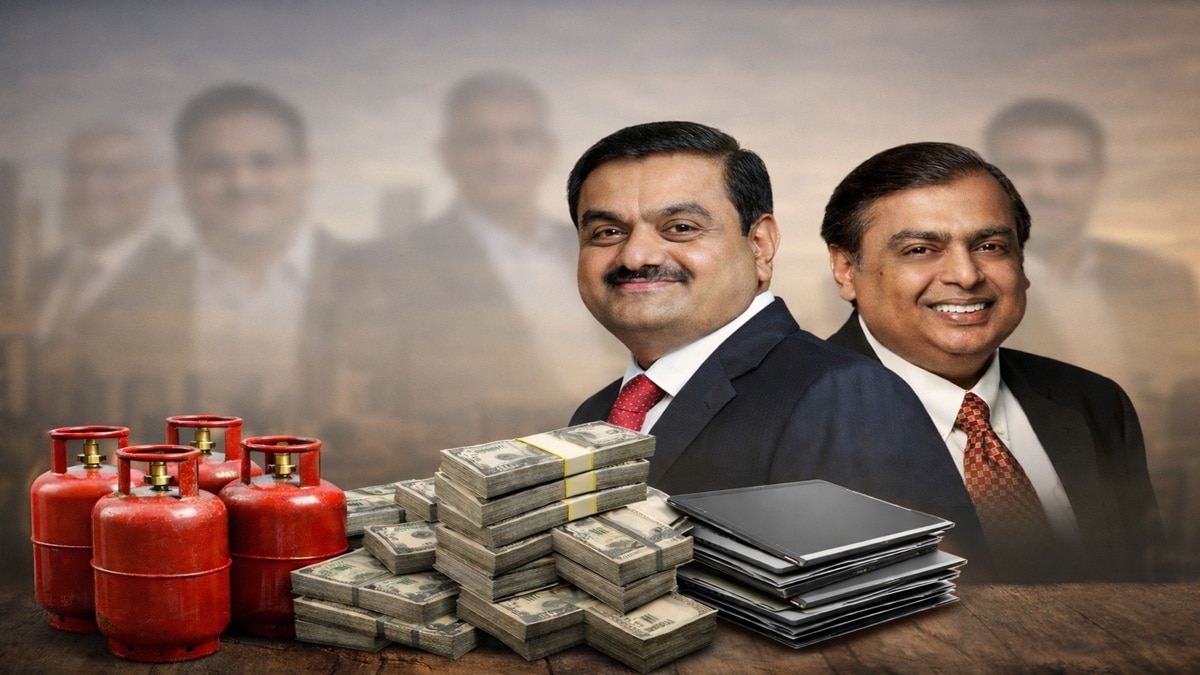
India’s widening wealth gap is once again bringing the idea of a wealth tax into focus. A new report has estimated that even a small levy of 2% on the ultra-rich can significantly boost funding for many welfare schemes.
According to the Wealth Tracker India 2026 report by the Centre for Financial Accountability and Tax the Top campaign, wealth concentration at the top has surged sharply in recent years, raising questions around redistribution and public spending priorities.
Inequality widens as wealth at the top surges
The report highlights that the top 1% in India now holds over 40% of the country’s wealth, while the bottom 50% accounts for just around 6.4%. This gap has widened from 2019 levels, indicating a growing concentration of wealth.
At the same time, the number of individuals with wealth above Rs 1,000 crore has risen sharply—growing by 77% between 2019 and 2025. Their total wealth, however, has expanded much faster, jumping by 227% over the same period.
Data from the Hurun Rich List, cited in the report, shows that the combined wealth of India’s top 100 richest individuals rose from about Rs 31 lakh crore in 2019 to nearly Rs 88 lakh crore in 2025.
The wealth of top billionaires has also seen dramatic growth. The combined fortunes of Mukesh Ambani, Gautam Adani and family, Savitri Jindal and family, Sunil Mittal and family, and Shiv Nadar increased by nearly 400% between 2019 and 2025, the report notes.
What a 2% wealth tax could achieve
But before we move ahead, let’s understand the current status of wealth tax in India.
It is important to note that wealth tax was formally discontinued from April 1, 2016, amid low revenue yield and frequent litigation arising from complex asset valuation. In its place, the government introduced a 2% additional surcharge on the super-rich—those earning above Rs 1 crore annually, as a simpler way to tax higher incomes. Therefore, any discussion around a 2% wealth tax remains purely hypothetical and part of a broader policy debate, not an existing or announced proposal.
Coming back to the Wealth Tracker report, one of the key arguments in it is the potential impact of even a modest wealth tax.
It estimates that:
Wealth Tax equivalents: What can be done with just 2% levy as per the report
India’s Wealth Divide: 2019–2025
-A 2% Wealth Tax on Ambani can translate into free laptops to approximately 1.85 crore Class 10 students three times!
-Providing Rs 18,000 to 2.85 crore women would cost about Rs 51,300 crore annually, meaning a 2% Wealth Tax on Ambani could finance nearly two years of universal maternity rights.
-A 2% Wealth Tax on Adani could fund over two years of primary healthcare services nationwide.
-A 2% Wealth Tax on Adani could translate into 87 crore free LPG cylinders.
So essentially, these amounts, the report argues, could fund large-scale welfare measures—from free laptops for students and maternity benefits to healthcare services and LPG subsidies.
The report further estimates that a broader 2%–6% wealth tax combined with an inheritance tax on ultra-rich families could generate over Rs 10 lakh crore annually, potentially funding health, education, pensions, and climate-related spending.
Experts flag practical challenges
However, experts caution that such estimates may be optimistic on paper.
Saumya Ranjan Satpathy, Co-Founder of Journie – a wealthtech platform, says the Rs 10 lakh crore figure should be seen as a theoretical upper limit rather than a realistic outcome.
He points out that a large portion of wealth in India is tied up in promoter stakes, unlisted businesses, and complex ownership structures, making valuation and taxation difficult. Additionally, behavioural responses—such as shifting assets or changing residency—can significantly reduce actual tax collections.
Harsha Vardhana VM, Founder-CEO of Atom Prive Financial Services, echoes similar concerns.
He notes that while India’s ultra-rich wealth base has expanded rapidly, much of it is not easily liquid or annually taxable. “You can’t easily convert this into a clean, annually taxable pool,” he says, adding that past experience shows wealth tax collections were modest relative to the effort involved.
Why reintroducing wealth tax is not easy
India abolished its wealth tax in 2016, largely due to low revenue yield and high administrative complexity.
Experts say those challenges persist—and may have intensified.
Satpathy explains that today’s wealth is increasingly held in startups, unlisted firms, and cross-border structures, making enforcement more complex. Implementing a wealth tax would require robust valuation frameworks, better data-sharing systems, and global coordination.
Harsha Vardhana adds that wealth tax is inherently complex, requiring annual valuation of diverse assets—from listed equities to private businesses and real estate—often leading to disputes and litigation.
He also points out that capital mobility has increased significantly. High-net-worth individuals can restructure holdings or move jurisdictions, potentially diluting the intended impact of such a tax.
The policy dilemma: equity vs efficiency
The debate ultimately comes down to balancing two competing priorities.
On one hand, the report argues that progressive taxation—including wealth tax—can help address inequality and generate resources for public welfare. It also cites global research suggesting that higher public spending funded through such taxes can support inclusive growth.
On the other hand, experts warn that poorly designed wealth taxes may lead to lower compliance, capital flight, and administrative challenges, making them less effective than expected.
What lies ahead
While the idea of taxing the ultra-rich is gaining traction globally, India’s experience suggests that implementation remains complex.
The Wealth Tracker India report makes a strong case for exploring wealth taxation as a tool for redistribution. But as experts highlight, translating that idea into policy would require careful design, strong institutional capacity, and a balance between revenue goals and economic incentives.
For now, the debate continues—between the promise of welfare expansion and the practical limits of taxing wealth in a modern, globalised economy.
Disclaimer:
This article is based on estimates and illustrative scenarios presented in the Wealth Tracker India 2026 report and should not be interpreted as actual fiscal projections or policy announcements. The figures cited—such as potential revenues and welfare benefits—are indicative and rely on assumptions about wealth valuation, tax rates, and compliance levels, which may vary significantly in real-world conditions.
Expert views included in the story highlight practical challenges such as valuation complexities, liquidity constraints, and behavioural responses that could reduce actual tax collections. Readers should note that wealth tax policy involves multiple economic, legal, and administrative considerations, and any implementation would depend on government decisions, regulatory frameworks, and broader fiscal priorities.
The publication and the author do not guarantee the accuracy of projections and advise readers to refer to official government data and policy announcements for confirmed information.