



The recent energy supply disruptions have exposed India’s vulnerability to external fuel dependence, particularly in crude oil, natural gas, and key industrial feedstocks. But as with every major crisis, this structural challenge provides a viable strategic opportunity. The energy supply bottlenecks have led to higher crude oil prices.
The Macro Bottleneck: High Import Dependence Pressures the Rupee
As India imports nearly 90% of its crude oil requirements and remains heavily dependent on imports for gas (more than 50% imported), urea (20%), methanol (80%), and ammonia (100%), this has put pressure on the rupee. In turn, the current account deficit has widened, intensifying concerns about the country’s dependence on imported energy and industrial raw materials.
Policy Alignment: Core Sector Drivers and the May 2026 Framework
At the same time, India sits on nearly 401 billion tonnes of coal reserves. Coal accounts for around 80% of India’s thermal power generation and 55% of overall energy consumption. But policymakers are now identifying coal not just as a power-generation fuel, but as a strategic tool for energy security and import substitution.
Syngas Integration: Transitioning from Thermal Base to Downstream Feedstocks
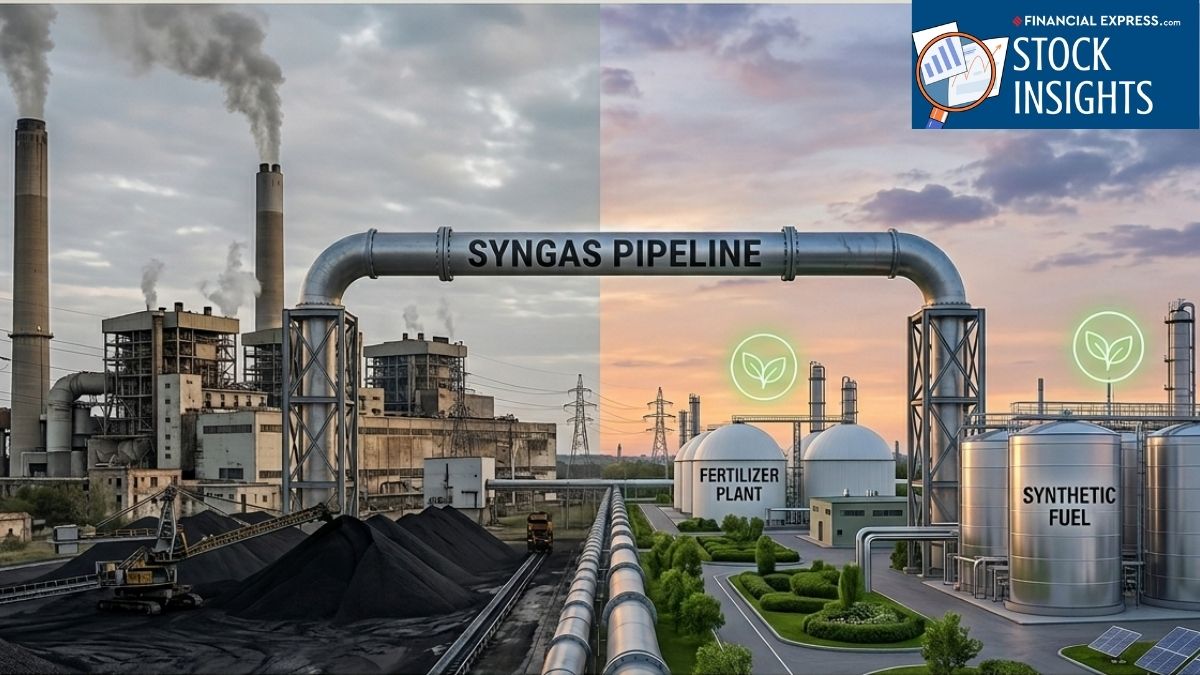
One of the biggest focus areas emerging from this shift is coal gasification. This process converts domestic coal into syngas. Syngas is then used to produce fertilizers, methanol, synthetic fuels, hydrogen, and industrial chemicals.
Furthermore, it can also help decarbonize polluting industries such as the refinery, chemical, petrochemical, and steel sectors. To accelerate this transition, in 2021, the Government of India set an ambitious target to achieve a coal gasification capacity of 100 million tonnes (MT) by 2030.
India’s ₹37,500 Crore Coal Gasification Push Takes Shape
Building on this framework, on 13 May 2026, the government approved a scheme to incentivize new surface coal/lignite gasification projects for the production of syngas and its downstream products. It has allocated ₹37,500 crore for the project, which targets the gasification of around 75 MT of coal/lignite.
Against this backdrop, here are three companies already positioning themselves at the centre of India’s coal gasification and import-substitution push.
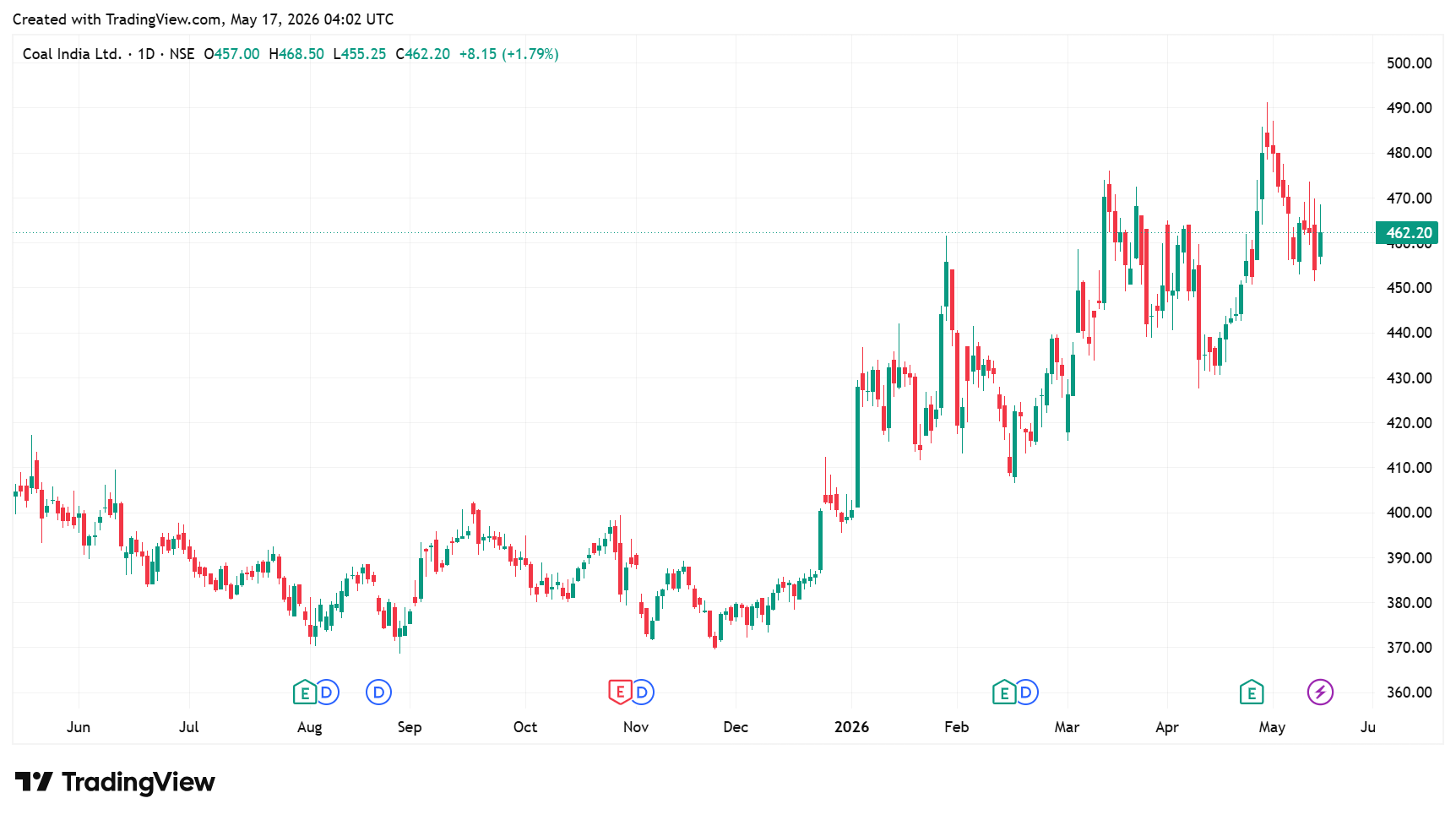
#1 Coal India: Capex Blueprint & Clean-Coal JVs
Coal gasification is a key component of Coal India’s (CIL) forward integration and diversification strategy. This aims to transition CIL toward cleaner, value-added utilization of domestic coal.
Fiscal Allocation: Analyzing the ₹37,050 Crore CAPEX and Ministry Incentives
To drive this capital-intensive expansion, the company has embarked on a ₹37,050 crore CAPEX over the coming years. To further promote gasification, the Ministry of Coal has proposed a financial incentive of ₹1,350 crore for each of CIL’s gasification projects. With a total outlay of ₹8,500 crore, this incentive aims to promote coal and lignite gasification.
CIL is executing its coal gasification roadmap primarily through strategic Joint Ventures (JVs) with leading Indian Public Sector Undertakings. CIL incorporated Bharat Coal Gasification and Chemicals in May 2024, with BHEL. CIL (51%) is the majority shareholder, while BHEL holds 49%.
The primary objective of this BHEL-CIL JV is to establish a surface coal gasification plant that will convert high-ash domestic coal into synthesis gas, ammonia, and nitric acid as intermediate products. The final end product will be Ammonium Nitrate.
The JV is establishing a 0.66 metric tonne per annum (MTPA) coal-to-ammonium nitrate plant in Lakhanpur, Odisha. It will invest ₹11,782 crore in this project, divided into four main lump-sum turnkey packages.
Diversifying Capital Allocation: SNG Network Development with GAIL and BPCL
Another JV, Coal Gas India, was incorporated in March 2025 as a 51:49 JV between CIL and GAIL. This JV aims to produce 633.6 million normal cubic meters of Synthetic Natural Gas per year. The project cost is ₹13,053 crore. The SNG produced will be supplied to urea plants. CIL is exploring avenues to supply city gas networks.
CIL signed a Memorandum of Understanding (MoU) with Bharat Petroleum Corporation Limited in December 2024. This MoU explores building another Coal-to-SNG plant at Western Coalfields Limited in Maharashtra.
Further, a major challenge for coal gasification in India is the high ash content of domestic coal, which typically ranges from 18% to over 40%. To overcome these technological hurdles and develop clean-coal solutions, CIL has launched several Research & Development initiatives.
CIL partnered with IIT Hyderabad to establish the Centre of Clean Coal Energy & Net Zero. This partnership focuses on developing innovative technologies for low-grade and rejected Indian coals.
Moving beyond surface gasification, CIL’s consultancy arm (Central Mine Planning & Design Institute) and Eastern Coalfields have partnered with Ergo Exergy (Canada) on a pilot project to establish UCG technology tailored to Indian geo-mining conditions.
Overcoming Technical Barriers: High-Ash Solutions and Talcher Complex Integration
Another JV (CIL holds a 33.33% stake) with Talcher Fertilizers, a Surface Coal Gasification-based integrated 1.27 MTPA urea complex, is being constructed. This project will blend high-ash coal with up to 25% pet-coke to produce syngas for neem-coated urea.
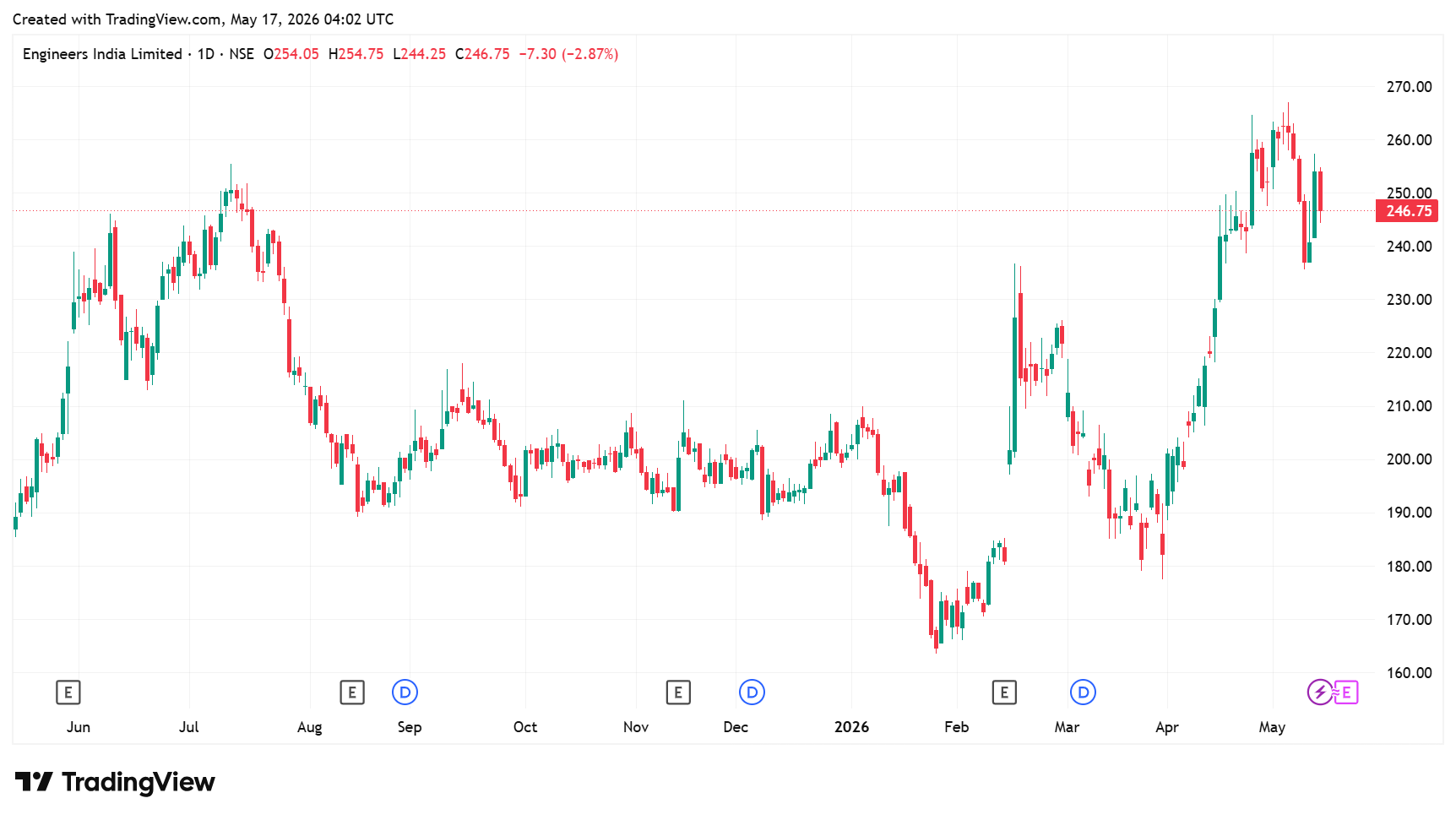
#2 Engineers India: High-Margin Energy Advisory Mandates
Engineers India (EIL) is a global engineering consultancy and project solutions company. Consultancy and engineering projects are its core, high-margin businesses, typically contributing 55% to 60% of its total revenue and the majority of its profits. The company serves clients across sectors like Oil and Gas, Infrastructure, green hydrogen, and renewable energy.
The Leadership Moat
Coal gasification is one of EIL’s core lines of business. It has successfully integrated gasification assignments into its broad project portfolio. Its leadership is deeply experienced in this domain. For example, Shri Rajiv Agarwal, Director (Technical), brings over 35 years of expertise in the process design and engineering of complex facilities, including coal and coke gasification plants.
To support the national agenda, EIL is taking on high-level strategic roles. The company was recently awarded an assignment to prepare the bidding documents for the Ministry of Coal’s Viability Gap Funding scheme, which aims to support coal gasification-based production plants under Categories II and III.
Institutional Mandates: Strategic MoUs with NTPC and Singareni Collieries
Additionally, EIL is in active discussions with various public- and private-sector players to pursue further opportunities in coal gasification and broader decarbonization projects. EIL is currently even offering engineering and consultancy services for several major coal-based gasification projects across India.
Under an MoU signed with NTPC, EIL is acting as a consultant to assist NTPC in setting up a new coal gasification plant. EIL is providing Project Management Consultancy services for pre-award activities. This includes preparing tender documents and selecting a suitable firm on a Lump Sum Turnkey or EPC basis.
This project, located in Neyveli, will use gasification to convert lignite into methanol with a capacity of 1,200 MTPD. Further, EIL is conducting a techno-economic feasibility study to set up a plant capable of producing 400 TPD of Ammonium Nitrate Melt through the gasification of coal within the client’s (Singareni Collieries Company) command areas.
Order Book Metrics: Assessing the ₹31.3 Crore Thallaipalli SNG Contract
Moreover, recently, during Q3FY26, EIL secured a consultancy contract worth ₹31.3 crore for the Thallaipalli Coal Mines. The scope of this project includes preparing the Detailed Project Report, selecting the licensor, and executing the Front-End Engineering Design for a Coal-to-Synthetic Natural Gas project. This assignment is scheduled for completion in October 2027.
#3 Central Mine Planning & Design Institute: Sovereign Exploration Data & UCG Pilots
Central Mine Planning & Design Institute (CMPDI), a Mini Ratna PSU, is a multidisciplinary consultancy organization. The company provides end-to-end consultancy and engineering support services across the entire lifecycle of mining operations, from initial mineral exploration to final mine closure.
Market Leadership: Core Exploration Assets and Institutional Data Stewardship
As a leading company in its field, CMPDIL held a 61% market share in India’s coal and mineral consultancy sector in FY25. It serves as the dedicated custodian of the country’s coal and lignite data. Geological exploration and resource assessment are CMPDIL’s core business, contributing 46% to its revenue in 9M FY26.
Technical Deployment: Deep Horizons Pilot at the Kasta West Block
CMPDIL is exploring the potential of Underground Coal Gasification. To this end, CMPDIL has launched a major R&D pilot project at the Kasta West Block, located in the Jamtara district of Jharkhand. This project is situated within the leasehold area of ’Eastern Coalfields’, a subsidiary of ‘Coal India.’
This project is being implemented jointly by ECL and M/s Ergo Exergy Technologies Inc. The primary objective of the initial phase (commenced in June 2024) is to prepare a technical feasibility report. This report will include borehole drilling and core testing. In the subsequent phase, the focus will shift to conducting coal gasification on a pilot scale.
Macro Economic Imperatives: Targeting Strategic Import Substitution
CMPDIL’s efforts in UCG and SCG aim to help India reduce its heavy reliance on imports of resources such as methanol. Advancing coal gasification supports the government-approved policy framework for the sustainable identification of coal- and lignite-bearing areas and drives India towards energy self-sufficiency.
Evaluating the Financial Landscape: Return Profiles and Multiples Compared
CMPDI and Coal India maintain high profitability, which significantly boosts their return ratios (Return on Capital Employed (ROCE) and Return on Equity (ROE)). EIL’s return ratios lag behind due to fluctuations in its margins.
The company’s consultancy and engineering projects yield a profit margin of 22-25%, whereas its turnkey projects carry a significantly lower margin of 6-7%. Consequently, fluctuations in the revenue mix impact the company’s blended margins, which, in turn, affect its return ratios.
From a valuation perspective, Coal India trades at a discount to the industry median, but at a premium to 5-year historical multiple. EIL trades at a slight premium to both the industry and historical median multiple. CMPDI is trading above the industry median.
| Valuation Comparison (X) | |||||
| EV/EBITDA Multiple | Return Ratios | ||||
| Company | Company | 5Y Median | Industry | ROCE (%) | ROE (%) |
| Coal India | 4.6 | 3.8 | 9.2 | 35.3 | 28.5 |
| Engineers India | 12.5 | 12.1 | 10.3 | 25.0 | 23.2 |
| CMPDI | 17.7 | – | 10.3 | 38.1 | 28.4 |
| Source: Screener.in (Data as of 15th May 2026) | |||||
With India importing nearly 90% of its crude oil and remaining heavily dependent on imported gas, methanol, ammonia, and urea, coal gasification is emerging as a key initiative for energy security.
However, the sector is still in the early stages of implementation, and much of the long-term opportunity will depend on execution, technology scalability, and commercial viability. That said,keep these stocks on your watchlist to see how they tap into upcoming demand.
Disclaimer:
Note: Throughout this article, we have relied on data from http://www.Screener.in and the company’s investor presentation. Only in cases where the data were unavailable have we used an alternative, widely accepted, and widely used source of information.
The purpose of this article is only to share interesting charts, data points, and thought-provoking opinions. It is NOT a recommendation. If you wish to consider an investment, you are strongly advised to consult your advisor. This article is strictly for educational purposes only.
About the Author: Madhvendra has been deeply immersed in the equity markets for over seven years, combining his passion for investing with his expertise in financial writing. With a knack for simplifying complex concepts, he enjoys sharing his honest perspectives on startups, listed Indian companies, and macroeconomic trends.
A dedicated reader and storyteller, Madhvendra thrives on uncovering insights that inspire his audience to deepen their understanding of the financial world.
Disclosure: The writer and his dependents do not hold the stocks discussed in this article.
The website managers, its employee(s), and contributors/writers/authors of articles have or may have an outstanding buy or sell position or holding in the securities, options on securities, or other related investments of issuers and/or companies discussed therein. The articles’ content and data interpretation are solely the personal views of the contributors/ writers/authors. Investors must make their own investment decisions based on their specific objectives, resources, and only after consulting such independent advisors as may be necessary.