



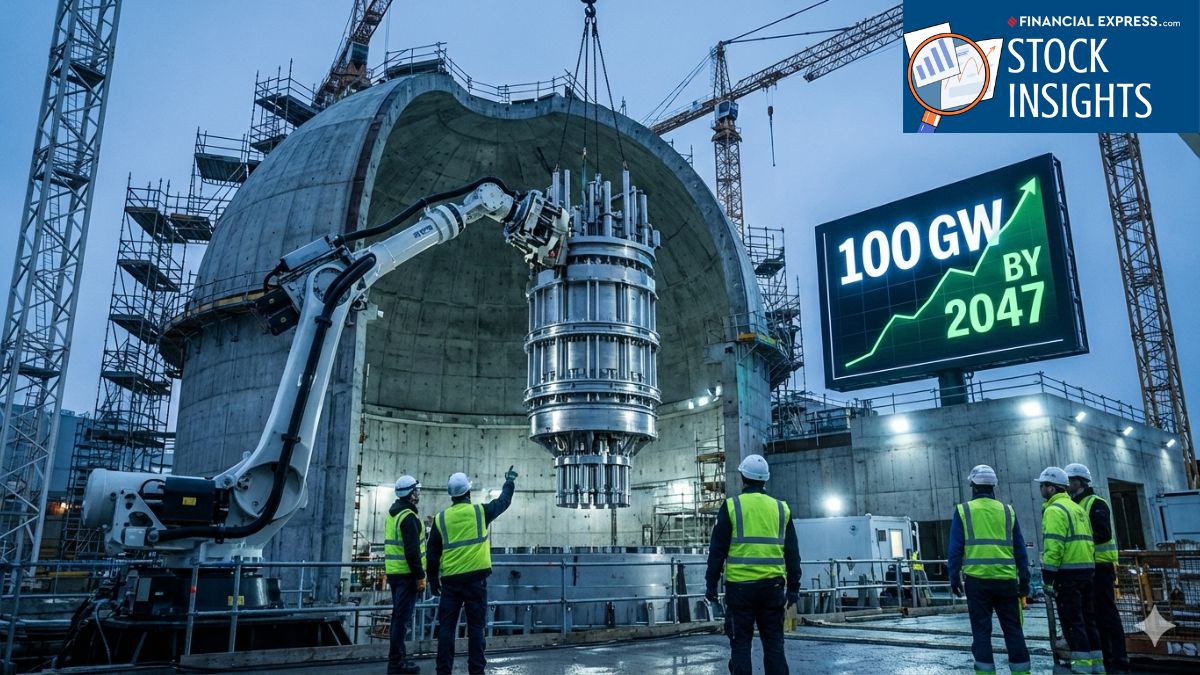
India’s nuclear energy push is moving from policy intent to execution. With regulatory barriers easing and capital support increasing, a long-dormant sector is about to open new opportunities across the supply chain.
To this end, first, the SHANTI Bill (Sustainable Harnessing of Advancement of Nuclear Energy for Transforming India) was enacted to strengthen the country’s nuclear power capacity. The bill opened the sector to private participation and capped vendor liability, barriers that previously stifled wider entry.
The Road to 100 GW: India’s Nuclear Capacity Roadmap
This is important because Antique Stock Broking estimates that India’s nuclear power currently accounts for only 1.7% of installed capacity, with plans to increase this to 2% by FY30. This could increase to over 5% of total installed capacity, given the government’s longer-term objective of 100 gigawatts (GW) of nuclear power capacity by 2047.
Fiscal Support: Budget 2026 and Customs Duty Relief
To further increase participation, Budget 2026 allocated ₹24,124 crore to the Department of Atomic Energy, of which ₹ 9,966 crore is for capital expenditure. Imports of goods for nuclear projects, regardless of capacity, are exempt until 2035. This moves away from previous restrictions that likely favoured specific plant sizes.
In addition, from 2 February 2026, the Basic Customs Duty on specific critical components has been reduced from 7.5% to Nil. A ₹ 20,000-crore production-linked incentive scheme for nuclear components is also proposed.
These measures fall under the government’s First Kartavya to accelerate and sustain economic growth by ensuring long-term energy security and stability. While established giants like NTPC and L&T dominate, three small-cap firms are emerging as critical specialized suppliers. Let’s take a look.
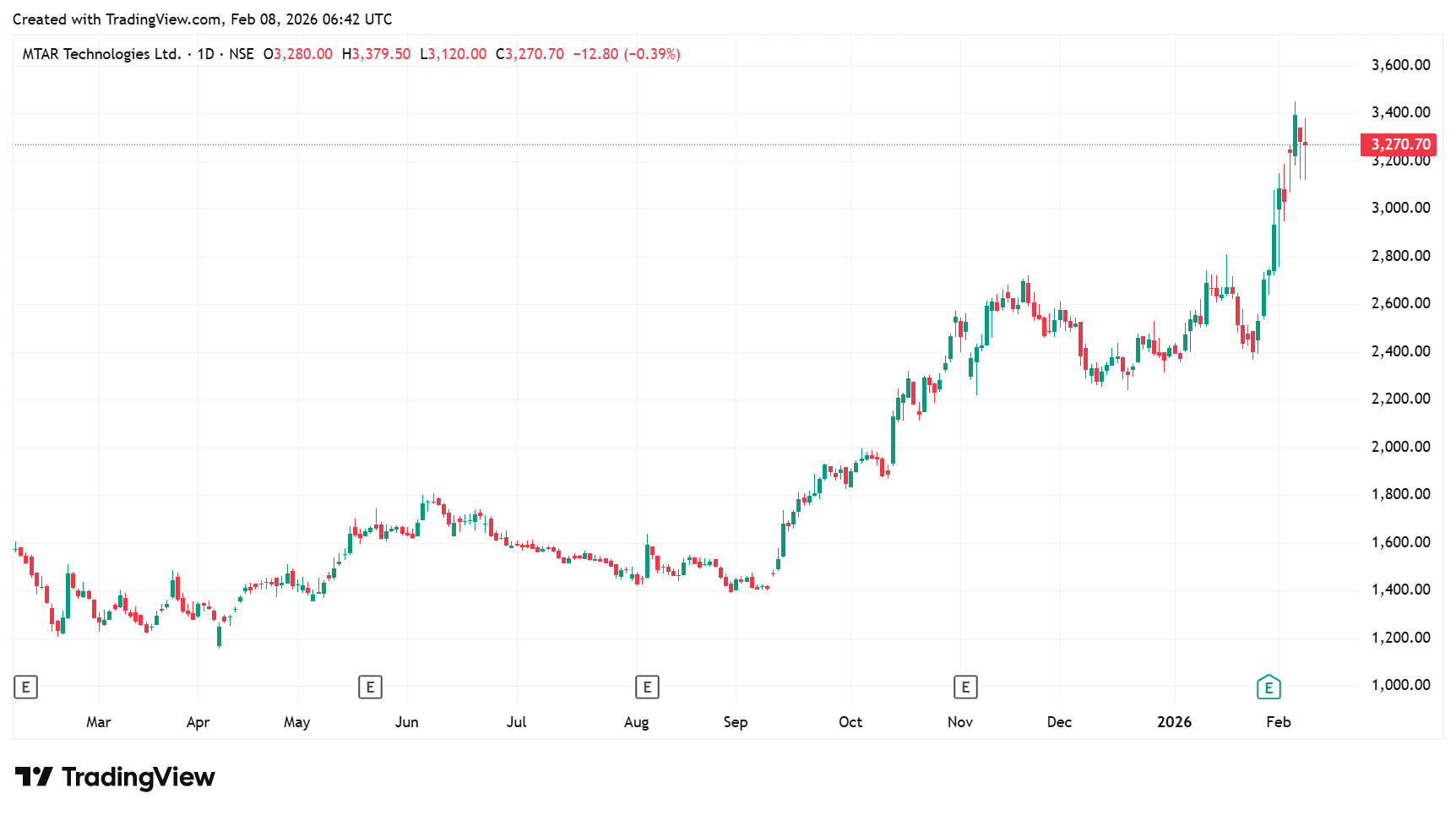
#1 MTAR Tech: The Precision Pivot to Kaiga
MTAR manufactures critical fuel-handling equipment for the core of the nuclear reactors. It is one of the top three suppliers of precision engineering services to the Indian Civil Nuclear Power sector, providing these services for over 40 years. MTAR supplies fueling machine heads, coolant channel assemblies, fuel transfer systems, and drive mechanisms.
The Revenue Blueprint: ₹400 Crore per Reactor
The company delivers these assemblies to the Nuclear Power Corporation of India and the Department of Atomic Energy. Management estimates the revenue opportunity at ₹350-400 crore per 700 MW reactor, driven by the supply of critical assemblies, including End Shields and Calandrias.
Order Resurgence: The Kaiga Catalyst and Execution Timeline
MTAR is currently witnessing a resurgence in this vertical, driven by favourable government policies. MTAR recently secured orders worth over ₹504 crore for the Kaiga units 5/6 nuclear reactors. This win reinforces the company’s position in the Indian nuclear energy ecosystem. This order will be executed over a 3-year period, with some items scheduled for 1-1.5 years.
While revenue from this segment was relatively muted in the 9MFY26 (₹16.6 crore) due to long gestation periods and work-in-progress, a ramp-up is expected. MTAR anticipates a strong start to revenue recognition from Q1FY27. Management is confident it can comfortably execute over ₹150 crore in nuclear revenue in FY27.
As of 31 December 2025, the Civil Nuclear Power segment constitutes 27.2% (₹651 crores) of MTAR’s total order book of ₹2,395 crores. This also provides good revenue visibility. Beyond Kaiga, MTAR expects to receive regular orders. The government plans to install another 700 MW reactor over the next 5-8 years.
Future-Proofing: Thorium Reserves and the Refurbishment Cycle
In addition to new builds, the company expects to receive orders for the refurbishment of existing reactors shortly. MTAR has completed work for Fast Breeder Reactors, which are expected to be commissioned soon. In the long term, this aligns with India’s vision for
thorium-based reactors that leverage the country’s vast thorium reserves.
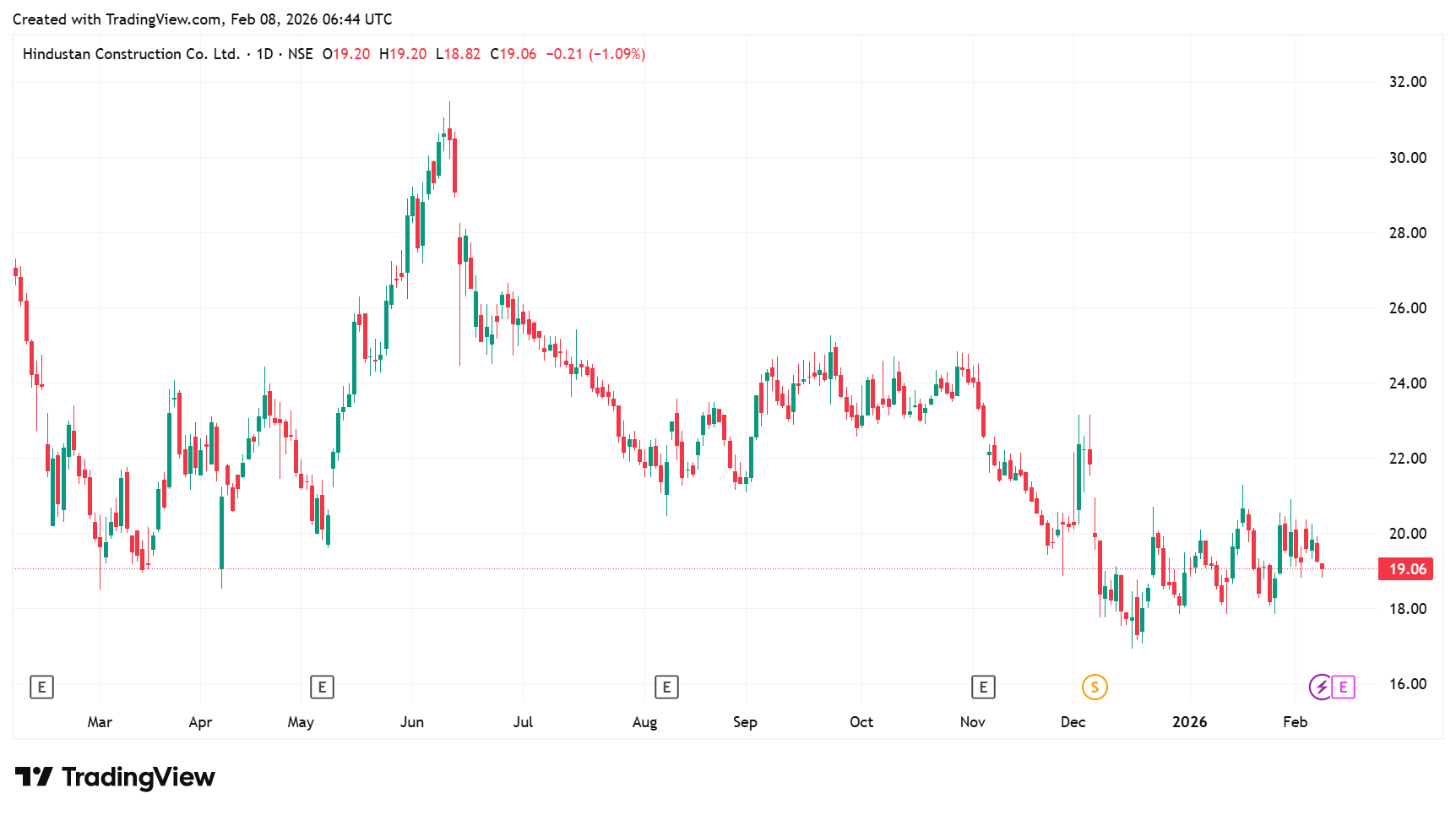
#2 HCC: The EPC Moat in India’s Atomic Infrastructure
HCC is an infrastructure company with a presence across the engineering and construction sector. It specializes in the Engineering, Procurement, and Construction (EPC) of critical nuclear infrastructure. The company has constructed 60% of India’s installed nuclear power capacity. The Nuclear & Buildings segment accounted for 6% of HCC’s total order backlog.
Key HCC projects include the Rajasthan Atomic Power Project, the Kudankulam Nuclear Power Project, the Kakrapar Atomic Power Project, and the Narora Atomic Power Project. Recently, it completed civil works for the front-end blocks of the Nuclear Recycle Blocks (NRB) for the Bhabha Atomic Research Centre (BARC) at Tarapur.
Partner of Choice for Global Players
The company works closely with India’s nodal nuclear agencies, including the Nuclear Power Corporation of India Limited, the Department of Atomic Energy, BARC, and IGCAR. Management describes HCC as a “choice partner for foreign strategics” looking to enter the Indian market
HCC is currently constructing the Fast Reactor Fuel Cycle Facility in Kalpakkam to support India’s fast breeder reactor program. Work includes construction of the fuel reprocessing plant and substations, and high-precision casting of cell walls, beams, and columns, all in accordance with nuclear-grade quality standards.
Navigating a ₹40,000 Crore Opportunity
The company has a total bid pipeline of approximately ₹40,000 crore. Management expects the Nuclear and Water sectors, combined, to contribute 15-20% to this pipeline. HCC estimates the annual market size for the nuclear sector execution at about ₹10,000 crore.
Next-Gen Nuclear Technology: Small Modular Reactors (SMRs) and Scale
HCC sees potential future traction from the Small Modular Reactor program. However, these are considered smaller opportunities (about ₹1,000 crore per reactor) compared with those of traditional plants. As the government gradually focuses on building nuclear projects, HCC is expected to be a prime beneficiary.
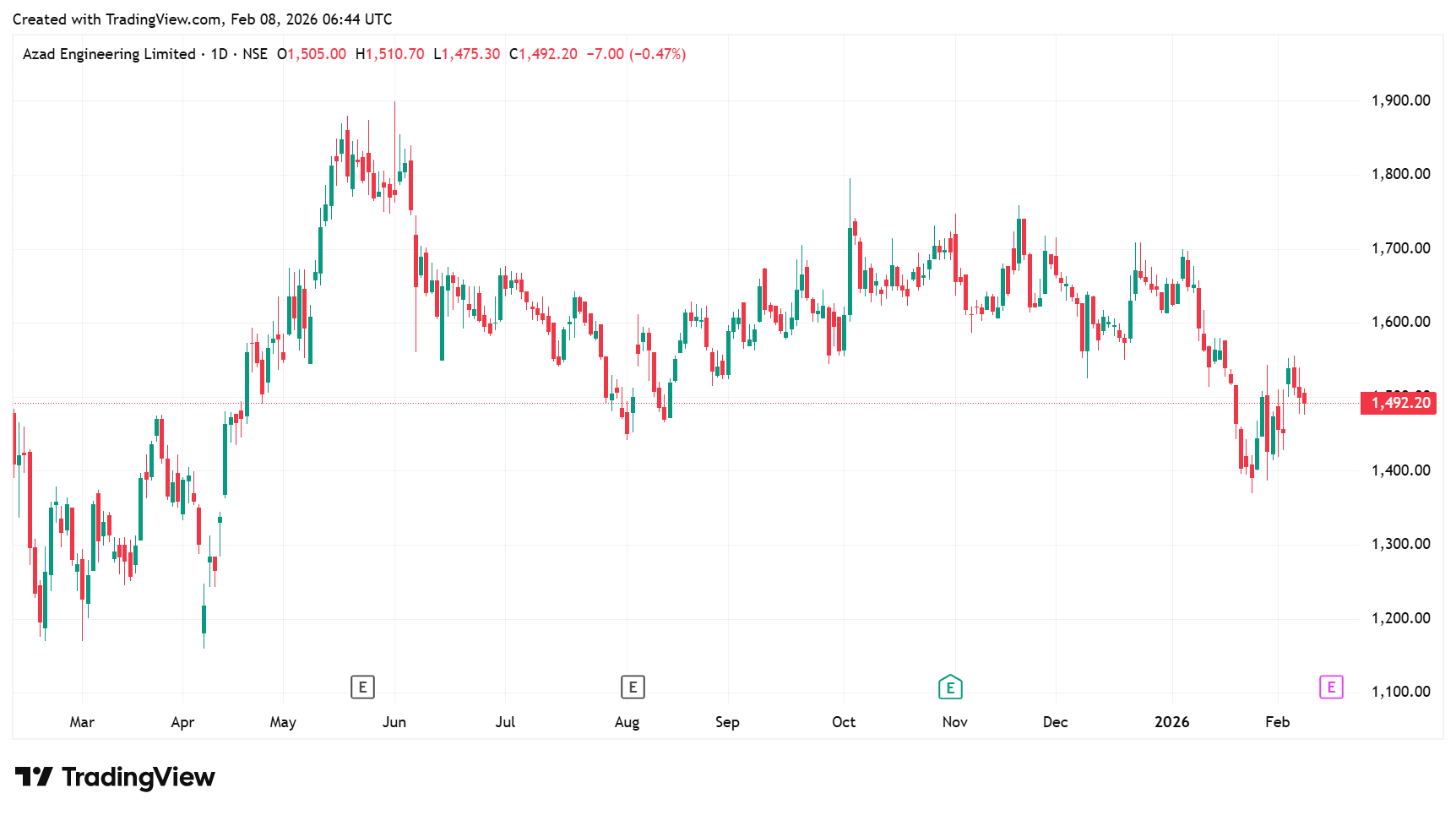
#3 Azad Engineering: Capturing the Global Turbine Value Chain
Azad Engineering manufactures highly engineered, complex, and mission-critical components for global original equipment manufacturers in the Aerospace & Defence, Energy, and Oil & Gas industries. In the energy, oil, and gas, the company manufactures components for advanced gas, nuclear, and thermal power turbines. Azad’s key nuclear product is a turbine airfoil assembly.
The Competitive Moat: Qualification Cycles and Switching Costs
The company emphasizes significant entry barriers in its industry. This includes Lengthy Qualification Cycles that take 30-48 months to qualify as a vendor, Zero-Defect Requirements, and high switching costs. Rigorous qualification cycles drive high customer stickiness, with average relationships lasting over 10 years.
The GE Vernova Pact: Moving Up the Global Value Chain
Azad has secured a significant agreement with GE Vernova valued at $53.5 million. This contract covers the manufacturing and supply of highly engineered, complex rotating and stationary airfoils for the advanced nuclear, industrial, and thermal power industries. Azad positions nuclear as a key part of its strategy to move up the value chain into higher-value products.
Azad aims to enter the nuclear turbine market as a target expansion area. To this end, the company plans to manufacture higher-value products across the client value chain, including advanced gas, steam, and nuclear turbines. Although Azad doesn’t disclose Nuclear revenue as a separate line item, its business is diversified across two verticals.
Energy and Oil & Gas are the dominant segments, contributing 81.5% of revenue in H1 FY26. Revenue in this segment grew by 35.7% in H1FY26, driven by new customer-specific manufacturing plants. The remaining revenue came from the aerospace and defense sectors. Azad is a supplier to six key manufacturers in this industry.
The 10x Expansion: Scaling to Meet Global Nuclear Demand
Azad is currently undergoing a massive expansion, with management stating it is building “10 times” its previous capacity. It recently opened three new lean manufacturing facilities. These plants are designed to meet global demand and scale rapidly.
The Investor’s Dilemma: Growth vs. Valuation
Return ratios, including Return on Capital Employed (ROCE) and Return on Equity (ROE), are muted across three companies, except HCC’s ROCE. Valuation-wise, MTAR trades at a significant premium to its median but is in line with industry multiples. HCC is trading in line with both the industry and median multiples, while Azad is at a discount to historical levels but at a premium to the industry.
| Peer Comparison (X) | |||||
| Company | EV/EBITDA | 3Y Median EV/EBITDA | Industry EV/EBITDA | ROCE (%) | ROE (%) |
| MTAR Tech | 67.8 | 41.0 | 64.0 | 10.5 | 7.5 |
| HCC | 9.2 | 10.5 | 10.2 | 25.2 | -0.7 |
| AZAD | 43.8 | 59.7 (1.5Y) | 19.1 | 12.2 | 8.9 |
| Source: Screener.in | |||||
Whether these companies can continue to lead the nuclear energy race, only time will tell. Meanwhile, add them to your watchlist and stay tuned.
Disclaimer:
Note: Throughout this article, we have relied on data from http://www.Screener.in and the company’s investor presentation. Only in cases where the data was unavailable have we used an alternative, widely used, and accepted source of information.
The purpose of this article is only to share interesting charts, data points, and thought-provoking opinions. It is NOT a recommendation. If you wish to consider an investment, you are strongly advised to consult your advisor. This article is strictly for educational purposes only.
About the Author: Madhvendra has been deeply immersed in the equity markets for over seven years, combining his passion for investing with his expertise in financial writing. With a knack for simplifying complex concepts, he enjoys sharing his honest perspectives on startups, listed Indian companies, and macroeconomic trends.
A dedicated reader and storyteller, Madhvendra thrives on uncovering insights that inspire his audience to deepen their understanding of the financial world.
Disclosure: The writer and his dependents do not hold the stocks discussed in this article.
The website managers, its employee(s), and contributors/writers/authors of articles have or may have an outstanding buy or sell position or holding in the securities, options on securities or other related investments of issuers and/or companies discussed therein. The articles’ content and data interpretation are solely the personal views of the contributors/ writers/authors. Investors must make their own investment decisions based on their specific objectives, resources, and only after consulting such independent advisors as may be necessary.