



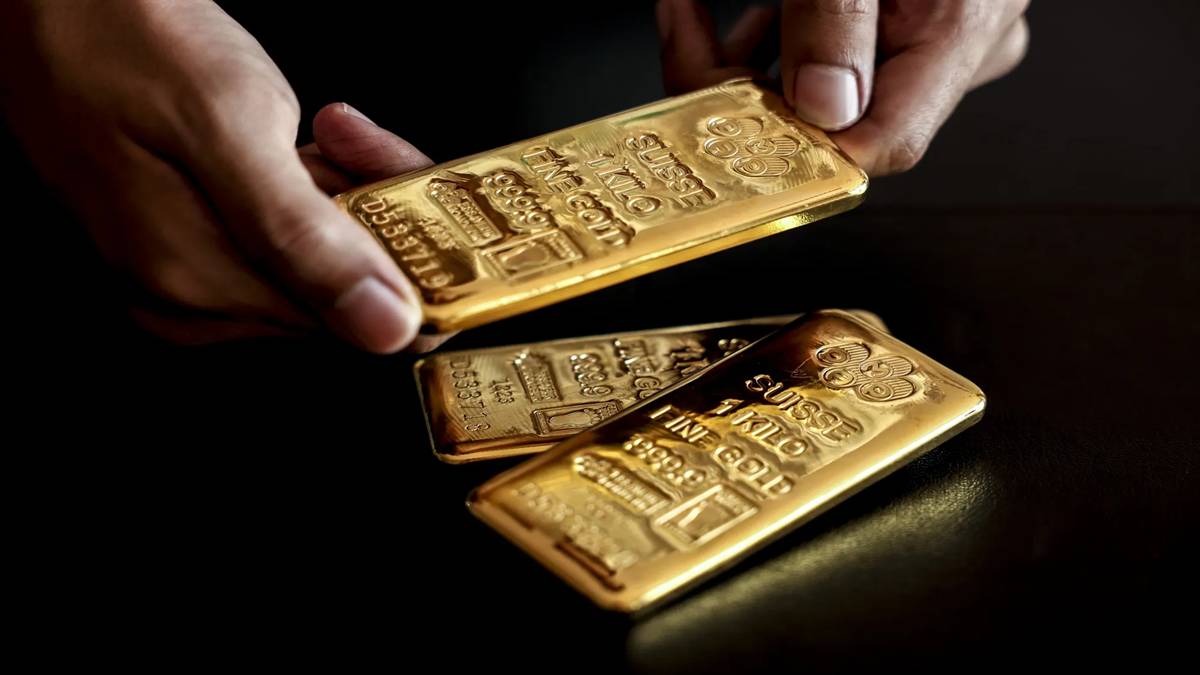
The RBI clarified on June 3, 2026, that India has not sold any gold from its holdings, calling media reports of a ‘sale of gold’ inaccurate. The central bank confirmed that the physical gold stock remains unchanged at 880.52 tonnes as of the clarification date.
The confusion may have emerged from an incorrect reading of the RBI’s weekly supplement report that shows the central bank’s gold holdings in value terms — not in quantity. The RBI data indicating the share of gold in India’s foreign exchange reserves is measured in currency terms, rather than reflecting the actual quantity of physical gold held.
“The weekly supplement reports gold valued in dollar and rupee terms, not in quantity. That figure moves with international prices and exchange rates, so a change in it cannot signal a transaction. The roughly $6 billion drop — from $120.85 billion (May 8) to $114.79 billion (May 22) — is a revaluation entry, not a sale,” says Dr. Renisha Chainani, Head of Research at Augmont.
What the May data actually shows
The value of gold in India’s foreign exchange reserves fell by $4.53 billion to $114.78 billion (Rs 10,98,889 crore) as of May 22, down from $119.31 billion (Rs 11,45,045 crore) the week before on May 15. The decline follows two weeks of gains — reserves had risen $5.6 billion to $120.85 billion (Rs 11,42,009 crore) as of May 8, up from $115.21 billion (Rs 10,93,660 crore) as of May 1.
However, comparing May 1 and May 22 — the rupee value actually rose marginally — from Rs 10,93,660 crore to Rs 10,98,889 crore. In dollar terms, gold traded at around $4,614.95 per ounce on May 1 and fell to $4,509.38 by May 22, down about 2.2% — which explains the drop in dollar value.
Over the two weeks between May 8 and May 22, gold reserves fell from $120.85 billion to $114.78 billion, down by $6 billion. Gold prices also fell by 2% during the same period.
“The actual driver was the global price itself, which fell roughly 4% during May, from about $4,724 an ounce on May 8 to the $4,540 region by late May. That correction, applied to an unchanged 880.52 tonnes, fully explains the lower dollar value — confirming revaluation, not disposal,” informs Dr. Chainani.
The physical stock — confirmed unchanged
The physical stock of gold is disclosed by the RBI in its Monthly Bulletin. The June 3 clarification states that the physical stock of gold remains unchanged at 880.52 tonnes — the same quantity the RBI had reported as of March 31. This conclusively confirms there was no sale of gold by India.
Not the duty hike effect either
The RBI values its bullion reserves using benchmarks from the London Bullion Market Association (LBMA). While the May 13 gold duty hike pushed domestic prices higher, international prices remained largely unchanged during May.
“The Reserve Bank values its gold at the international (LBMA) benchmark, not the Indian landed price. The May 13 duty hike — from 6% to 15% — lifted only the domestic price; it has no bearing whatsoever on reserve valuation, so it cannot be used to infer a sale,” adds Dr. Chainani.
RBI’s gold holdings: The bigger picture
If anything, gold’s role in India’s reserves has grown significantly. Gold’s share in total forex reserves has risen from 12% to 17.2% of RBI’s net foreign assets (NFA) by March 2026, primarily due to revaluation gains from higher gold prices. In March 2024, gold accounted for just 8.3% of NFA.
Many central banks, including India, have been net buyers of gold over the last 2–3 years. In 2025, the RBI lowered its gold purchases to 4.02 tonnes, a dramatic decrease from 72.6 tonnes in 2024. The RBI’s total gold holdings hit a record of 880.3 tonnes at the end of 2025, after buying only 1.3 tonnes during the year.
So far in 2026, RBI has also slowed gold buying. Following a four-month break, the RBI purchased 0.13 tonnes in January but none in February. The World Gold Council report on central bank gold buying for April also shows no buying by RBI. Through all of this, the physical stock has stayed constant — the RBI’s gold holdings remain at 880.52 tonnes.
Disclaimer: This article is based on official clarifications issued by the Reserve Bank of India on June 3, 2026, RBI weekly supplement data, and expert commentary. It is intended for informational purposes only. Readers are advised to refer to official RBI publications for authoritative data on India’s gold and foreign exchange reserves.