



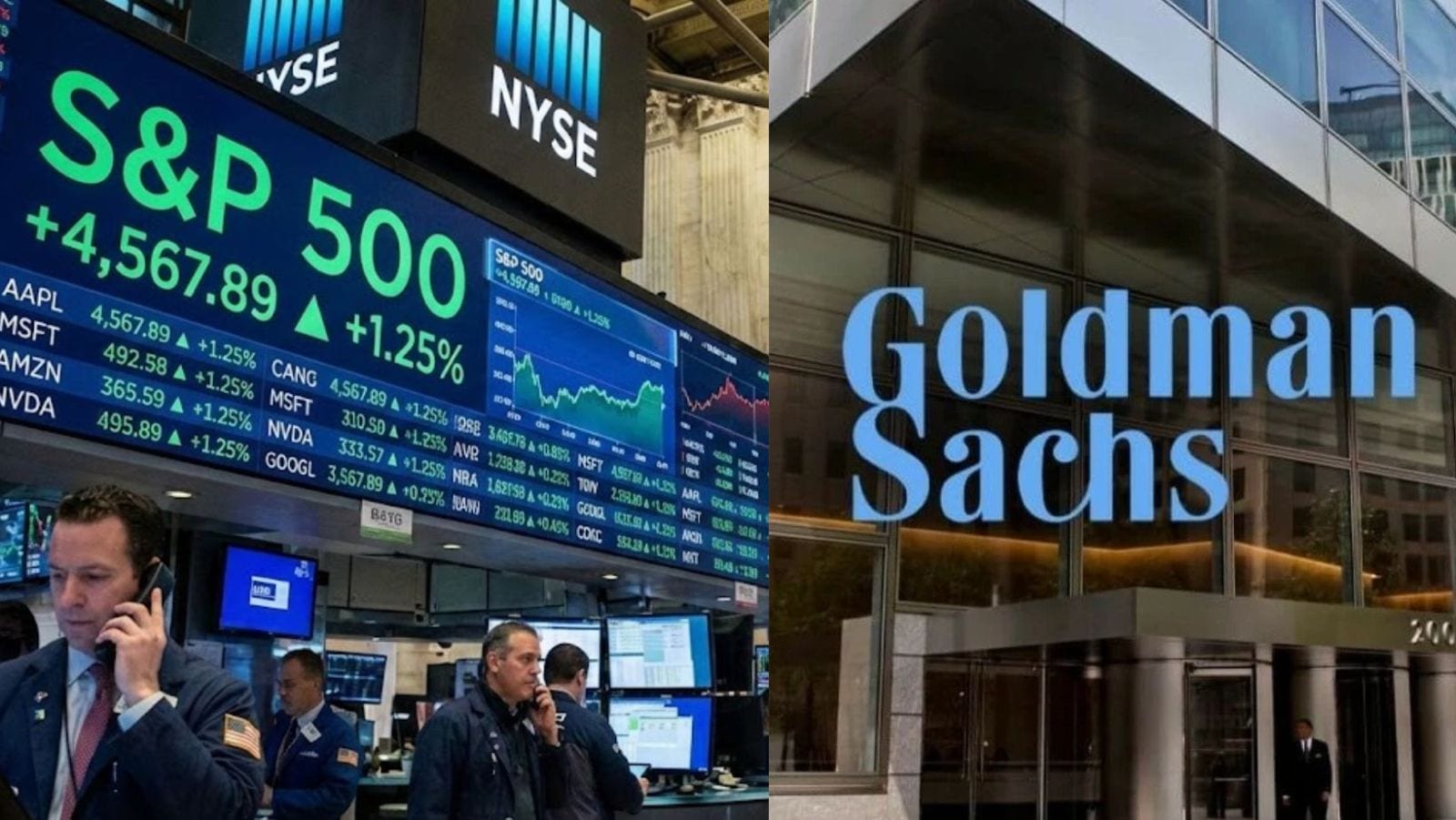
Goldman Sachs has identified five investment themes that could dominate 2026. From AI adoption moving beyond infrastructure to a massive comeback in dealmaking, here’s where the smart money is headed.
The mid-cycle acceleration play
Let’s kick things off with what Goldman is calling the “mid-cycle acceleration” theme.
Here’s the setup: The US economy is expected to grow 2.7% in 2026, while the Federal Reserve is likely to cut interest rates twice. This combination of accelerating growth plus Fed easing is historically a goldmine for certain types of stocks.
Which stocks are best positioned?
Cyclical sectors. Think companies exposed to middle-income consumers and firms tied to non-residential construction.
Why these specifically?
Because when the economy accelerates in mid-cycle and rates are falling, these are the businesses that tend to see their revenues surge. Middle-income consumers have more money to spend. Construction projects that were on hold suddenly become viable again.
Goldman’s data shows that when you get both accelerating growth AND rate cuts happening simultaneously, the S&P 500‘s price-to-earnings multiple has historically increased by roughly 10% to 15%. That’s a powerful tailwind.
The great re-leveraging
Now here’s a trend most people are missing.
Corporate leverage in the US is currently low. Really low. But it’s about to rise, and that creates some fascinating opportunities.
When companies start borrowing more, who wins? Obviously, the lending ecosystem. Banks, financial services firms, credit providers. They’re going to see increased business.
But there’s another angle here that’s even more interesting.
As more companies take on debt, there will be a premium for businesses that maintain strong free cash flows and focus on returning cash to shareholders. These companies become increasingly valuable in a world where everyone else is leveraging up.
It’s a simple supply and demand equation. Disciplined capital allocators become scarce. Scarcity drives value.
AI: From infrastructure to adoption
Here’s where things get really interesting.
The AI story in 2025 was all about infrastructure. Companies spending massive amounts on data centers, chips, and computing power. The hyperscale tech companies alone spent roughly $400 billion on capital expenditures last year.
But Goldman thinks the AI trade is about to shift dramatically in 2026.
The theme? “The AI Future is Now.”
What does that mean? It means the focus is moving from companies building AI infrastructure to companies actually using AI to make money.
Think about it in two waves. The first wave was picks and shovels (infrastructure).
The second wave is businesses boosting efficiency through AI adoption and companies generating revenues from that adoption.
Goldman also expects increased attention on AI’s interaction with the physical world. Robotics. Automation. Real-world applications beyond chatbots and image generators.
And here’s the kicker: while AI investment will continue to increase in 2026, the growth rate is expected to decelerate. This means rotation within the AI trade rather than just buying everything AI-related and hoping for the best.
The dealmaking comeback
Remember when IPOs and M&A were everywhere? Those days are coming back.
Goldman expects a major rebound in dealmaking activity in 2026. IPO volumes are projected to increase. M&A activity is surging. And with the equity market continuing to appreciate, private equity firms are going to find exits much easier.
This creates a chain reaction.
More IPOs mean more fees for investment banks. More M&A means more advisory work. More private equity exits mean alternative asset managers start looking attractive again.
Stock valuations for alternative asset managers took a beating when dealmaking dried up. Goldman thinks 2026 is the year they recover.
The search for value
Last but definitely not least: value stocks.
Value had a surprisingly strong 2025. And Goldman thinks the trend continues into early 2026.
Why? Two reasons.
First, valuation spreads are wide. Really wide. Growth stocks are trading at historically high multiples while value stocks are comparatively cheap. That gap usually doesn’t last forever.
Second, the macroeconomic outlook is favorable. When you have steady economic growth without recession fears, value stocks tend to perform well. They’re often tied to cyclical businesses that benefit from economic expansion.
The bottom line
Goldman isn’t just predicting a 12% gain for the S&P 500. They’re telling you exactly where to look for opportunities. Mid-cycle acceleration plays. Companies benefiting from corporate re-leveraging. AI adoption beyond infrastructure. Dealmaking recovery stocks. And value plays with wide spreads.
The question is: which bet are you taking?
Sonia Boolchandani is a seasoned financial writer She has written for prominent firms like Vested Finance, and Finology, where she has crafted content that simplifies complex financial concepts for diverse audiences.
Disclosure: The writer and her his dependents do not hold the stocks discussed in this article.
The website managers, its employee(s), and contributors/writers/authors of articles have or may have an outstanding buy or sell position or holding in the securities, options on securities or other related investments of issuers and/or companies discussed therein. The content of the articles and the interpretation of data are solely the personal views of the contributors/ writers/authors. Investors must make their own investment decisions based on their specific objectives, resources and only after consulting such independent advisors as may be necessary.