



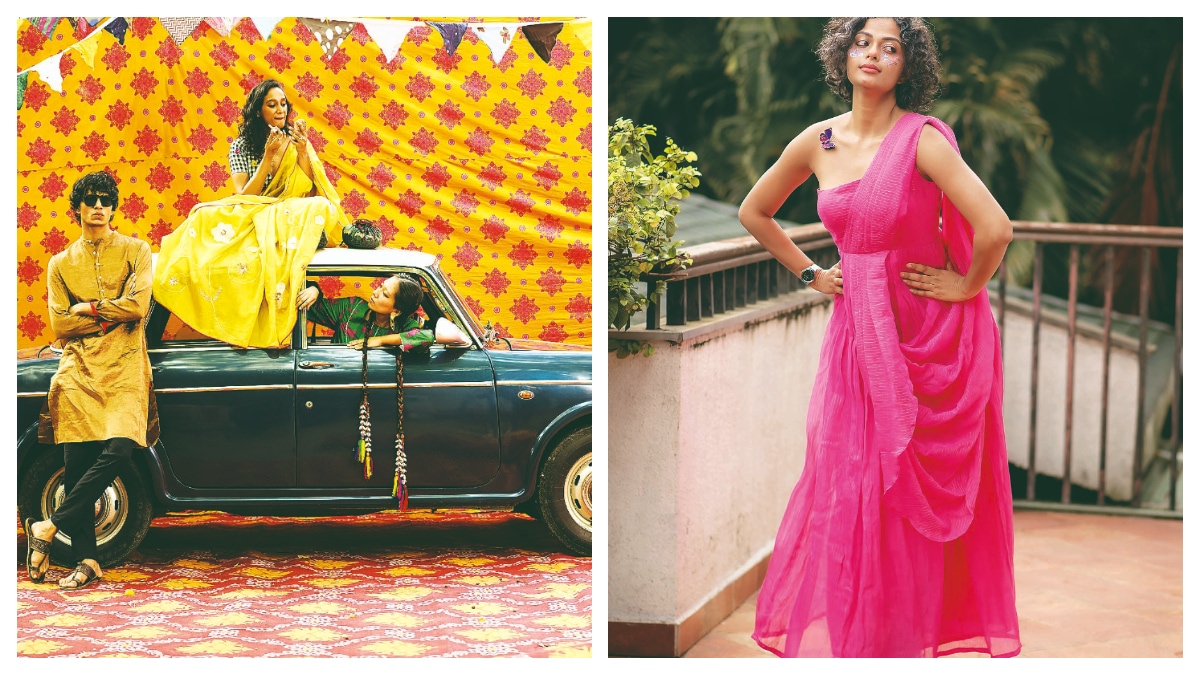
There’s a shift happening in the fashion landscape of the great Indian wedding space. Whether you’re at the royal lawns of Udaipur or at a beachside mandap of Goa, whether you are attending a haldi ceremony in an intimate backyard or a sangeet inside a chartered jet, brides, grooms and wedding-goers today are looking for comfort alongside glamour.
This is leading to a rise in fusion wear this wedding season, where a bride in a corset lehenga and metallic sneakers can make the celebration look as effortless as a groom in an embroidered tuxedo with zari accents, or a bridesmaid carrying shimmer-sleek handbags.
To tap into this growing trend, couture houses, designers and brands are now blending Indian craftsmanship with global sensibilities. Last month, Italian luxury sneaker brand Golden Goose launched two limited-edition sneakers in collaboration with fashion designer Manish Malhotra, turning heritage into contemporary style. Just in time for the wedding season, the white suede for women in gold embroidery can be paired with lehengas and palazzos, while the men’s black suede goes well with bandhgalas, sherwanis and Indo-Western jackets.
Similarly, luxury brand Nicobar’s first-ever wedding collection Nicobaarat, launched in November 2025, is all about contemporary silhouette design inspired from Indian culture and global travel. Fluid skirts with pockets, diaphanous dupattas, chanderi sarees, and versatile blouses with mukaish, tassels and frills lend contemporary soul to Indian textiles, an example of how Indian weddings are becoming fusion-forward.
“It’s the blend of tradition, innovation and conscious luxury that makes the season so dynamic and promising,” says Pushpa Bector, senior executive director and business head of DLF Retail. In September last year, DLF Luxury Malls organised ‘The Treasury of Trousseau 2025’, a three-day luxury wedding and lifestyle showcase, which indicated that Indian weddings are embracing a distinctly ‘Made in India’ identity, while seeking celebrations that highlight craftsmanship and couture alongside luxury.
The winning formula
Designer Monica Shah of Jade, a brand known for lehengas, gowns, and sarees, notes a marked rise in brides and grooms gravitating toward fusion wear. “There’s a growing comfort in blending Indian craftsmanship with global silhouettes— structured bodices with fluid drapes, metallic embroidery on contemporary cuts, and a play between old-world techniques and modern textures,” says Shah. Soft golds, deep reds, and muted jewel tones still anchor the palette, but fabrics like organza and tulle are being reimagined to deliver movement, not weight.
Designer Amit Aggarwal, whose bridal segment has grown 40% y-o-y, feels, “Today’s brides are choosing metallic saris, engineered drapes, and sculpted silhouettes made from heritage textiles and even recycled polymers, a nod to both luxury and sustainability.”
Men, too, are embracing fusion as a form of individuality. What once revolved around a sherwani or classic bandhgala has now expanded into a wide spectrum of cross-cultural style. “Fusion wear has become the heartbeat of this wedding season,” says Piyush Mohnani, marketing head of fashion brand Asuka Couture. “Modern grooms want comfort, versatility, and individuality rather than purely ethnic ensembles,” he adds.
This season, grooms are gravitating toward structured bandhgalas paired with draped trousers, embroidered tuxedos with subtle Indian detailing, asymmetrical kurtas and hybrid Indo-Western sets, soft metallics, sage green, champagne, ivory, and midnight blue. In fact, Asuka’s fusion line now contributes nearly 35% of wedding orders, growing at 40% year-on-year, a testament to how powerfully Indian menswear is evolving.
Personal expression is big
According to Tanya Biswas, co-founder of design house Suta, wedding wardrobes, especially for women, are all about choosing comfort and character over convention. “Pairing sharp blazers with lehengas, slipping into fluid saree-gowns, or twirling in easy co-ord sets is the wedding fusion,” says Biswas. Pastel lilacs and sages dominate daytime functions, while deeper emerald and regal red take over the evenings. Suta is seeing a steady 7-8% growth in fusion wear.
This movement is also reflected in the shift toward lighter fabrics. Designer Bhawna Rao observes brides gravitating toward chiffon, georgette, and crepe for refined ease. “Colours like ivory, blush, and metallic tones are replacing the usual reds and maroons,” she adds.
Designer Achint Mehta sees a deeper cultural shift at play as celebrations are changing to be more personal, expressive, and more about joy than formality. “For me, fusion wear has never been about mixing silhouettes for the sake of it; it’s about blending emotion with ease. Brides are choosing lighter lehengas with corset blouses, pre-draped sarees, jackets over skirts, pieces that let them dance, laugh, and live every moment comfortably,” says Mehta.
However, the most unexpected yet exciting twist in fusion fashion comes from footwear. Bharat Mahajan, chief design innovator at CHK, and former designer at Puma and Wildcraft, has seen a meteoric rise in wedding sneakers.
“Fusion wear is likely to become an even bigger trend this season, especially pairing sneakers with formal wear. Earlier it was about comfort, but now sneakers are gaining wider acceptance as an expression of personality,” Mahajan says.
Brides are trading stilettos for metallic sneakers. Grooms are matching their tuxedos with shimmer-lined lace-ups. Bridesmaids are dancing through three-day sangeets in floral sneakers designed to move with the chaos. “Most of our customers are young, fashion-forward individuals who prioritise making their style statement without compromising on comfort,” says Mahajan.
According to Ayush Tainwala, CEO of Bagzone Lifestyles (Lavie), the wedding accessory market has undergone a major style pivot. “Weddings are becoming noticeably more modern, where people are opting for fusion silhouettes, minimalist palettes, and statement accessories that go beyond conventional ethnic motifs,” he explains.
Lavie’s Occasion Edit has been developed for this very demand, sleek silhouettes, shimmer finishes, and multi-function evening bags that complement the modern festive wardrobe. “These handbags are crafted for women who believe every evening out is an opportunity to express individuality,” Tainwala adds.
Heirloom meets modernity
Fusion jewellery has also emerged as one of the strongest trends this wedding season. The defining movement is the resurgence of vintage and heirloom-inspired designs. Searches for rose gold wedding jewellery (+415%), burgundy ball gowns (+150%), and unique vintage rings (+190%) reflect a collective desire for timeless opulence and nostalgic charm, as per a Pinterest report.
Shravan Satyani, co-founder of Tyaani Jewellery by Karan Johar, attributes this shift to a more mindful customer. “Today’s consumer is value-driven, preferring intentional purchases over impulse buys,” says Satyani. The brand has seen rapid growth in tier 2 and 3 cities, where digitally savvy, aspirational consumers seek heritage but also affordability, which fusion jewellery delivers.
Despite gold price volatility, jewellery demand remains buoyant. MP Ahammed, chairman of Malabar Gold, says wedding jewellery saw a 27% rise in value and 5% increase in volume this season. The buying pattern, however, is changing. Brides still opt for heavy gold for the main ceremony, but lightweight fusion jewellery dominates the mehendi, sangeet, and reception wardrobes.
This shift has encouraged brands to innovate. This season, jewellery retailer Senco Gold has launched gold jewellery in 9 carat, designed for affordability and versatility. “Low caratage jewellery in 18, 14, or 9 carat is picking up and matches the demand and budgets today,” says Joita Sen, director at Senco Gold and Diamonds.
The fusion shift isn’t limited to gold alone. Natural coloured gemstones like emeralds, tourmalines, corals, and opals are also popular. According to Ramesh Kalyanaraman, executive director of Kalyan Jewellers, consumers are open to mixing traditional gold with contemporary stonework.