



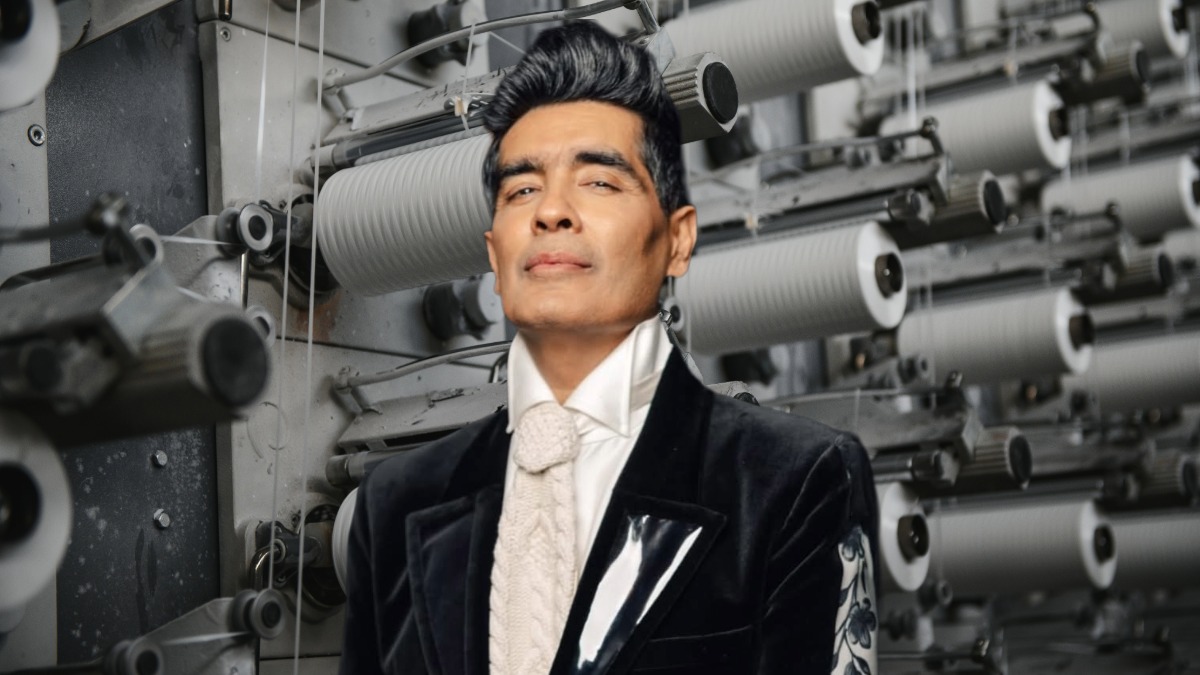
“I started modelling in college and earned Rs 2000,” said one of the biggest fashion designers in India. Little did that teenager know that not only would he dress all of Bollywood, but also win awards for it, achieve global recognition, and become every Indian bride’s dream designer for her big day.
He is Manish Malhotra.
The designer behind Karan Johar’s Met Gala look, who even dressed ‘King of Pop’ Michael Jackson in the 1990s, he was the the costume designer behind some of Bollywood’s most iconic films, including Dilwale Dulhaniya Le Jayenge (1995), Dil To Pagal Hai (1997), Kuch Kuch Hota Hai (1998), Mohabbatein (2001), and Kal Ho Naa Ho (2003). He was also behind Bollywood’s most iconic character, Kareen Kapoor’s Poo from Kabhi Khushi Kabhie Gham (2001).
Giving life to the costumes, a Manish Malhotra design became an extension of the character, almost an extension of their personality.
The Boy Who Loved Clothes
In the most non-stereotypical way possible, Manish Malhotra loved clothes as a child. Be it giving styling advice to his mother for her sarees or falling in love with painting at an art class, fashion had been his calling.
Speaking to Official Humans of Bombay in 2020, Malhotra shared, “I grew up in a typical Punjabi household…I was always fascinated by Bollywood films & made it a point to watch every single film that was released. But I wasn’t a very good student & found academics boring.”
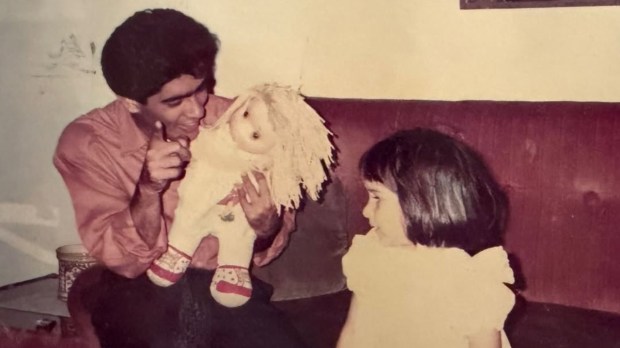
With encouragement from his mother, he did not suppress his fascination for the arts. In 6th grade, he joined a painting class and enjoyed it, “From watching films, to painting, & being surrounded by mother’s clothes, my love for fashion grew,” he told Official Humans of Bombay.
And his journey? Began at the young age of 14.
Having just entered the teen years, it was one of the biggest things he is associated with today. Yes, weddings. At 14, while preparing for his brother’s wedding, he truly looked forward to understanding the design, the clothes and intricacies of it all.
As per TeenVogue, Malhotra skipped any formal training and developed his skills also by experience. Pursuing higher education now, he was attending Elphinstone College, but picked up modelling on the side. “I started modelling, & began working at a boutique.
“I was there for a year & a half & earned Rs. 2000 from modelling jobs,” shared Malhotra in 2020.
But he realised that he couldn’t afford a fashion degree or study abroad for such a niche. “I couldn’t afford to go abroad & study fashion, so that was my school in a way. I’m completely self-taught and I used to sit & sketch for hours,” Manish Malhotra said.
Malhotra’s Masterclass in Brand Building
From boutique to empire, Malhotra had a long journey. But the 1990s were kind to him.
He made his first Bollywood debut in 1990 with ‘Swarg’ and became a turning point in his career. Having dedicated over 30 years to the industry, Manish Malhotra has become synonymous with it. But how did he do it?
He applied one thing even business school may not teach the students – using someone else’s platform to build your own. He used Bollywood as his biggest advertisement. From Kajol’s Simran in DDLJ to Urmila in Rangeela (touted as his first Bollywood film), Malhotra’s long running collaboration with films is what kept him relevant.
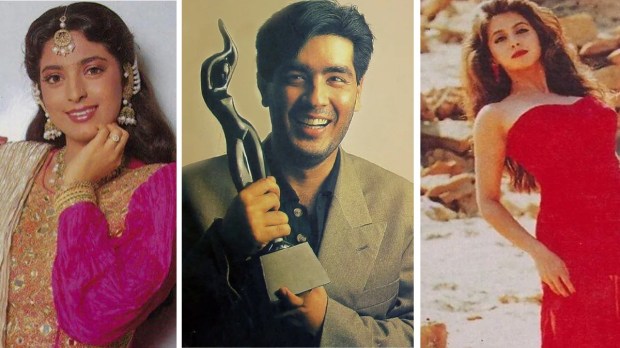
In fact, the Manish Malhotra playbook is comparable to the late Giorgio Armani’s use of Hollywood to dress Richard Gere in ‘American Gigolo’, establishing a visual identity. And Malhotra did the same, organically, for 15 years – the biggest designer Bollywood had seen.
But why did his work stand out?
He told TeenVogue in 2023, “The goal was always to embrace the character’s persona as well as I could; the costuming was how I saw the portrayal of these characters when I read the script. It was how I would imagine these characters to dress if they happened to be around me in real life. I wanted viewers to feel the character in their garments alone.”
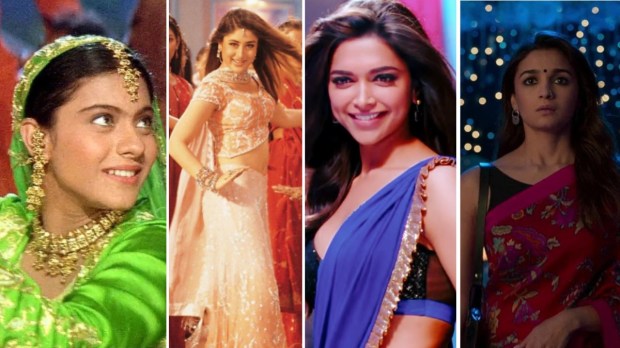
While it was a suit for Simran (Kajol) in DDLJ to evoke NRI nostalgia, Dil Toh Pagal Hai’s Nisha (Madhuri Dixit) introduced western athleisure on the silver screen, with bike shorts, slip dresses, and unitards.
Beyond Bollywood – Testing The Waters
Before going all in, Malhotra tested the waters. A strategic move to transform his big launch into a low-risk, high-ROI potential. In 1999, Manish Malhotra collaborated with industrialist Kajal Anand, Avanti, and Yash Birla to design collections for their store Reverie.
Gauging the market and predicting the trends, Malhotra took the reverse route for brand building. He started with aspiration and then went exclusive, with a price tag only some would dare to afford .
In 2005, when Manish Malhotra was 39 and 15 years since he first declared his love for the fashion world, he launched his eponymous label, MM Styles Pvt Ltd. The 1990s were over and he was already on a high of reigning Bollywood outfits, from silver screens to award shows, he had officially arrived.
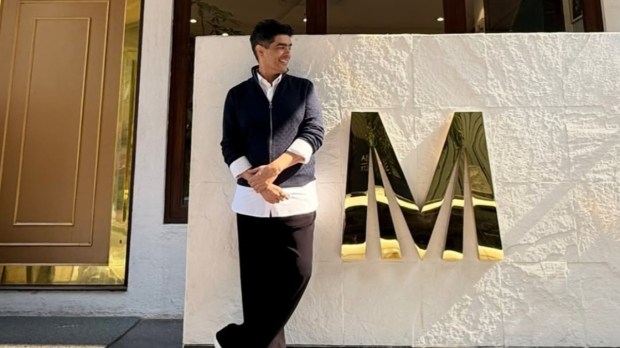
He didn’t take long to take it global. The first international store was launched in Dubai, in 2006, targeting India’s ties with the Gulf. And Mumbai came later. Only in 2008 did the flagship stores launched, with the rest being a last-mile expansion, from Delhi in 2013 to Hyderabad in 2017.
The New Decade of Expansions: Setbacks and Diversity
A decade later, in the 2010s, Malhotra still dominated the industry. Known for bridal couture, red carpet looks, and at the creme-de-la-creme of Indian fashion, he was still riding high.
In 2018, the real challenge came with the changing decade. Malhotra not only faced Indian heavyweights like Sabyasachi Mukherjee, Anita Donge, Tarun Tahiliani, Abu Jani & Sandeep Khosla, but also international designers who had moved away from maximalist aesthetics, slowly building a strong aspirational hold over the Indian couture consumers.
It was time to diversify.
Malhotra collaborated with MyGlamm to launch ‘Manish Malhotra Haute Couture Makeup’. 46 products, not high priced, but at a price point people could afford. Pushing heavily in online sales, in an attempt to make luxury more accessible, the collaboration fell through.
Once a unicorn reporting a Rs 100 crore revenue in two years, the reviews and mega-players like Lakme were not an easy loyalty to break. Facing severe financial strains, building operational liabilities, and brand value dilution, it was later declared dissolved.
But in 2021, Malhotra bounced back to become India’s first NFT (Non-fungible token) designer, in collaboration with Lakme Fashion Week, FDCI, and WazirX NFT Marketplace. Selling out within 2 minutes, it became one of the fastest sales recorded.
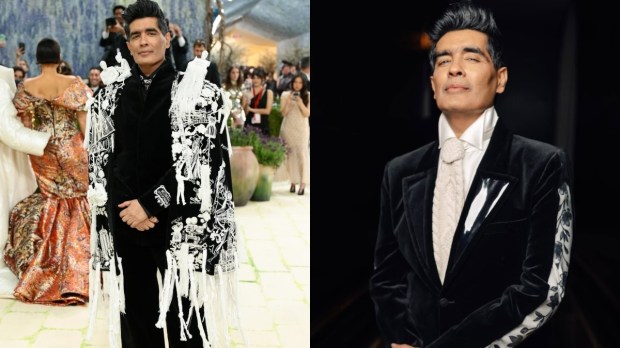
In a statement he had said, “NFTs are a complete gamechanger and absolutely something that the Indian industry needs to consider and move towards…I can see so many new possibilities emerge for artisans and the creator’s community. I’m looking forward to further explore the extent of the new-age technology.”
Years later, in 2023 came Manish Malhotra’s jewellery line. Flaunted by billionaire beauty mogul and singer Rihanna on multiple occasions, she is known to have paired Malhotra and Sabyasachi’s high-fashion pieces together.
The Reliance Collaboration that Flipped the Script
The next decade brought a trend which changed the game for several Indian designers. Conglomerates started to monopolise the market. From acquiring the labels of these independent artists and boosting their international sales, it became a strategic business decision, for both the creator and commissioner.
In October 2021, Reliance Brands Ltd picked up a 40% minority stake in MM Styles, the first external investment the brand has taken. It raised more than $33 million with this deal, as per a Tracxn report. A major buyout amid the COVID-19 pandemic, it came as a blessing in disguise.
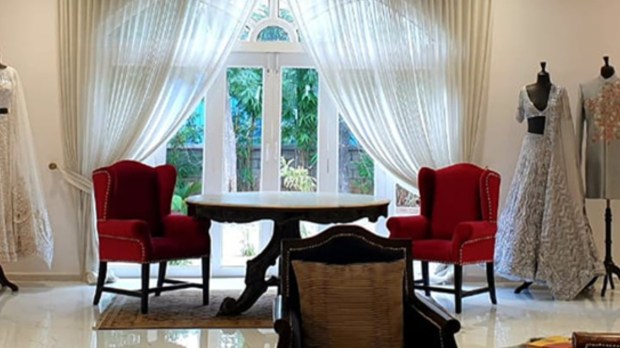
Darshan Mehta, RBL’s CEO, said at the time: “A question I am often asked is: why isn’t there a true luxury brand out of India? In three years time, I would expect people to say, ‘Well, there’s Manish Malhotra, that’s a global luxury brand that comes out of India.’ That’s the mission.”
The Malhotra Playbook
Manish Malhotra’s business works like a carefully layered pyramid, with different parts of the brand serving different kinds of customers while all contributing to its larger luxury image.
At the base:
This is where the more accessible products come in, beauty lines, diffusion fashion, and smaller accessories. These are designed for a wider audience, sold in larger volumes, and help introduce younger customers to the brand. It’s the entry point into the Manish Malhotra world.
In the middle:
Bridal and occasion wear form the real commercial backbone of the business. India’s wedding industry is massive, and Manish Malhotra has built a strong hold in the premium luxury segment. His bridal lehengas often begin at several lakhs and can go up to crores for custom-made creations, making weddings one of the brand’s biggest revenue drivers.
At the top:
Then comes haute couture, high jewellery, and exclusive celebrity commissions. These are produced in very limited numbers, but carry enormous prestige and high profit margins. They may not sell in large quantities, but they create the glamour, exclusivity, and aspirational value that keeps the entire brand desirable.
The brand’s powerful social media presence, with over 12 million followers across platforms, acts as the bridge connecting every layer of the business. It keeps the label constantly visible, relevant, and aspirational across audiences, all without relying heavily on traditional advertising.
Disclaimer: This is an independent profile. Manish Malhotra and their representatives were tried to be contacted but did not respond prior to the time of publication. In the absence of direct comment, this article was reported using publicly available records and reports. This content was produced in accordance with FinancialExpress.com’s editorial guidelines.