



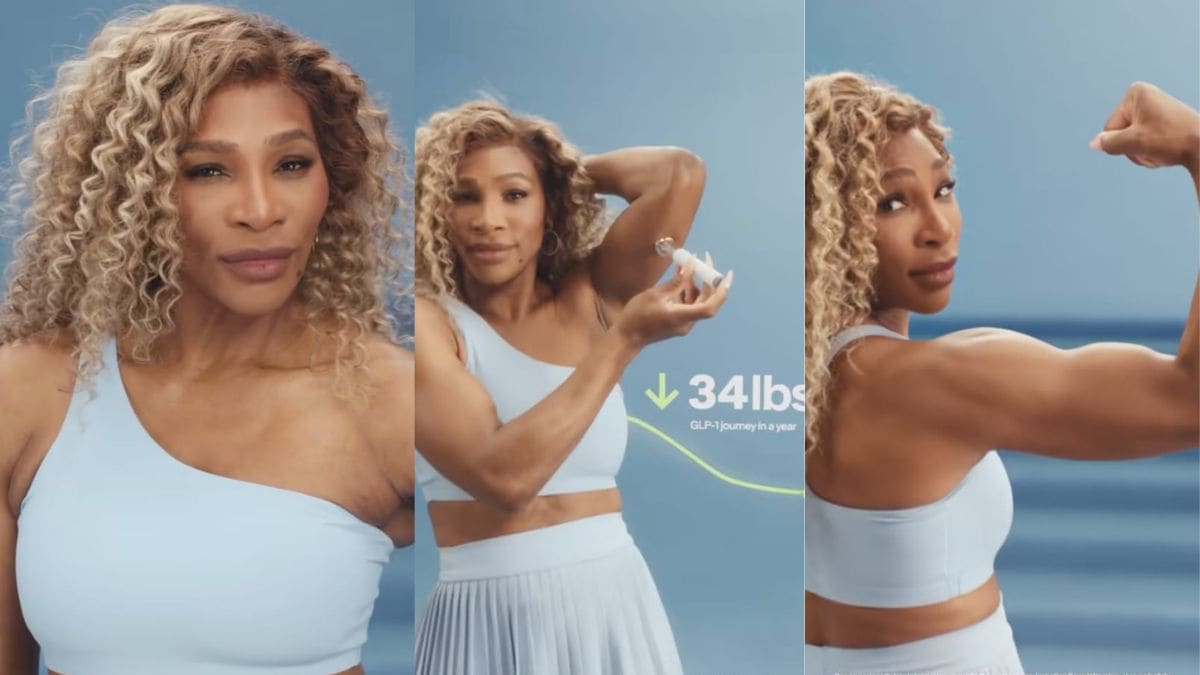
Serena Williams’ recently appeared in a Super Bowl advertisement promoting a GLP-1 weight-loss drug which has triggered a wave of backlash online. This has reignited debate over celebrity endorsements, pharmaceutical marketing, and the ethics of selling prescription weight loss.
The retired tennis legend features in a commercial for telehealth company Ro, where she is shown using an injectable pen and navigating the company’s app. Williams credits the GLP-1 drug Zepbound for helping her lose 2 stone 3 pounds (around 14 kgs), a disclosure that quickly went viral after the game.
While GLP-1 medications like Ozempic, Wegovy and Zepbound were originally developed to treat type 2 diabetes, their use for weight loss has surged globally, along with scrutiny around who should be promoting them.
Why is Williams facing backlash?
Much of the outrage centres on Williams herself. As one of the most dominant athletes in sporting history, her endorsement struck many viewers as tone-deaf. Williams won 39 Grand Slam titles and four Olympic gold medals across a career that spanned more than two decades. For critics, seeing an elite athlete promote pharmaceutical weight loss felt like a troubling signal.
Social media reaction was swift. “Serena Williams being the poster girl for Ozempic blows my mind,” one user wrote on X. Another X user commented, “From tennis legend to Big Pharma mascot, kids watching, Ozempic dreams loading.”
Others questioned why a former world-class athlete would publicly endorse medication rather than lifestyle-based health, especially during an event watched by millions of young viewers.
Conflict of interest concerns
The controversy has also drawn attention to Williams’ personal ties to Ro. Her husband, Reddit co-founder Alexis Ohanian, is an investor in the company and serves on its board. Williams has previously acknowledged partnering with Ro for weight management after her second pregnancy, but critics argue the Super Bowl spotlight raises fresh ethical questions.
What do the experts actually say about GLP-1 drugs?
Medical experts stress that GLP-1 drugs are not cosmetic tools. “These medications can be extremely effective for people with obesity-related health risks,” Dr Fatima Stanford, an obesity medicine specialist at Harvard Medical School, has said in public discussions. “But they require medical supervision and lifestyle changes. They’re not meant to be quick fixes.”
Clinical data supports both their effectiveness and limitations. A 2021 study published in The New England Journal of Medicine found that patients taking semaglutide lost an average of 15 per cent of their body weight over 68 weeks. However, follow-up research published in JAMA 2024 showed many patients regained a significant portion of the weight after stopping the drug.
Experts also warn about side effects. “We’re seeing nausea, gastrointestinal distress, muscle loss and metabolic changes,” says Dr Ethan Weiss, a cardiologist at the University of California, San Francisco. “Without long-term behavioural changes, the benefits may not last.”
Big Pharma’s changing Super Bowl strategy
The ad also reflects a broader shift in pharmaceutical marketing. For years, drug companies avoided overt clinical messaging during the Super Bowl. That caution appears to be fading. Reports suggest 2026 Super Bowl ad slots averaged $8 million per 30 seconds, with premium placements crossing $10 million.
Williams struggle with weight loss post-retirement
Williams has been open about struggling to lose weight post-retirement despite years of elite training. Supporters see her honesty as refreshing. Critics argue the issue is not her personal choice, but the platform and message.
As GLP-1 drugs reshape the global weight-loss industry, the reaction to Williams’ Super Bowl ad shows a growing discomfort: when icons endorse prescription medicine on the biggest stage in advertising, the conversation quickly shifts from health to responsibility and who should be shaping it.