



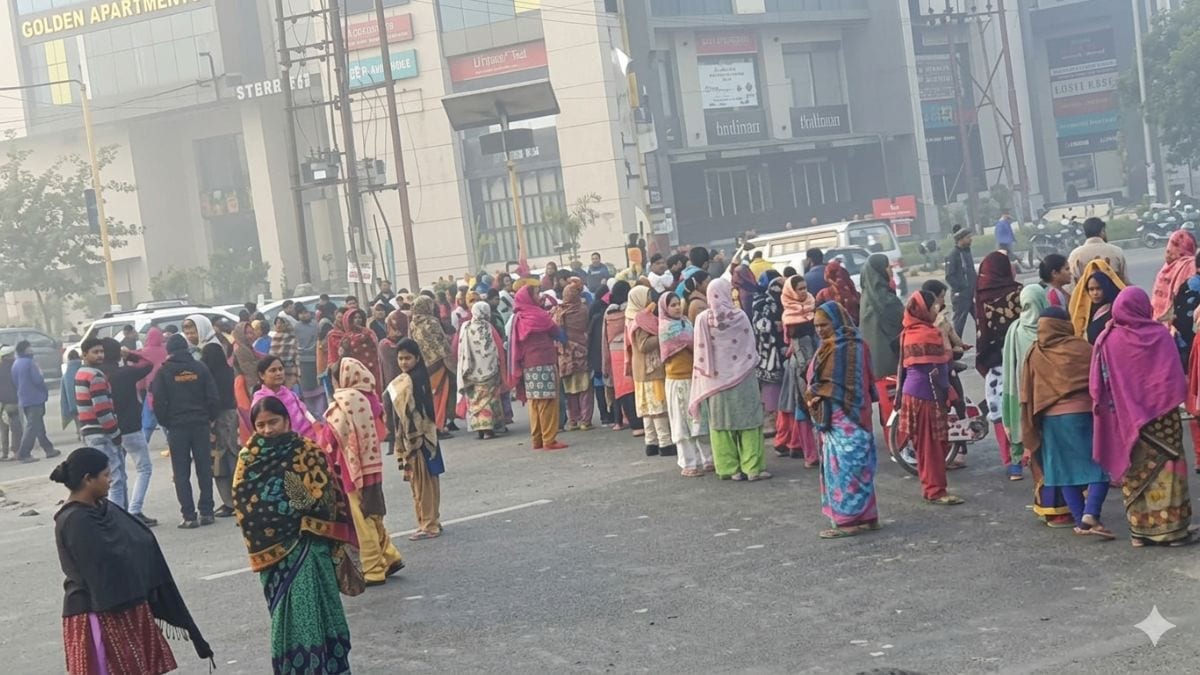
In a notable development, domestic workers across Noida’s high-rise sectors have joined the ongoing labor strike, demanding a formal wage structure and immediate pay hikes.
The move has reportedly paralyzed daily life in major residential hubs, as maids and cooks refuse to enter societies until their demands for higher pay and fixed working hours are met.
The latest demands from maids in Noida include an immediate increase in monthly wages and better structure for monthly/weekly offs.
“The fees of private schools, groceries, LPG, everything is rising, yet our wages remain the same. Why can’t my children also go to private school,” one domestic worker was heard saying during the ongoing protests.
When asked how long they intend to protest before they go back to work by reporters, the domestic workers hurled back by saying “we won’t go back to work till our pay is increased.”
Domestic workers have also demanded regular and structured weekly offs. Some of the protesting maids told reporters that they only received 2 offs a month which prevented them from spending adequate time taking care of their children.
They further alleged that if they take even one more leave than the prescribed two then they have to deal with a pay cut on a bare minimum salary. It is in light of this situation that Noida’s maids have now taken to the streets to demand better working conditions.
Notably, these demands from Noida’s informal economy workers came shortly after the state government announced an interim hike in the wages of factory workers. The government’s decision to hike the pay of Industrial workers came in the wake of a massive industrial protest that has gripped the city for the past 72 hours.
Backdrop: From factories to high-rises
The unrest in Noida’s industrial zones began earlier this week, specifically in Phase-2 and Sector 60. Frustrated with stagnant wages and the rising cost of living in Noida, thousands of factory workers took to the streets to protest against factories for cruel pay structure and working conditions.
A protester told NDTV that despite working 12-hour shifts, workers earn between Rs 11,000 and Rs 15,000, making it difficult to sustain a household.
Another alleged irregularities in wage payments, saying workers are often made to sign for double shifts while being paid for a single duty. “Everything is becoming expensive, but our salaries remain around Rs 11,000-12,000. They should be increased to at least Rs 20,000-25,000,” a protester said.
The movement turned violent on Monday, resulting in significant destruction of property.
Notably, incidents of stone-pelting at manufacturing units led to broken facades and damaged machinery.
Protesters also blocked key arterial roads, setting fire to several private vehicles and damaging public buses. Following the violent public outburst, security forces were forced to use tear gas to disperse crowds, leading to multiple injuries and detentions.
In a bid to quell the violence, the Uttar Pradesh government approved an interim 21% wage hike for factory workers late Monday night following which domestic workers in Noida joined the strike demanding an immediate increase in wages and better working conditions.