



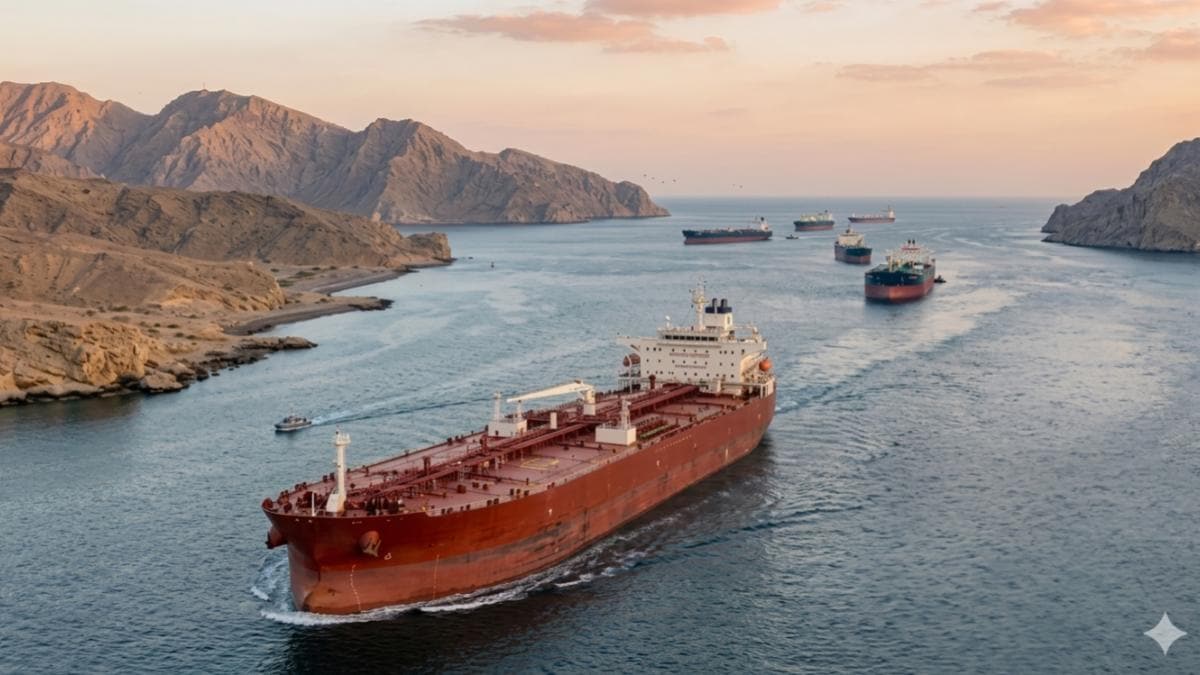
India is in constant touch with Iranian authorities to ensure the safe exit of ships through the Strait of Hormuz, the ministry of external affairs (MEA) said on Monday, after two India-flagged vessels reported firing incidents while transiting the strategic waterway.
The development comes amid rising tensions in West Asia and concerns over shipping safety in one of the world’s most critical energy corridors.
“The foreign secretary conveyed our deep concerns… and reiterated that we attach very high importance to the safety and security of our mariners and that there should be unimpeded shipping through the Strait of Hormuz,” MEA spokesperson Randhir Jaiswal said.
Dialogue between MEA and Iran’s foreign ambassador
The foreign secretary summoned Iranian ambassador Mohammad Fathali following the incidents involving tanker Samnar Herad and bulk carrier Jag Arnav, both of which returned to the Persian Gulf after the reported firing.
“We continue to be in touch with the Iranian authorities for the safety of our ships, for their safe exit of the Strait of Hormuz,” Jaiswal added.
Officials said 10 India-flagged vessels have transited the strait safely so far, with one more expected to berth at an Indian port by April 22. Crude tanker Desh Garima, carrying 97,422 metric tonne of oil and 31 Indian crew members, crossed the strait on April 18 and is en route to Mumbai.
The shipping ministry said it is closely monitoring the situation and is in continuous communication with vessel operators. “The safety and security of Indian seafarers is the top priority… and all possible assistance is being extended,” it said.
The incidents coincide with uncertainty over the ceasefire between the US, Israel and Iran, with Tehran reiterating closure of the Strait of Hormuz, a key artery for global oil and gas supplies.
On the Domestic front
On the domestic front, the government sought to reassure that fuel availability remains stable despite external disruptions.
“Supply of LPG to domestic households has been prioritized. No dry-outs have been reported at LPG distributorships,” said Sujata Sharma, joint secretary in the petroleum ministry.
Refineries are operating at high capacity with adequate crude inventories, while petrol and diesel stocks remain sufficient, officials said.
However, demand indicators point to shifting consumption patterns. Online LPG bookings have risen to 99%, while delivery authentication compliance has reached around 92%. Commercial LPG sales have averaged over 7,000 tonne per day over the past five days.
Auto LPG demand has also surged, with PSU oil companies reporting sales of around 350 tonne per day — nearly double February levels — driven by a shift from private retailers.
City gas consumption remains strong, with over 4.93 lakh PNG connections gasified since March and 5.51 lakh new registrations, even as 39,200 consumers have surrendered LPG connections.
To support critical industries, the government has allocated 1,000 tonne per day of LPG from the pool for pharma and chemical sectors, while over 4,050 tonne of propylene has been supplied since April 9.