



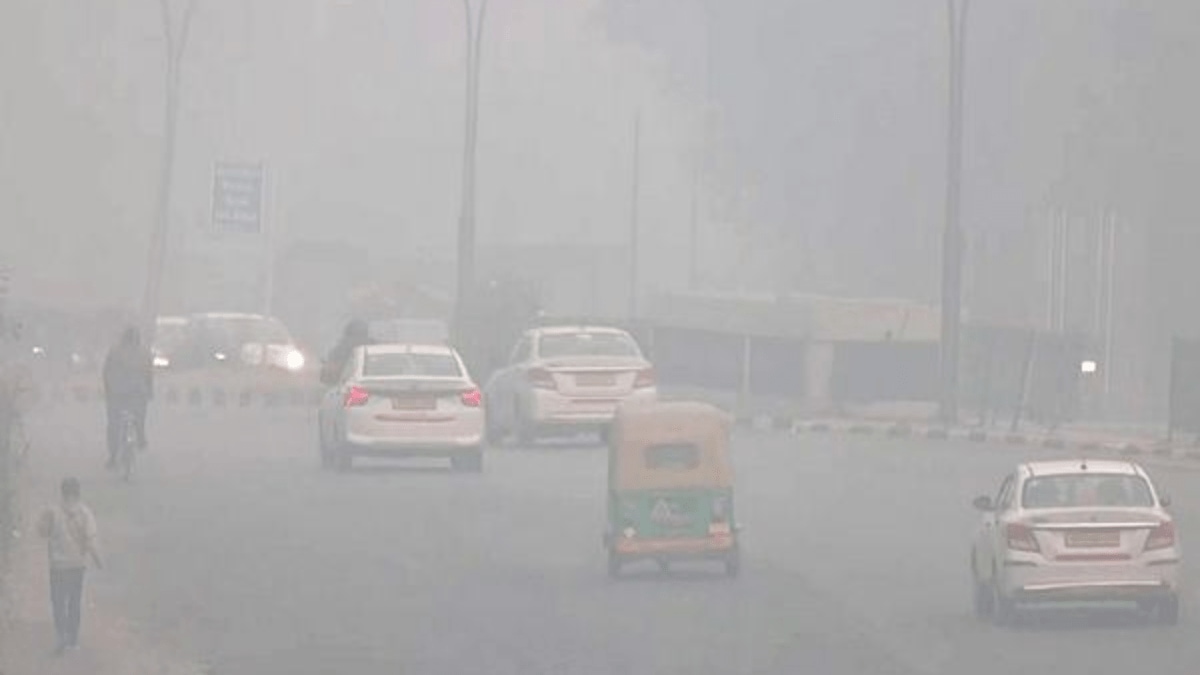
The Delhi government has banned the entry of non-BS VI-compliant vehicles from Thursday to improve the air quality of the national capital, which has remained in the red zone on most days since Diwali. At 8 am today, Delhi’s AQI stood at 328, which falls in the “very poor” category.
Non-BS VI vehicles banned
This comes after Delhi Environment Minister Manjinder Singh Sirsa on Tuesday said that vehicles without a valid Pollution Under Control Certificate (PUCC) will not be supplied fuel at petrol pumps in Delhi from Thursday onwards.
“To control tailpipe emissions from vehicles, all petrol/diesel/CNG pump dealers have been instructed to provide fuel only upon presentation of a valid PUCC,” he said before adding, “For the protection of Delhi’s air, all vehicles registered outside Delhi and of a category lower than BS-VI will not be allowed to enter Delhi when GRAP-III and GRAP-IV are implemented. No polluting vehicle will be allowed to enter Delhi.”
Sirsa also said that since GRAP-IV is in place in Delhi, vehicles carrying any kind of construction material will be prohibited from entering Delhi.
According to official records quoted by TOI, Gurugram alone has close to two lakh privately owned vehicles that do not meet BS-VI emission norms. This includes approximately 1.5 lakh BS-III petrol vehicles and over 36,000 BS-IV diesel cars. The city also has more than 47,000 commercial BS-IV diesel vehicles, over 2,000 BS-III petrol vehicles, and nearly 2,200 buses running on BS-III and BS-IV standards.
On top of that, 92,000 diesel vehicles in Gurugram have already exceeded the 10-year age limit, which only further exacerbates the woes. This also means that the pool of vehicles that can enter Delhi has shrunk, the outlet reported.
Noida faces a similar situation, per the TOI report. Of the nearly 10 lakh registered vehicles in the city, more than four lakh will be affected by the ban. Official records indicate that about 1.4 lakh vehicles fall under the BS-III category, 96,210 petrol and 41,067 diesel. Another 2.8 lakh vehicles comply only with BS-IV norms, most of them petrol-driven. Just over 4.2 lakh vehicles in Noida meet BS-VI standards and will remain eligible to travel into Delhi.
In Ghaziabad, while more than 5.5 lakh vehicles are BS-VI compliant, an almost equal number, comprising roughly 1.7 lakh BS-III and 3.7 lakh BS-IV vehicles, will no longer be allowed to cross into the capital, the outlet further noted.
How will the vehicles be verified?
Sirsa said that PUCC and vehicle categories will be verified through Automatic Number Plate Recognition (ANPR) systems and ground-level checks, and suggested that residents carry a PUCC certificate to avoid inconvenience.
On public transport, he said that over 3,000 electric buses have been running on Delhi roads, and this number will only increase in the coming days. “Delhi’s public transport is rapidly moving towards a green transition. 3,427 electric buses have already been inducted, and by December, the number will reach 3,800.”
CEO of the Noida Authority on Tuesday directed the Transport Department to promote electric vehicles (EVs) over fuel-based vehicles and expand the network of EV charging stations across the authority area.
Noida’s assistant regional transport officer, Nand Kumar, told TOI that the ban is in line with GRAP III, which requires NCR states to restrict BS-Ill petrol and BS-IV diesel vehicles.
“Now, the Delhi govt has gone a step further and imposed a ban on all categories of vehicles below BS-VI. Traffic police teams have been deployed at all Noida-Delhi borders. Such vehicles will not be allowed to enter Delhi. Violators will be fined, and their vehicles seized,” he was quoted by Kumar as saying.