



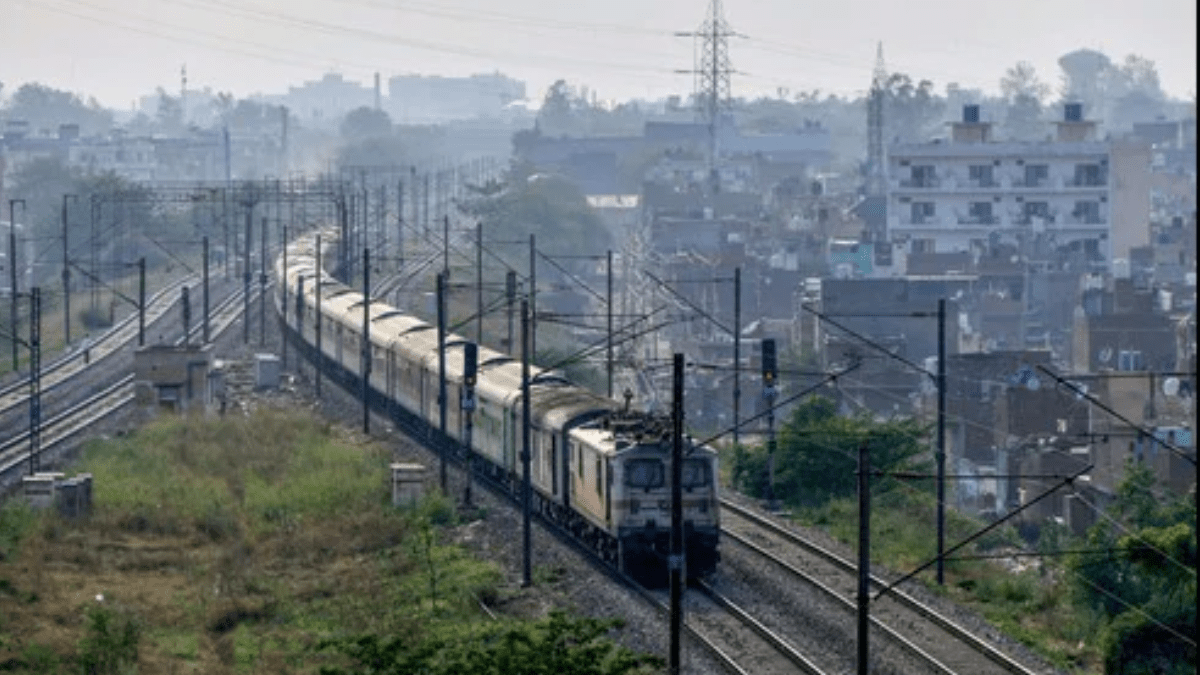
The movement of passengers and freight in West Bengal is set to improve with enhanced connectivity under the New Jalpaiguri–Siliguri Rail Line Doubling Project, which involves building a parallel railway track alongside the existing line. Recently, the Ministry of Railways also approved ₹916.18 crore for speeding up this long-pending project.
This development was shared by Raju Bista, Member of Parliament, in a post on X, along with an official letter from the Railway Board. He also thanked Railway Minister Ashwini Vaishnaw, Prime Minister Narendra Modi, and Chief Minister Suvendu Adhikari for this.
I am happy to share that the Ministry of Railway has sanctioned Rs 916.18 crores towards the doubling work of the New Jalpaiguri to Siliguri railway line covering a stretch of 7.15 kilometres.
This important project will extend the ongoing Alubari Road-Thakurganj rail line… pic.twitter.com/ohMFpXqVfc
— Raju Bista (@RajuBistaBJP) June 9, 2026
This new doubling project is expected to increase capacity, improve connectivity, and strengthen rail services in the Siliguri–Terai region of West Bengal.
Jalpaiguri–Siliguri Railway Line: Route Details
The New Jalpaiguri–Siliguri railway line doubling project will extend the ongoing Alubari Road–Thakurganj rail line doubling up to Siliguri Junction. The route will pass through important stations such as Bagdogra, Naxalbari, and Adhikari.
Reduced congestion and faster train movement
The new double-line track is expected to reduce heavy rail traffic on this busy route. Right now, the single-line system often causes delays and limits the number of trains that can run.
With a second line coming up, train movement should become much smoother and faster. Both passenger and freight trains will benefit, making travel and transport more efficient in the region.
More trains and better connectivity
The new infrastructure will help run more trains in the region, including long-distance, express, and local services. This will make travel easier and improve connectivity within North Bengal as well as with other parts of the country, including major cities and business hubs.
With better capacity on the route, there is also a chance that new train services could be introduced in the future, depending on demand.
Economic growth expected in the region
The New Jalpaiguri–Siliguri railway line doubling project is expected to boost economic activity across the region. Better rail connectivity will help strengthen local trade, support tourism, and improve the movement of goods in and out of North Bengal.