



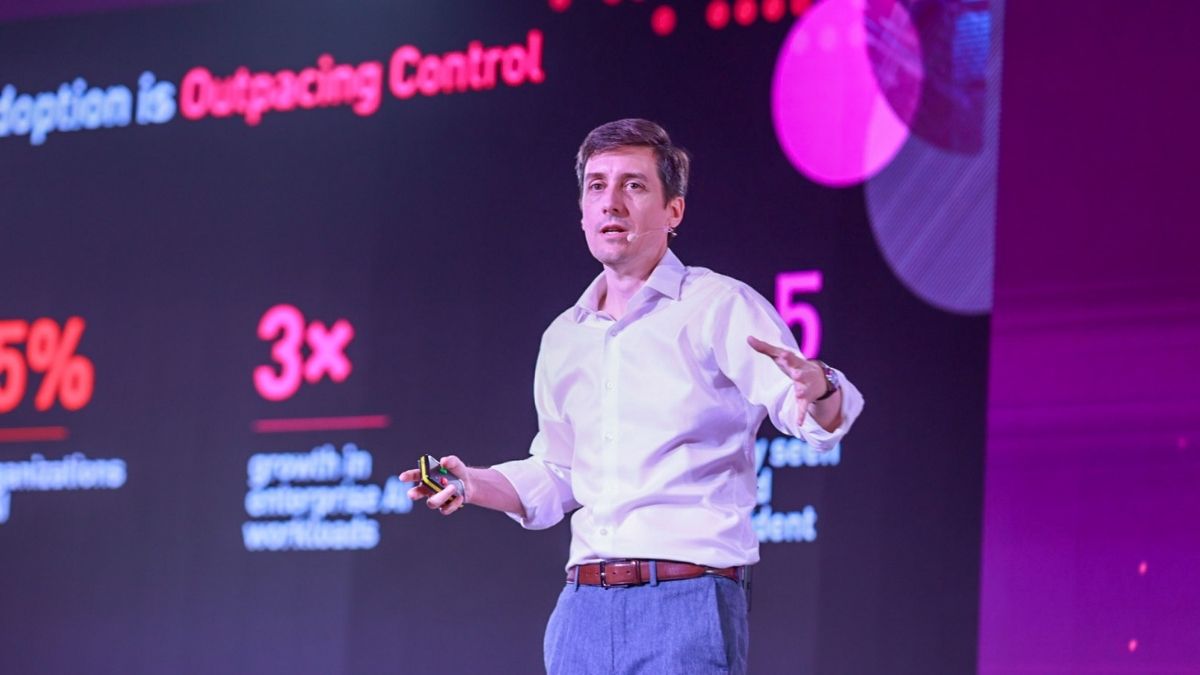
AI has become fundamental, and as organisations remain in the early stages of adoption, it should be treated as a board-level priority, says Adam Ely, General Manager–AI Agent Security, Check Point Software Technologies. In an interview with Christina Titus, he discusses why cybersecurity is critical to AI adoption and the key risks organisations underestimate.
What do you think is the greatest opportunity for AI to strengthen cyber resilience?
I think the biggest opportunity is embracing the use of AI within operations. Over the past 2-3 years, many firms have experimented with AI, often starting with customer‑service chatbots, but have found the greatest return on investment from improving internal operations. Security teams get double benefits from AI such as boosting operational efficiency and accelerating risk reduction as attacks evolve. Secondly, organisations have a major opportunity to build organisation-specific AI platforms tailored to their needs.
What are the cybersecurity risks that organisations are underestimating today?
Many organisations underestimate risks like data loss and unauthorised access. They are only beginning to understand threats such as model manipulation, where hackers can attack models to get them to do nefarious things. Secondly, companies are discovering new risks from autonomous agents performing tasks—these agents can act incorrectly without awareness. That creates a new challenge of detecting, correcting, and preventing such errors.
How do you assess India’s cyber maturity when compared to other Asia-Pacific countries?
India’s CERT-In has been evolving for years, and they set out cutting-edge policies. Overall, India is proactively positioning itself in managing cybersecurity. The country’s cybersecurity talent is very impressive. It’s a fairly unique ecosystem where you have a government that’s really empowering CERT-In to put out new policies and see what works.
How should organisations approach managing third-party risks?
It has always been a challenge for companies, as it is not completely under their control. In my view, it should be shared risk relationship and both parties should share the accountability for ensuring the security. From a regulatory standpoint, it’s important to recognise that no single party can oversee or control the entire ecosystem. While one organisation may be primarily accountable, the responsibility for managing risk needs to be shared.
What should organisations prioritise in AI and cybersecurity over the next 2-3 years, and what should Indian firms particular focus on?
We are in a paradox shift now, where AI is fundamentally changing how companies work and AI agents run operations instead of humans. AI is transforming everything from assessing process quality and testing systems to reshaping regulation and compliance. My advice is that companies, who are in their AI adoption journey, should think about how to secure that as well. This will be critical for any organisation.
Regarding India, with growing technology and emerging-tech jobs, employers that fail to invest in employee development will lose talent to competitors.
In today’s environment, should cyber resilience and AI be considered a board-level priority?
AI has now become fundamental within organisation that boards are asking questions. AI should be treated as an organisatonal risk and regularly discussed at the board level as part of broader risk management, given its rapid adoption and evolving risks. As organisations are still in the early stages of AI adoption, board-level oversight is essential to manage emerging risks and implementation mistakes.
(The writer was in Singapore at the invitation of Check Point Software Technologies)