



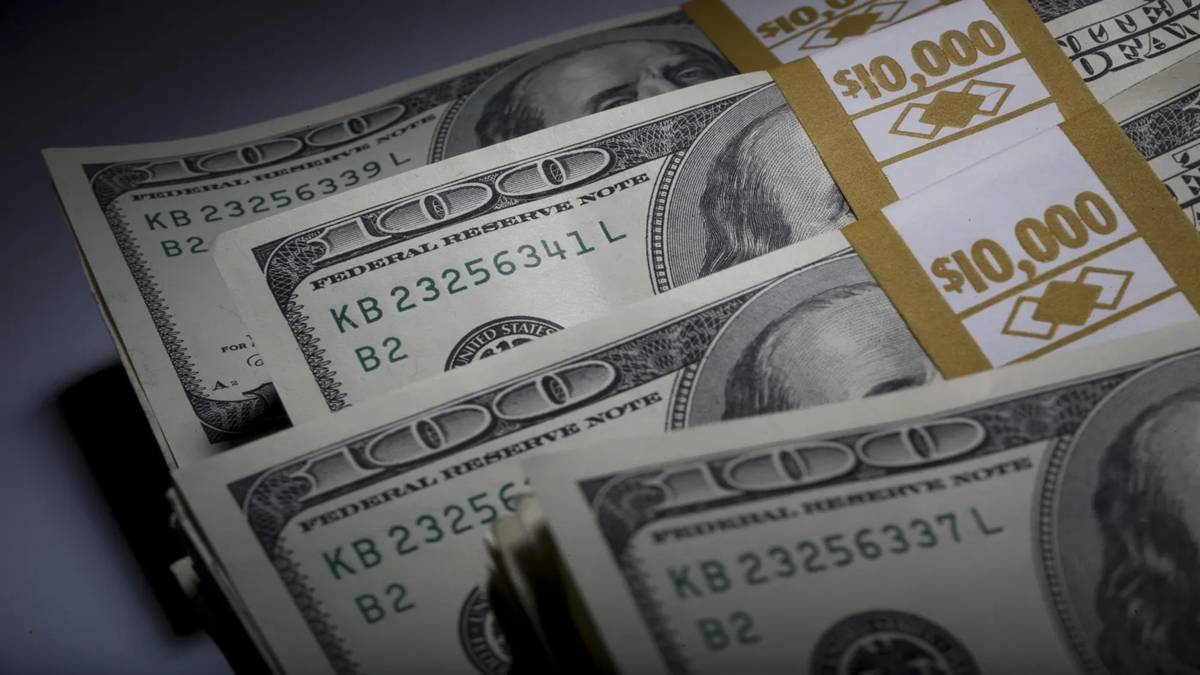
Foreign currency deposits from non-resident Indians have staged a sharp turnaround after months of decline. Since the implementation of the new RBI Swap Facility, FCNR(B) flows have totaled $17 billion in roughly 40 days, from June 8 to July 17, 2026. This comes just weeks after inflows had slowed to their weakest pace in years.
The Slowdown Before The Turnaround
The foreign currency inflows from non-resident Indians were slowly drying up. As against $7,076 million of inflows in 2024-25, the FCNR (B) flows dipped to $946 million in 2025-26, a sharp fall of 87%.
This was a major blow to dollars coming into India. NRIs’ annual deposits falling from over $7 billion in FY25 to just under $1 billion in FY26 alarmed the government.
Even the start of FY27 wasn’t better. During the April-May period of FY27, inflows into FCNR(B) deposits fell to $282 million, down from $442 million the previous year, a fall of 36%.
RBI’s Two-Step Fix
RBI launched the Swap Facility on FCNR(B) deposits, taking currency risk away from the banks and also removing the ceiling on rates that the banks could offer to NRIs.
The move came in two stages. First, on June 8, the RBI agreed to protect banks from currency impact by hedging the depreciation of the Indian rupee against the dollar under the Swap Facility for FCNR(B) Deposits, mobilised for a minimum tenor of three years and a maximum tenor of five years.
In its next move, on June 18, the RBI removed the ceiling, thereby allowing banks to offer higher interest rates to NRIs. These two relaxations are available to banks and investors till September 30, 2026.
The effect on rates was immediate, says Sneha Pandey, Fund Manager- Fixed Income, Quantum AMC: “RBI absorbing the full hedging cost let banks push USD deposit rates from the 2-4% range to as high as 6-7.1%, instantly making FCNR(B) one of the most competitive dollar-deposit products globally.”
How Much Of The $17 Billion Is Fresh Money?
The total outstanding balance under FCNR is $34 billion as of May 2026. The RBI’s new Swap Facility pertains to 3-5 year deposits. As of today, it remains uncertain how much of the $17 billion represents fresh inflows, renewals, or potentially diverted deposits.
“The scale of FCNR (B) deposits likely included renewals as well as fresh deposits, explaining the overall push by officials to increase the scale of new flows under this window,” says Radhika Rao, Senior Economist & Executive Director at DBS Bank.
Rao also flags headwinds that could slow the pace going ahead. “Despite the lucrative terms of the deposit scheme, rising dollar rates globally have narrowed spreads, besides facing other hurdles by way of foreign tax treatment of interest income in a few jurisdictions, and long onboarding processes, which have slowed the pipeline of fresh inflows as of mid-July,” adds Rao.
Role of Leverage
NRIs can access loans from overseas banks to invest in FCNR(B) deposits in India, with some banks offering leverage of up to 19 times one’s capital, potentially yielding returns of 15-20% for investors. Leveraging can increase interest earnings for NRI investors, but factors like loan interest rates, rate spreads, and tax implications must be thoroughly assessed before making a decision.
“The eye-catching 15% to 27% figures being circulated are leveraged returns, created by borrowing 9 to 19 times the deposit against it. The deposit earns a fixed rate, but the borrowing is almost always floating and pegged to global benchmarks. Because the position is leveraged, even a small rise in borrowing cost compresses the spread,” says Dharmendra Maurya, Co-Founder & CEO of Rupeeflo.
Outlook: A Repeat Of 2013?
Industry experts are hopeful for a bigger collection by the time the scheme ends. In a similar Swap Facility by the RBI in 2013, the total amounts mobilized under FCNR(B) deposits were approximately $26 billion.
“Hope is that, akin to the experience in 2013, the scale of deposits will pick up sharply in the second half of the available time frame (FCNR scheme ends in Sept and ECB in Dec) as compliance processes are completed, with our forecast at cumulative $45-$50bn under these windows,” says Rao.
Watchouts for NRI Investors
NRIs have always had access to FCNR(B) deposits. Investing now in Indian banks for three to five years may be an option for those who want to earn a higher rate on their dollar deposits than available in their residence country. They must exercise caution in a few areas, though.
Maurya points out at least two things. “First, this is a tactical window, not a permanent feature. Both the rate relaxation and the RBI hedging support lapse on 30 September, so the decision has a clock on it.
Second, for most NRIs the product was never the hard part. The friction is access: getting KYC, documentation and cross-border onboarding done in time, and getting the country-specific tax treatment right. The people who actually benefit will be the ones who prepare early and treat the clean deposit and the leveraged strategy as two completely separate decisions,” says Maurya.
Disclaimer: This article is based on official data released by the Reserve Bank of India and is intended for informational purposes only. It should not be construed as investment, financial, or legal advice. NRIs and investors are advised to consult their bank or a qualified financial advisor before making any decisions regarding FCNR(B) deposits or related instruments. Figures are subject to change based on subsequent RBI updates.