



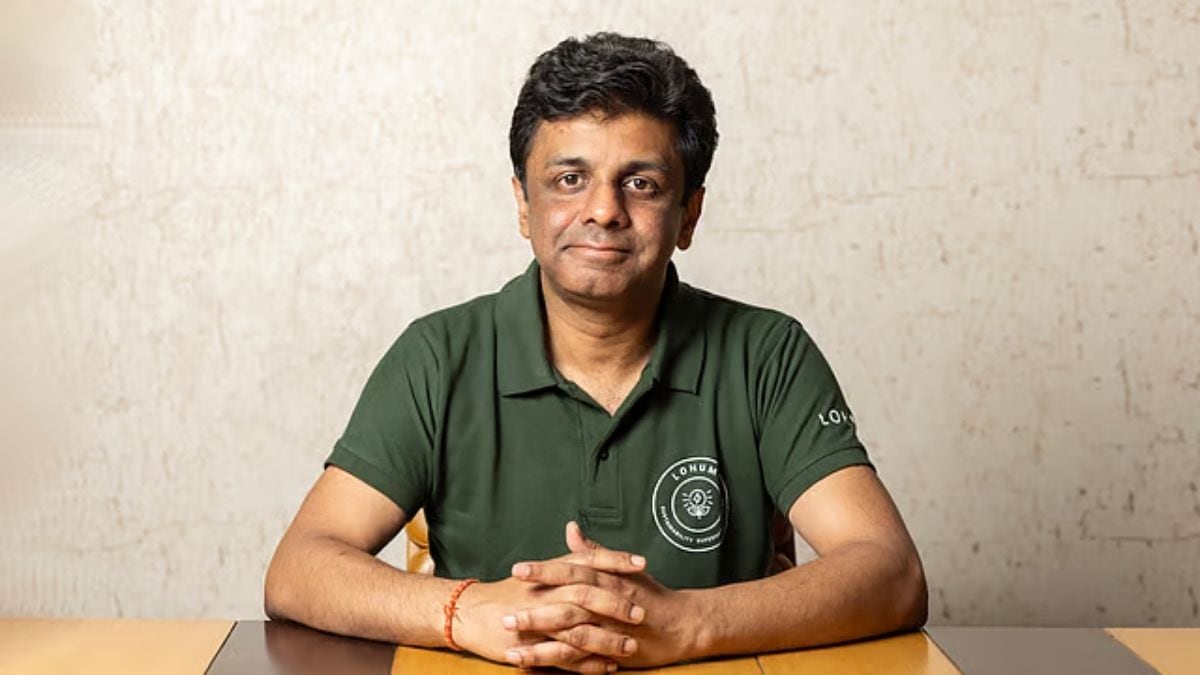
Critical minerals and battery recycling company Lohum is set to operationalise its newly acquired lithium mines in Zimbabwe in a month or two, targeting production of 30,000 tonne of lithium carbonate equivalent per year, even as the ongoing West Asia crisis has pushed procurement costs up by as much as 50%. The company has set a revenue target of Rs 10,000 crore by 2029, backed by planned capital expenditure of Rs 2,500-3,000 crore, Rajat Verma, founder and CEO, tells Saurav Anand in an interview. Excerpts.
Lohum has traditionally been known as a recycler. Is the company now formally diversifying into the mining sector, and what does that strategic shift look like on the ground?
Yes, that shift is very real and very deliberate. We are building what I would call the overall critical mineral space, not just recycling. We recycle, we refine, and now we own mines. We have acquired lithium mines in Zimbabwe which will be operationalised in the next month or two. We are working with partner mine owners for cobalt across Africa. We are evaluating mines in Latin America, Africa, and Australia across lithium, nickel, platinum group metals, and cobalt. This is not a distraction from recycling. Recycling is still core. But if India wants critical mineral sovereignty, it cannot depend only on what comes out of end-of-life batteries. We need to control the upstream as well. That is the strategy.
Tell us about the Zimbabwe lithium mines. What is the production capacity, timeline, and what does this mean for Lohum’s overall materials supply?
Our goal is to produce approximately 30,000 tonne of lithium carbonate equivalent per year from the Zimbabwe lithium mines. This is significant because lithium is at the heart of the energy transition… By owning the mine, we are securing our upstream supply rather than depending entirely on the spot market or third-party procurement. It directly strengthens our position as a company and, more broadly, it is a step towards India having actual control over a critical mineral that it currently imports almost entirely.
Are you looking at cobalt mines, and how does the Africa play fit into the larger global mining road map?
In cobalt, we work with…mine owners in Africa. We do not own cobalt mines there directly, but we have strong, established partnerships that give us access to material. Africa is central to our supply chain strategy because it holds some of the world’s largest reserves of cobalt, which is critical for NMC batteries and several advanced material applications. Beyond cobalt and Zimbabwe lithium, we are evaluating possibilities in nickel as well, both in Africa and Southeast Asia. Latin America is also on the radar, particularly for lithium and nickel. Our core criteria for any mine we evaluate is simple: can it produce within the next five years? We are not in the business of a 10-year exploration timeline.
India currently has 50,000 tonne of battery recycling capacity against a government target of 200,000 tonne. What role Lohum sees for itself in closing that gap, and how much investments are being made?
That 4x gap is real and it needs to close quickly. Most of the 50,000 tonne of true installed capacity in the country today belongs to Lohum. So yes, we are the anchor player in this space. But I want to be clear that the opportunity is much larger than battery recycling alone. Across lithium, cobalt, nickel, platinum group metals, rare earths, tin, silver, titanium, vanadium, and molybdenum, India needs millions of tonne of processing capacity if it wants to compete with China. We are setting up India’s first integrated rare earth magnet plant in Meerut with approximately Rs 800 crore in capex. We have a platinum plant operational in Hyderabad. We are expanding capacity there as well. By 2029, we plan to deploy Rs 2,500-3,000 crore in total capex and reach Rs 10,000 crore in revenue.
How is the West Asia crisis impacting Lohum’s sourcing and margins, and does the company have enough resilience built in to navigate a prolonged conflict?
The West Asia crisis has hit us on multiple fronts. Black mass containers transiting through the UAE have been disrupted. We are rerouting through alternative ports in Africa and Saudi Arabia. More painfully, procurement costs depending on the material have gone up between 10 and 50%. Sulfuric acid, which is a critical consumable for our processing operations, has seen a price increase of 100-150%, depending on the grade. We are bearing that cost and taking a margin hit. For this quarter and the next, we have enough safeguards built in through conservative projections.