



Be honest, how much cash do you have in your wallet right now? For many, it’s probably just a few Rs 10 or Rs 20 notes. With the rise of the Unified Payments Interface (UPI), paying for everything, from a chai outside the office to splitting a restaurant bill, can now be done in seconds with a few taps. Yet, cash hasn’t faded away. According to a report by SBI Research, currency in circulation in India hit an all-time high of nearly Rs 40 lakh crore in January 2026, up 11.1% from a year ago.
In January 2026, UPI transactions touched a record Rs 28.3 lakh crore in value. But cash hasn’t disappeared. Despite digital payment booming, the amount of cash circulating in the economy is still rising.
Who is still using cash and why?
A tax scare pushed some small traders back to cash
One surprising trigger came from tax enforcement. In July 2025, the Karnataka Commercial Taxes Department reportedly issued around 18,000 GST notices to small traders and vendors whose UPI transactions crossed the Rs 40 lakh registration threshold.
The report suggests that this may have created a ‘signalling effect’, discouraging some merchants from accepting digital payments and pushing them toward cash transactions instead.
Data analysis in the report showed that after the notices, districts in Karnataka saw an additional rise of about Rs 37 crore per month in ATM withdrawals, compared with districts with lower withdrawal activity. In simple terms, this means that when digital payments start attracting scrutiny, some businesses go back to the anonymity of cash.
Rural households are holding more cash
Living in a Tier-1 city, you might rely on mutual funds, PPFs, real estate investments, etc to manage the money. But this isn’t the case for millions of people living outside big cities. According to the report, the demand to hold cash has increased in rural areas because the interest rates are relatively low. When savings accounts, or deposits, don’t offer attractive returns, people may prefer to keep money in cash for everyday spending.
The report further mentioned that bank deposit growth slowed to about 10.6% as of January 2026. This is known as precautionary demand for cash, keeping money readily available for consumption.
Households are cashing out gold and silver
Another unusual factor driving the growth of cash in the economy is precious metals. With gold and silver prices rising sharply, many households have begun selling or recycling their holdings, converting these assets into cash, the report added.
Unlike earlier cycles, when people bought gold using cash, this time the trend appears reversed: households are cashing out their metals to fund spending, which adds more physical currency to the economy, according to the SBI report.
The Rs 500 note now dominates the cash economy
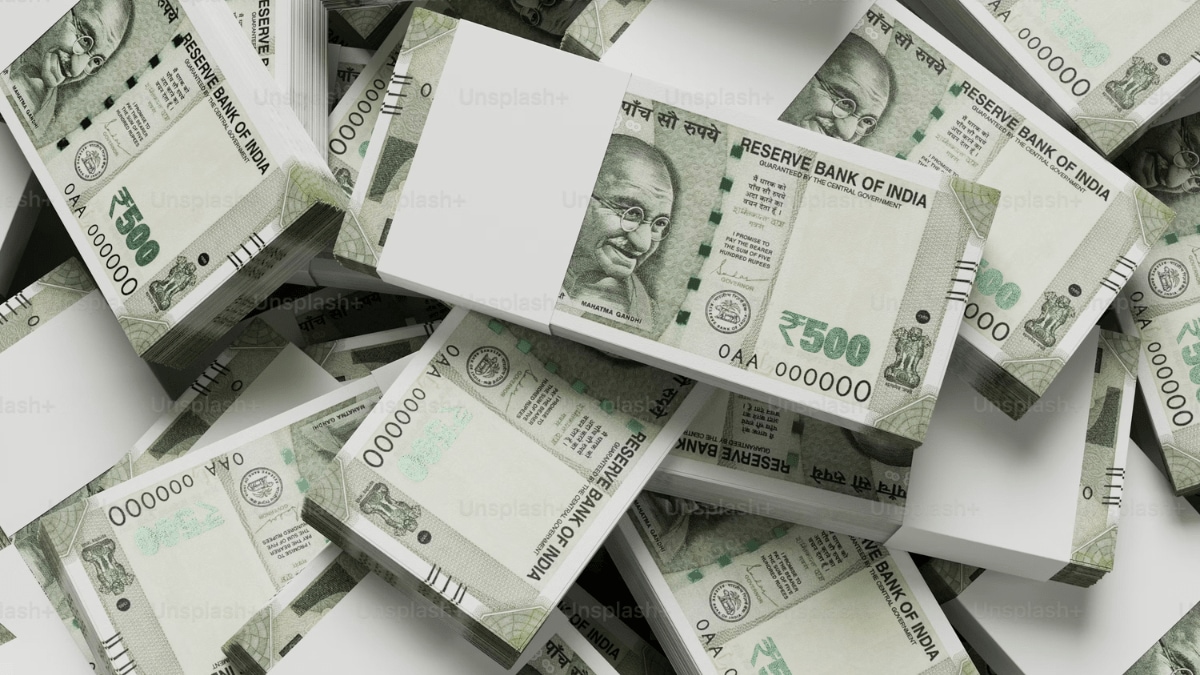
After the withdrawal of the Rs 2000 note, the Rs 500 note has become the backbone of India’s cash system, accounting for about 86% of the total value of currency in circulation, the report noted. Meanwhile, smaller notes are slowly losing relevance in many everyday transactions.
According to NPCI data cited in the report, around 86% of merchant UPI transactions are for amounts below Rs 500. This means that people are relying on UPI for small-value cash payments, whereas higher-value cash transactions are still carried out via cash.
Digital payments are winning—but cash isn’t disappearing
The bigger picture shows that digital payments are still dominating the economy. Even though the absolute amount of cash is rising, its importance relative to the economy is actually declining. India’s cash-to-GDP ratio has fallen from 14.4% in FY21 to about 11% in FY26, according to the SBI report. This means that while the economy needs more cash as it grows, new economic activity is increasingly being driven by digital payments rather than paper currency.
Effectively, this means that UPI may never be able to replace cash completely.