



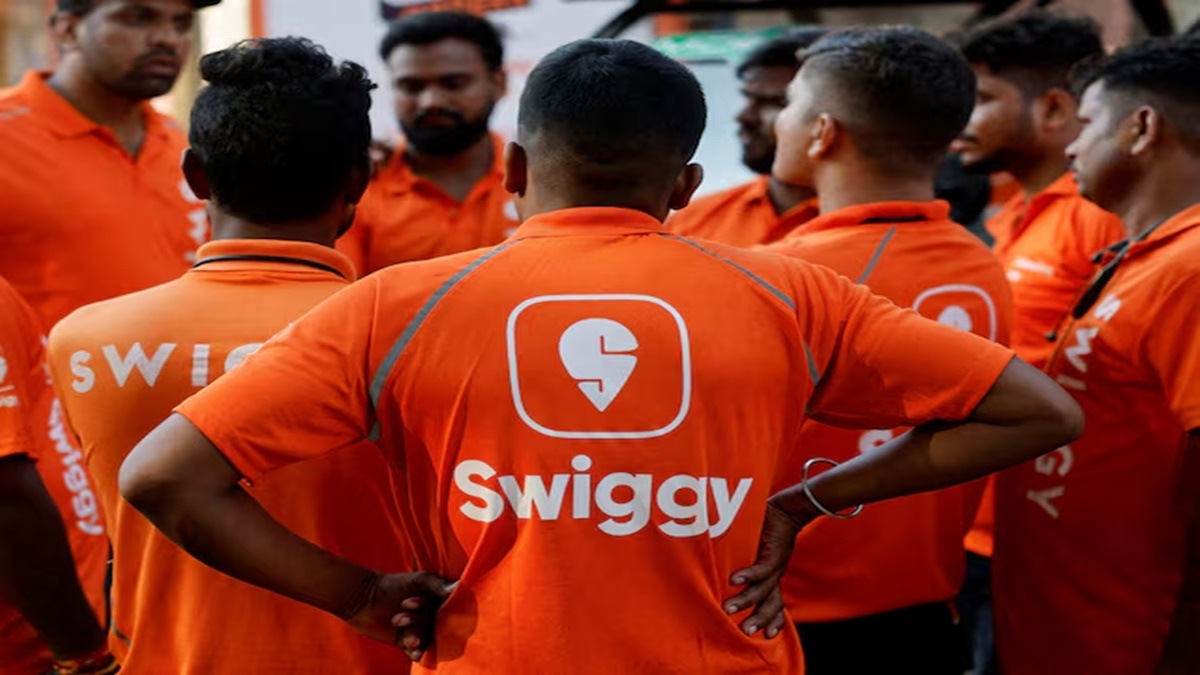
Swiggy on Tuesday said it has enabled users to order food, shop for groceries and book restaurant tables directly through conversational artificial intelligence platforms such as ChatGPT, Claude and Google Gemini, embedding transactions inside third-party AI chat interfaces.
The integration is powered by the Model Context Protocol (MCP), an open-source framework that allows AI systems to securely connect with live services and execute tasks. The rollout spans Swiggy Food, its restaurant delivery business; Instamart, its quick commerce arm; and Dineout, its dining reservations platform.
Instamart claims global first in MCP-based quick commerce
Swiggy said Instamart is the first quick commerce platform globally to adopt MCP, enabling users to browse and purchase from an assortment of over 40,000 products using natural language prompts.
Instead of navigating Swiggy’s app, users can now express intent directly within an AI interface, for example, asking to order ingredients for a specific recipe or to find a highly rated dish, while the AI agent handles product discovery, comparisons, cart creation, offer application, address confirmation and checkout.
From conversational AI to agent-led transactions
MCP functions as a standardised connector, often likened to a USB-C port, that reduces the need for custom integrations between AI tools and application programming interfaces. By exposing a secure set of tools through MCP servers, Swiggy allows AI agents to move beyond answering queries to executing transactions.
In practice, this means an AI assistant can assemble a grocery basket, apply coupons, place an order and track delivery, or search restaurants, retrieve available time slots and complete a table reservation in a single conversational flow.
The approach reflects a broader industry shift toward what technology executives describe as “agentic AI”, where software agents handle multi-step tasks traditionally performed by users inside apps.
Focus on convenience, not navigation
Madhusudhan Rao, chief technology officer at Swiggy, said conversational commerce is aimed at reducing friction in everyday decisions shaped by time constraints and routine needs.
“Conversational commerce allows users to simply express what they want, while software agents handle execution,” Rao said, adding that the company sees applications across food delivery, quick commerce and dining out.
Building toward personalised, AI-native commerce
Swiggy said the MCP integration lays the groundwork for future use cases such as meal planning, dietary-specific shopping, health-focused lists and occasion-based ordering, while maintaining privacy-first safeguards.
Usage of AI in Quickcommerce
Only a handful of Indian companies have made comparable moves into AI-native commerce. BigBasket has participated in a pilot that allows users to shop and pay via ChatGPT using UPI. JioMart has enabled chat-based ordering through WhatsApp, while Zomato has deployed AI to recommend and manage internal workflows.