



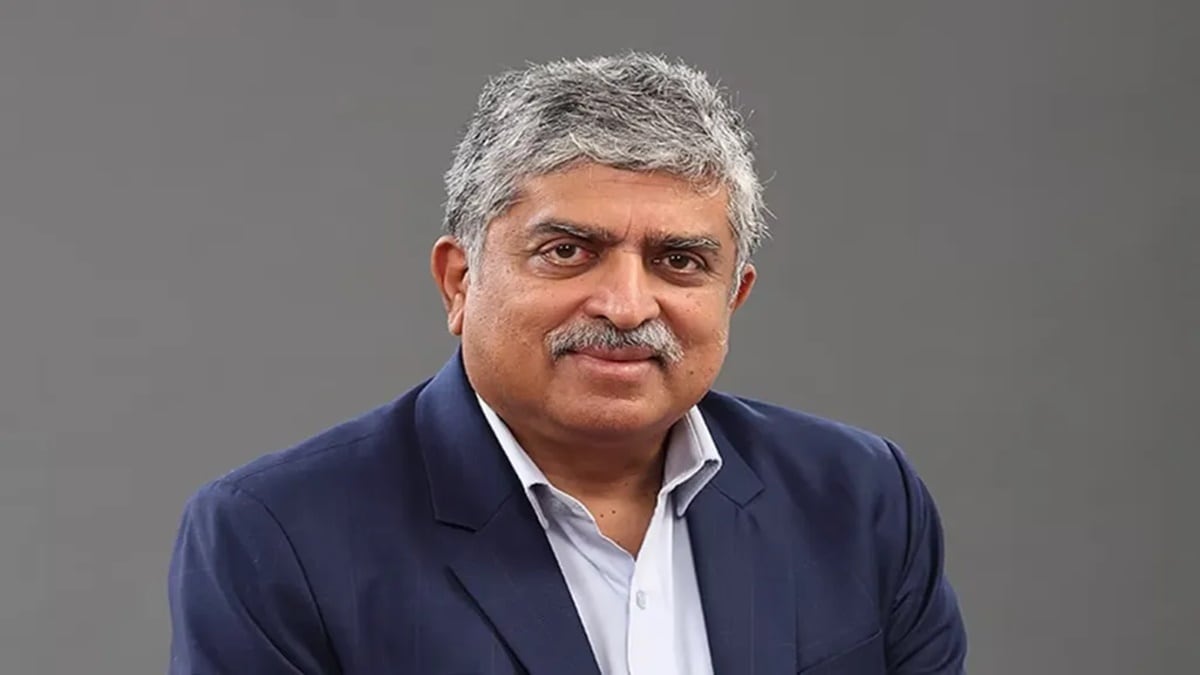
The transition to artificial intelligence is unlike any earlier tech cycle and will fundamentally change the way businesses operate, Infosys Co-founder Nandan Nilekani said on Tuesday and in the same breath sought to allay fears around it by describing the moment as a reset opportunity.
“This time it’s not a layer of technology… This is a fundamental root-and-branch surgery of the way business is done,” he said.
On the job front, Nilekani said, “writing code will not be the goal” in the AI era but there will be new roles.
“It’ll actually be making AI work, orchestration, and those kinds of things… The talent transformation is huge… There will be a need for AI engineers, forward deployment engineers, forensic analysts — roles that didn’t exist a few years ago,” he said at Infosys’ Investor AI Day 2026 event in Bengaluru.
The Investor AI Day coincided with the India AI Impact Summit 2026 being held in Delhi.
Nilekani asserted that it has become clear that modernisation of legacy systems cannot be deferred any longer. “This is a massive clean-up job that firms have to do if they want to leverage AI,” he added. These outdated systems and structural challenges contributed to a tech debt that had accumulated over decades, which are a barrier to AI adoption. “The technology is moving much faster compared to the ability of enterprises to deploy it,” he noted.
Many large companies spend 60% to 80% of their IT budget on maintenance, he said, adding that has zero business value and it’s time to flip the ratio.
Highlighting the unprecedented speed of AI adoption, he said that while the internet took over a decade to reach a billion users and smartphones five years, AI adoption is happening in just a couple of years, enabled by the infrastructure of prior tech eras.
“Each technology transition has had implications, but this time, it’s a fundamental change in the way businesses operate. Customer journeys, operating models, talent — everything has to change,” he said.
The risk around AI, Nilekani emphasised, was not around opportunity but related to execution.
Flagging the deployment gap between AI capabilities and enterprise implementation, he noted the urgent need for talent transformation, change management, and clean-up of technical debt. “It’s not about using AI tools. It’s about productivity out of those tools. Otherwise, you’ll get false productivity,” he said.