



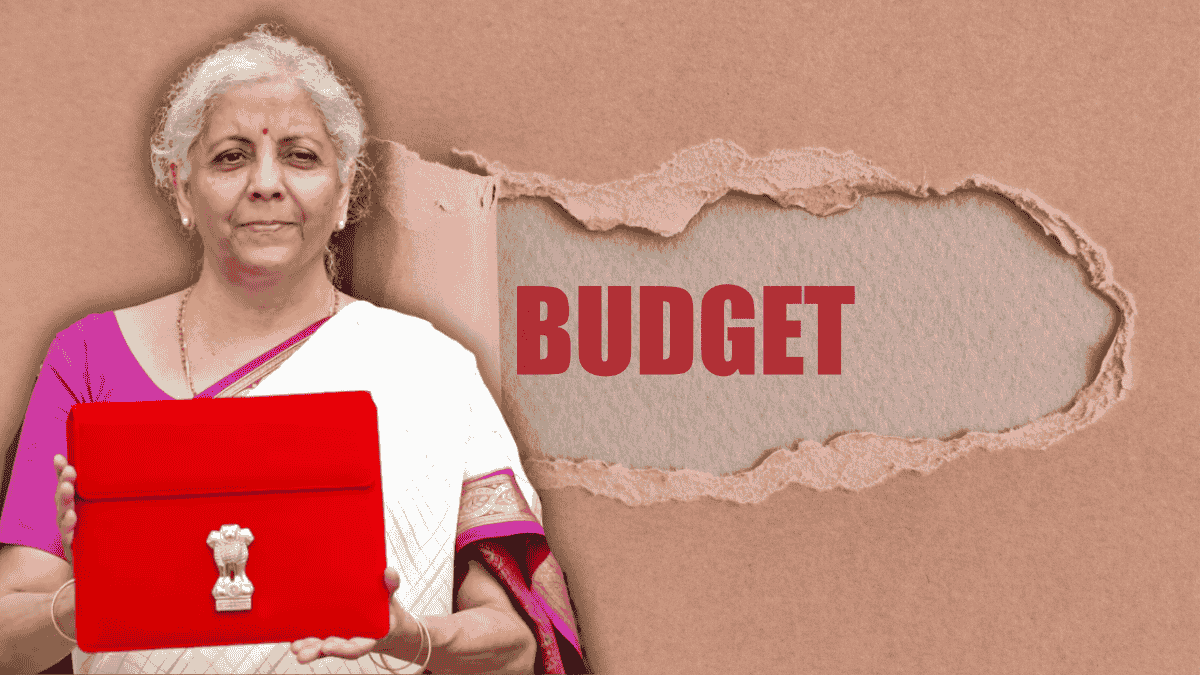
The unveiling of Union Budget 2026-27 is merely a few days away, and the expectations from India’s consumer-facing industries are more or less around the same themes: lower friction, predictable policies and a bigger support for sectors that directly shape everyday spending, mobility, health, and lifestyle.
From fitness chains and footwear startups to jewellery houses, NBFCs, and dental-care providers, executives say the next phase of consumption-led growth will depend less on headline incentives and more on whether policy frameworks make it easier to invest, expand and formalise across both urban and rural India.
The bigger picture
Budget 2026 is also seen as a test of how well India can balance domestic consumption with export-led manufacturing.
“The Budget presents a timely opportunity to accelerate India’s progress toward ‘Viksit Bharat’ while reinforcing the domestic consumption cycle,” Gautam Singhania, chairman and managing director of Raymond Group, said. He said measures that support disposable incomes would lift demand across retail and real estate.
At the same time, Singhania called for deeper “Make in India” support aimed at global markets. “As global supply chains realign, India is well placed to scale in advanced manufacturing segments such as aerospace and defence,” he said. “A Budget that balances fiscal discipline with an emphasis on manufacturing scale will reinforce India’s position as a trusted alternative in the global economy.”
Credit access
NBFCs focused on secured lending say Budget 2026 could play a pivotal role in expanding credit access for rural and lower-income households. “We recommend budgetary measures for more credit supply to the rural and lower middle-income segments,” Shaji Varghese, chief executive officer of Muthoot FinCorp, said. He called for liberalising branch-opening norms for gold loan NBFCs and rationalising capital risk weights to lower the cost of lending.
Varghese also urged the government to harmonise SARFAESI Act applicability for NBFCs with banks and housing finance companies, and to design schemes that bring one-time defaulters back into the formal credit system.
Healthcare
While cancer care has emerged as a policy priority, dental-care providers say oral health remains a blind spot in public-health planning. “Oral cancer is the most common cancer among Indian men, with India accounting for nearly one-third of global oral cancer cases,” Vimal Arora, chief clinical officer at Clove Dental, said. He called for Budget 2026 to recognise oral health as a standalone public-health category, with dedicated funding for screening and early intervention.
“Strengthening oral healthcare is not an add-on to cancer policy; it is essential to making cancer care more effective, equitable and sustainable,” Arora said.
Paints, housing and premium consumption
Paint manufacturers are watching the Budget closely for signals on housing, infrastructure and input costs. “Sustained government support for housing, infrastructure and manufacturing continues to shape the growth trajectory of the paints industry,” Kuldip Raina, managing director and chief executive of Shalimar Paints, said. He said increased capital expenditure on roads, railways and airports would directly boost demand for industrial and protective coatings.
Raina also called for rationalised customs duties on raw materials such as titanium dioxide, resins and pigments. “This will reduce input costs and improve value for money for end-users,” he said, adding that tax relief for households could shorten repainting cycles and drive premiumisation.
Jewellery and gold
The gems and jewellery sector, grappling with record-high gold prices and currency volatility, wants clearer regulation, particularly for digital gold.
“The industry bodies are seeking clear and well-defined regulation of digital gold that will enhance consumer protection and support greater formalisation,” Paul Alukkas, managing director of Joy Alukkas, commented.
He welcomed the Bureau of Indian Standards’ move to differentiate natural diamonds from lab-grown diamonds, calling it “much-needed clarity that protects consumer interest.”
“Consistent and forward-looking policies will help strengthen the sector and reinforce India’s position in the global gems and jewellery value chain,” he added.
Fitness
India’s fitness industry, which remains structurally underpenetrated, is looking to the Budget to help move gymming from a discretionary expense to a public-health priority.
“India’s fitness penetration remains extremely low, with less than 1% (0.8%) of the population enrolled in gyms, compared to nearly 25% in Western countries,” Vikas Jain, managing director of Anytime Fitness India, said.
He added that, “To build a healthier India, gymming and fitness services must be recognised as essential pillars of preventive healthcare.”
Jain said easier financing could unlock faster expansion, particularly beyond metros. “Low-interest loans and simplified access to credit for gym owners and franchisees will encourage greater participation in the fitness industry and support infrastructure expansion,” he said. He also called for tax rebates on fitness memberships and expanded public campaigns promoting active lifestyles.
Travel, homestays and luggage
The travel and hospitality sector, buoyed by a surge in domestic tourism and rising demand from Tier II and Tier III cities, wants regulatory clarity and tax rationalisation.
“With travel preferences undergoing a clear shift, homestays and alternative accommodation have emerged as a significant contributor to tourism growth and local employment,” Husain Khatumdi, managing director and co-founder of homestay venture EkoStay, said.
He called for formal recognition and standardisation of the homestay ecosystem, along with “uniform guidelines across states and simplified licensing.”
On the consumption side of travel, luggage brand uppercase sees a broader lifestyle shift underway. “India’s travel momentum has evolved into a powerful economic multiplier,” said Tushar Kamath, chief financial officer at Uppercase.
The luggage market is projected to reach Rs 267 billion by 2028, he said, driven by demand from Tier II and III markets.
Kamath said the industry expects “GST rationalisation on travel products made of man-made fibres and polymers” and stronger incentives for domestic manufacturing.
He also flagged the need for frameworks that encourage eco-friendly materials and circular-economy practices.
Footwear and manufacturing
Footwear brands and digitally native consumer companies are calling for Budget measures that reward durability, sustainability and R&D rather than short-term cost relief.
“Footwear sits at the intersection of fashion, mobility and daily utility, yet it remains under-represented in sustainability and MSME policy conversations,” Ashesh Mukhi, founder of footwear brand Chupps, said.
He argued that targeted support for material R&D and easier access to compliant manufacturing infrastructure would improve global competitiveness.
“Sustainability must be viewed through the lens of longevity,” Mukhi added. “If Budget 2026 rewards quality-led manufacturing and innovation, it can help shift the industry from volume-led growth to value-led growth.”
Brands, IP and the services economy
Beyond physical goods, creative and marketing firms say the Budget should also recognise the growing role of intellectual property and brand-building in India’s export economy.
“The next chapter depends on how much value we choose to build and own,” Siddharth Jalan, founder of marketing lab SquidJC, said. He called for predictable taxation, simpler compliance and clearer IP ownership guidelines to encourage long-term investment.
“Agencies are increasingly helping build platforms, formats, data systems and AI-led tools that can travel across markets,” Jalan said. “A budget that understands the role of brands, IP and creative services strengthens India’s position as a serious, value-led exporter of services.”
Bottom line
For all the optimism, the subtext running through these expectations is caution. Margins remain thin, capital costs are rising, and regulatory uncertainty continues to distort pricing across sectors from fitness to jewellery to alcohol. Budget 2026 will matter less for what it announces and more for what it simplifies.