



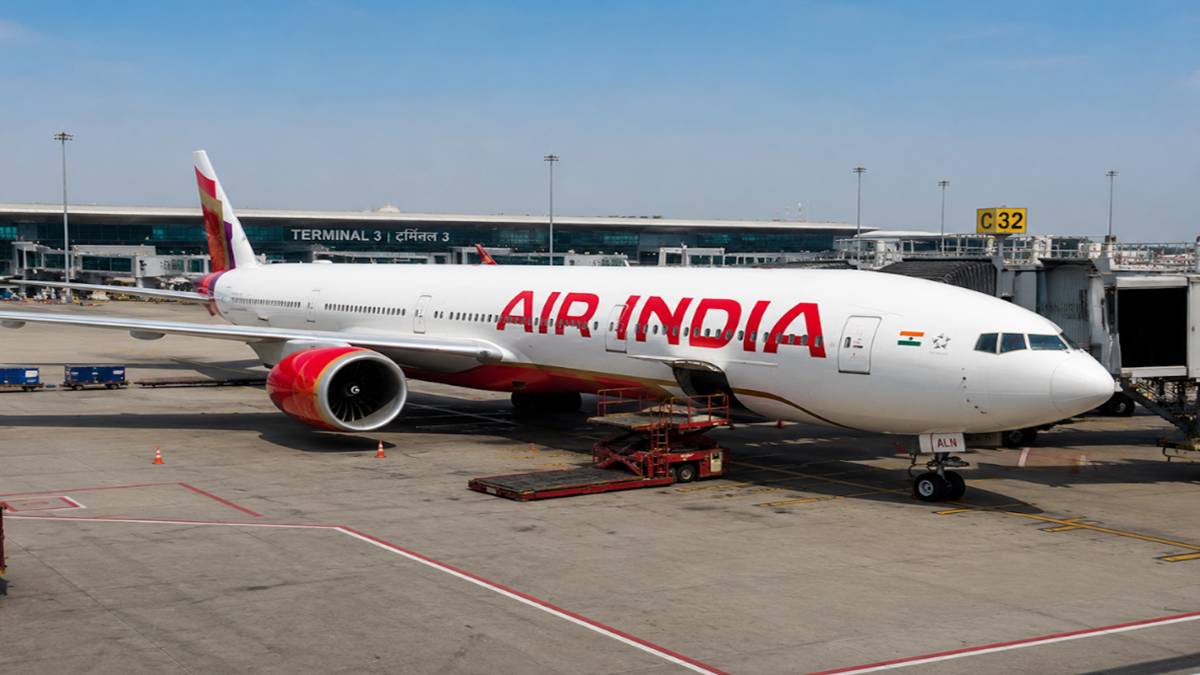
For most Indians, Air India isn’t just an airline. It’s a memory — of a time when flying felt like an occasion, when the maharaja mascot meant something, when the country had a carrier it was genuinely proud of. When the Tata Group brought it back home in January 2022, there was a real sense of homecoming. Nearly nine decades after JRD. Tata founded it, the airline was returning to its original owner. Finally, someone capable was going to fix it.
Four years on, that optimism hasn’t disappeared. But it has grown considerably more complicated.
The numbers tell part of the story. Air India is expected to post losses of around Rs 26,000 crore in FY26 alone. The group has commitments worth nearly Rs 7.65 lakh crore in the pipeline — covering 570 aircraft on order from Airbus and Boeing, fleet refurbishments, technology overhauls, pilot training programmes, maintenance facilities, airport infrastructure and the enormous task of merging four separate airlines (Air India, Vistara, AirAsia India and Air India Express) into one coherent operation. This is not a small bet. It is, by almost any measure, one of the most ambitious turnarounds in global aviation history.
And it is genuinely hard. The airline that Tata inherited wasn’t just loss-making — it was decades behind. Underinvestment had seeped into everything: aircraft, systems, culture, morale. Fixing it means rebuilding almost from scratch while simultaneously running a full-scale airline, competing against a dominant IndiGo at home and well-resourced Gulf carriers on international routes. Both are formidable opponents with no interest in making room for a resurgent Air India.
Progress has been real but uneven. New aircraft are coming in. Networks are expanding. Technology systems are being modernised. But operational reliability — delays, cancellations, aircraft sitting on the ground due to supply chain disruptions and parts shortages — continues to frustrate passengers and dent the brand. This isn’t entirely unique to Air India; global aviation has been dealing with aerospace supply chain headaches for years. But for an airline trying to rebuild trust, every disruption costs more than it otherwise would.
Cultural Harmonization
The integration challenge alone would keep most management teams fully occupied. Merging four airlines isn’t a paperwork exercise. Each entity came with its own culture, workforce practices, operating procedures and technology platforms. Harmonising all of that — while keeping planes in the air and passengers reasonably happy — demands sustained focus and considerable spending on systems, retraining and restructuring. The bills are real and ongoing.
Every bad flight experience doesn’t just reflect on Air India either. Given the Tata name above the door, it reflects on the whole group. Few Tata businesses interact with consumers as directly or as viscerally as an airline does. A missed connection, a rude crew member, a seat-back screen that doesn’t work — these moments travel. And for a conglomerate whose reputation rests significantly on trust and service quality, Air India’s shortcomings carry reputational weight well beyond the aviation business.
The June 2025 Ahmedabad crash added a layer of scrutiny the airline can ill afford. As India’s flag carrier, Air India operates in a fishbowl at the best of times. Any technical failure, compliance lapse or operational misstep attracts outsized attention from regulators, media and the public. Progress here is measured not just in financial metrics but in something harder to quantify: the ability to fly safely and reliably, consistently, at scale.
Staggered Fleets
Leadership is also in transition at a critical moment. Outgoing CEO Campbell Wilson is credited with laying the foundation for Air India’s revival — bringing strategic direction and operational discipline to a carrier that had neither. His successor inherits a business mid-transformation, which is arguably the most precarious point in any turnaround. The risk isn’t starting over; it’s losing momentum. Continuity of execution will matter enormously in the years ahead.
Even the investments that are clearly the right ones will take time to show results. The 570-aircraft order will eventually transform what it feels like to fly Air India. But deliveries are staggered across several years, meaning the airline must keep operating and refurbishing older planes in the interim. Global aerospace bottlenecks could push timelines further, complicating fleet plans, network expansion and the financial projections that underpin the whole strategy.
The honest assessment is that Air India was always going to take longer and cost more than the early optimism suggested. The scale of inherited problems — financial, operational, cultural — proved greater than many had anticipated. That isn’t necessarily a failure of strategy. It may simply be the reality of what it takes to rescue a carrier that had been neglected for so long.
The question the Tata board is quietly wrestling with now isn’t whether the airline can be turned around — most within the group believe it can — but how much longer, and how much more capital, the journey will require before it starts giving back. For a conglomerate with several other businesses competing for attention and investment, that is a question with no easy answer.
Air India may be just one company within a sprawling empire. But it has come to embody something larger: the tension between scale, ambition and the patience required to see either through. How that tension resolves will matter well beyond the world of aviation.