



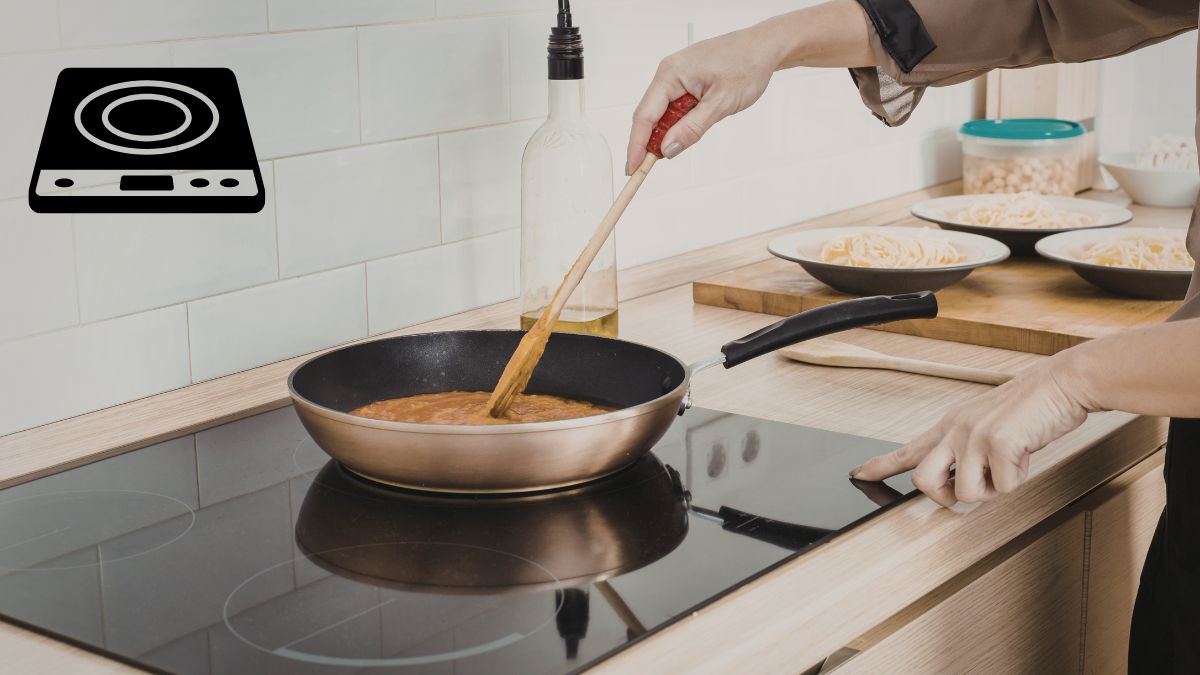
In most Indian homes, induction cooktops have long played a niche role—brought out during LPG refill delays, used by students in hostels or tucked into rental apartments. The heart of the kitchen has remained the gas stove, trusted for everything from preparing gravies to hot beverages and aromatic meals. That equation, however, could be changing now.
With global energy disruptions raising concerns over LPG prices and supply stability, households and restaurants are beginning to reconsider electric cooking as more than just a contingency plan. There is growing interest in e-cooking, but experts caution that large-scale adoption of induction cooktops and other electrical cooking appliances faces economic, cultural and infrastructure hurdles.
For one, a key challenge remains electricity reliability. Unlike LPG, electric cooking depends entirely on an uninterrupted power supply. Frequent outages and voltage fluctuations in several parts of the country can make e-cooking impractical for households or businesses that rely on consistent cooking schedules.
Consumer preferences also remain a key barrier. Many Indian cooking techniques are built around an open flame, from roasting meat to cooking vegetables and preparing soups. While induction technology has improved significantly, gas stoves continue to be perceived as more versatile.
Culinary Constraints
“As a cooking fuel, LPG is adaptable across cuisines. You can cook anything on LPG. The same can’t be said about induction cooking, which is why adoption is limited,” Gurbaxish Singh Kohli, executive committee member, Hotel and Restaurant Association (Western India), said.
For instance, many eateries have opted to shift dishes that require slow cooking techniques (like curries, gravies, braises) onto induction cooktops in the last few months. While quick-cooking tasks such as tossing noodles in woks, flame-searing proteins and tandoor baking and dosa making continue to be done on gas stoves. At the height of the commercial LPG crisis in March, for instance, restaurants providing Chinese cuisine had temporarily shut operations for want of gas cylinders.
The economics of e-cooking are another consideration for Indian households and businesses.
Basic induction cooktops (used in Indian homes) typically cost between Rs 2,000 and Rs 4,000, while a complete electric cooking setup can range from Rs 4,000 to Rs 10,000 or more. In many cases, consumers must also replace existing utensils with induction-compatible cookware made from magnetic materials such as stainless steel or cast iron, adding another `2,000-5,000 to upfront costs.
“For a price-sensitive market like India, this upfront expenditure becomes a major barrier despite potential savings over time,” said Charith Konda, energy specialist, India Mobility and New Energy at the Institute for Energy Economics and Financial Analysis (IEEFA).
According to Konda, government incentives, capital subsidies and consumer financing schemes—similar to those used to promote rooftop solar and electric vehicles—could help accelerate adoption by reducing the affordability gap. The economics become even more challenging for commercial establishments.
Industry estimates suggest that converting a mid-sized restaurant or commercial kitchen from LPG to electric cooking may easily require investments of around Rs 5 lakh or more. Beyond purchasing new equipment, businesses may need to upgrade electrical infrastructure and install backup power systems to maintain uninterrupted operations, which is an added cost.
“While organised players can still absorb the cost of shifting to e-cooking, for small restaurants and eateries, there is a clear challenge in doing so,” says Anurag Katriar, founder, Indigo Hospitality, and trustee, National Restaurant Association of India (NRAI).
Grid Under Pressure
A large-scale shift could also reshape India’s electricity demand profile, experts said.
Government officials estimate that electric cooking appliances consume substantial power. A single induction or hotplate burner typically draws between 1,200 watts and 2,500 watts, while larger electric ranges can consume more than 5,000 watts when operating at full capacity.
If induction cooking adoption accelerates because of LPG shortages or higher prices, officials estimate that additional electricity demand could range between 13 GW and 27 GW by FY27. Such an increase would require power planners to reassess generation and distribution capacity, particularly during periods of peak summer demand.
The impact could be even greater if restaurants begin switching in significant numbers.
Manish Sejwal, senior vice-president at Rystad Energy, estimates that India has 6-7 million restaurants, with 80-90% currently dependent on LPG. Even if about a quarter of these outlets migrate to electric cooking, the resultant load would be substantial.
“Average load would be about 20 GW, while peak load could reach 40 GW. Applying a diversity factor, the effective additional load could be in the range of 5-10 GW,” Sejwal said.
Each restaurant shifting to electric cooking could add 15-30 KW of connected load, raising concerns over local grid capacity, particularly in dense urban clusters, he said.
Electric cooking offers long-term advantages, including lower dependence on LPG imports and potential emissions benefits when powered by cleaner electricity sources. But experts caution that consumer adoption alone will not drive the transition. Reliable electricity supply, affordable appliances, supportive policy interventions and stronger grid infrastructure will all be necessary before electric cooking can move from the margins to the mainstream.