



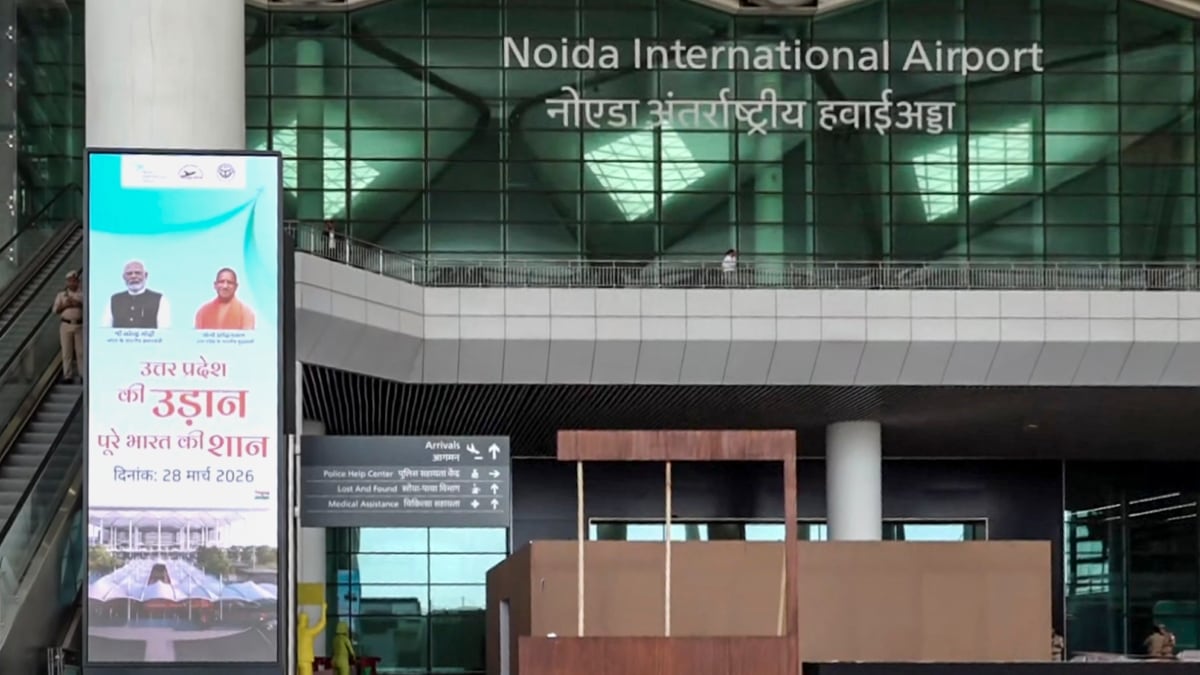
The first phase of the Noida International Airport (NIA), situated in Jewar, is set to be inaugurated on March 28, marking a major milestone not just for the NCR, but for the broader infrastructure story of Uttar Pradesh. Built as a greenfield mega project, the airport is expected to reshape how the state connects, grows and attracts investment in the coming decades.
For many in the industry, the moment naturally invites comparisons with Gurugram – a city whose transformation was closely tied to its proximity to Delhi’s airport. But stakeholders believe the story unfolding along the Yamuna Expressway is fundamentally different.
A gateway for Uttar Pradesh’s economic expansion
Unlike earlier infrastructure developments in NCR that primarily unlocked residential expansion, the Noida International Airport is being positioned as a multi-dimensional economic engine. It is not just about connectivity, but about creating an integrated ecosystem where infrastructure, industry, logistics and urban development grow simultaneously.
Industry experts say this convergence is what sets Jewar apart. The airport is expected to act as a central anchor, around which multiple sectors – from data centres to logistics hubs and townships – are already taking shape.
“The Noida International Airport is set to emerge as a powerful gateway for the state, significantly enhancing global connectivity and attracting investments across sectors. We anticipate a strong ripple effect on the real estate market, with property values witnessing a steady upward trajectory in the coming years,” Manoj Gaur, CMD, Gaurs Group said.
“Uttar Pradesh has already attracted investment commitments worth nearly Rs 19,877 crore in the region, spanning data centres, logistics, and urban development projects. These investments alone are expected to generate over 20,000 jobs, indicating that the ecosystem is moving beyond planning into execution,” Gaur added.
He believes that the development of this world-class airport will not be limited to Noida or Greater Noida but will serve as a strong gateway for the entire state of Uttar Pradesh. As a result, the region will evolve into a major hub for industrial and logistics activities. “This will generate large-scale employment opportunities, leading to increased demand for quality housing and planned urban developments,” he said.
Real estate sees early signals of transformation
The Yamuna Expressway belt has already witnessed strong traction over the past few years, but the nature of growth is evolving rapidly.
Industrial activity has picked up pace significantly in the past year, with dozens of new industrial plots added, hundreds of lease deeds executed, and a steady rise in operational units.
“As industries and institutions begin to operationalise, they have added to the demand for well-planned residential projects. Affordability also continues to be a strong advantage for the Yamuna Expressway when compared to established micro-markets like Noida and Gurugram. In short, the region is on the path to becoming a self-sustaining city, with residential, commercial, and industrial growth complementing each other,” Sahil Agarwal, CEO, Nimbus Group explained.
From land speculation to lifestyle-driven development
Developers note that the region is now moving beyond its early phase of land-driven investment.
Yukti Nagpal, Director, Gulshan Group, explains, “As the airport-led ecosystem develops, this region will start attracting a more premium buyer profile. That’s when you see the transition from plotted growth to more curated, lifestyle-driven developments and that’s where long-term value really builds.”
Sharing the similar thoughts, Salil Kumar, Director – Marketing & Business Management, CRC Group, adds, “What we are witnessing is the evolution of a corridor from an investment destination to a planned urban ecosystem. As infrastructure and economic activity pick up pace, there is a clear shift towards organised, well-designed developments”.
Reshaping NCR into a multi-nodal region
The rise of the Jewar corridor is also altering the broader urban structure of NCR.. Mohit Batra, Regional Director, Realistic Realtors, captures this transition, saying, “NCR is no longer a single-centre market. What we are seeing now is the emergence of multiple growth nodes. This decentralisation could help address long-standing challenges such as congestion, uneven development, and pressure on existing urban infrastructure”.