



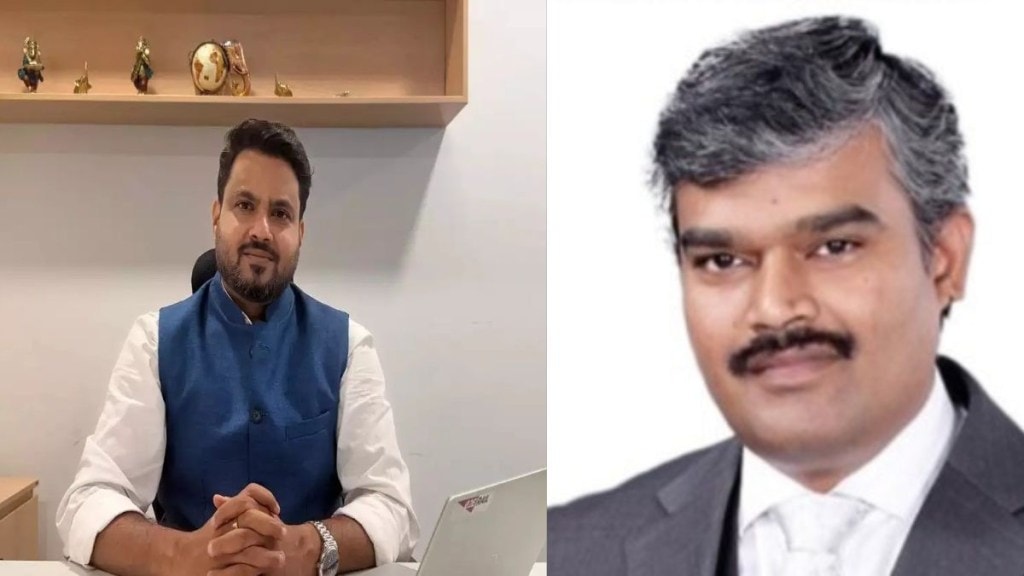
EtoE Transportation Infrastructure recently broke records with drawing Rs 29,500 crore in IPO bids, making it India’s most subscribed SME issue ever. This was followed by a listing last week at a 90% premium over its issue price on the Emerge platform of NSE. In a conversation with Manu Kaushik, the company’s CEO and director Sourajit Mukherjee, and Jayaraj Rajapandian, head of rail & transportation at Tata Elxsi, discussed the strong IPO response, Kavach 4.0 plans, and the revenue targets. Excerpts.
Typically, companies in the new-age sectors and technology firms receive strong investor participation at the time of IPOs. As a company involved in the railways business, what has worked in your favour to attract investors in large numbers.
Sourajit Mukherjee: While we did expect a healthy response, we certainly did not anticipate a record-breaking one of this scale. The opportunity landscape in Indian Railways is enormous. In the last decade, the focus was largely on the highways. The coming decade clearly belongs to the railways. There is a significant modernisation push required to bring Indian Railways at par with rail systems in developed countries. This spans track modernisation, rolling stock, and signalling and telecommunications. At EtoE, we position ourselves as a system integrator for signalling and telecommunication systems, and also as an OEM (original equipment manufacturer) focused on deep-tech product development for safety applications.
Besides strengthening our system integration capabilities, we have made investments in product development. A key example is our partnership with Tata Elxsi to co-develop Kavach, India’s indigenous automatic train protection (ATP) system.
As passenger volumes rise and train speeds increase from 100 kmph to 130 kmph, and even 200 kmph, the signalling system must be completely revamped to ensure safety. While tracks and electrification have seen major progress, signalling and telecom were the last big pieces requiring large-scale modernisation. That is precisely the gap we are addressing. At the same time, entry barriers in signalling and telecom are high due to the complexity, long gestation periods, and specialised skill sets required.
What products are you developing for the railways?
Mukherjee: At present, we are developing our first flagship product—Kavach 4.0. Importantly, we are not a sub-system vendor. We are a complete OEM for the entire Kavach 4.0 system.
Jayaraj Rajapandian: India has a rail network of roughly 125,000 kilometres. Modernising a network of this scale presents a massive opportunity, and only a limited number of players are actively operating in this space. For Tata Elxsi, our collaboration with EtoE Rail is a natural fit. We provide similar systems and services to OEMs and operators globally, and partnering with EtoE allows us to bring train protection systems to India as part of a nation-building effort.
Mukherjee on the current status of Kavach
What is the current status of Kavach 4.0? How many companies are involved in this space, and where do you stand in terms of approvals?
Mukherjee: We are currently at the development stage, and have applied for approvals with RDSO (Research Designs and Standards Organisation), which is the authority responsible for certifying all safety-critical railway applications. We are expecting approvals during FY26.
At present, there are around three approved vendors (Kernex Microsystems, Megha Engineering & Infrastructures, and HBL Engineering). In addition, about 8-10 companies have applied, and are at various stages of approval and field trials.
Kavach deployment has two components: the wayside infra and the locomotive-mounted systems. Indian Railways currently operates close to 25,000 locomotives, and this number continues to increase every year. In the first phase of Kavach 4.0 installation, it is expected that high-density routes of about 40,000-50,000 kilometres, and about 20,000 locomotives will be covered.
What will be the duration of the first phase of Kavach 4.0?
Mukherjee: At a minimum, around five years. Kavach is a complex system combining hardware, software, and communication devices operating across a highly interconnected railway network. The product itself has gone through several stages of evolution – from the initial Kavach version to Kavach 3.2, and now Kavach 4.0.
Kavach 4.0 is where the system has reached a much higher level of maturity. Over time, the government recognised that large-scale deployment would not be possible with just a few players. Today, even among the RDSO-approved companies, a handful has both full-scale system integration and in-house product development capabilities. That is where we see our role.
Could you share details on EtoE’s work across mainline railways, metro projects, and private rail infrastructure?
Mukherjee: Over the past 15 years, we have operating across three distinct markets, including mainline railway, metro rail systems and private railway sidings. India has nearly 5,000 kms of private railway sidings owned by large corporates such as Adani, JSW, and others. Most power plants, ports, cement facilities have their own railway yards. Now the private railway yards must be upgraded and modernised to meet the same standards as the mainline network. This has created a significant market opportunity.
However, the project ticket sizes in this segment typically ranges Rs 30-100 crore which is not large enough to attract major EPC players like L&T and Tata Group companies. We were among the first players to step into this space. Today, we are executing over 18 projects with the Adani Group. In addition, we have ongoing projects with UltraTech Cement and other industrial players. Mainline railways remain our largest segment. In metro rail, we initially worked as system integration partners to global OEMs such as Thales and Siemens. Going forward, with the development of our own products and our collaboration with Tata Elxsi, we are planning to offer proprietary metro signalling products while also executing projects.
Mukherjee on the firm’s revenue from different segments
What’s your revenue mix in terms of these different segments?
Mukherjee: Our operations can broadly be divided into two segments. The first is B2G (business-to-government) which includes projects with Indian Railways and select PSUs. The second is B2B (business-to-business) which includes private railway sidings for companies. Currently, 60-65% of the revenue comes from B2G, while balance is generated from B2B. Over the next few years, we expect this mix to move closer to 50-50 driven largely by faster growth in the B2B segment.
What’s the revenue target for the company over the next few years?
Mukherjee: Last year, we closed at around Rs 250 crore in revenue, with a 35%-plus CAGR year-on-year growth. With the IPO and increased resources, we are targeting Rs 1,000 crore revenues in the next three years.