



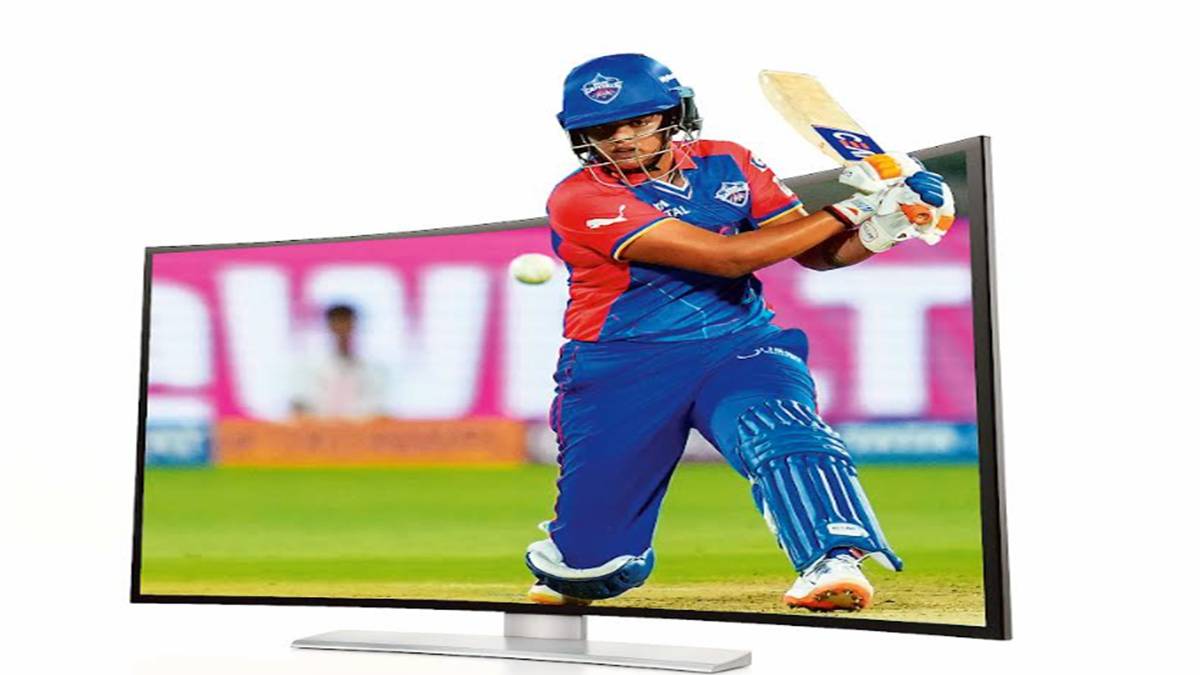
As defending champion Mumbai Indians gets ready to face Royal Challengers Bengaluru in the opening fixture of this year’s Women’s Premier League (WPL) on Friday, advertisers off the pitch are also gearing up for what promises to be a breakout season. Media agency sources report that broadcast ad revenues have already doubled for the 2026 season over last year, with ad rates surging by over 40% to cross Rs 60,000 per 10 seconds for SD and HD TV.
Connected TV (CTV) slots are also being sold at a premium of around Rs 400-500 CPM (cost per mille) while mobile CPM is at rS 150-170. Industry sources add that advertisers are betting big after the Indian women’s team wowed fans with their historic ICC World Cup win last year. The tournament saw the cumulative viewership reach 446 million for the India-South Africa final at DY Patil Stadium, matching the ICC Men’s T20 World Cup 2024 final viewership. Broadcaster JioStar has roped in 15 sponsors this season, including SBI, Kingfisher packaged water, Kalyan Jewellers, TVS Eurogrip, VIDA and BHIM UPI.
WPL emerges as a brand powerhouse
Chintan Shah, senior vice-president at Sportz Interactive, says the WPL has become the gold standard for purpose-led, high ROI brand associations in the country. “The league has transformed from a promising start-up in 2023 to a commercial powerhouse today. One of the big developments this year is the entry of ChatGPT as a premier partner for the league, the first time that it has partnered with any sports event or property in the world. Brands are also cashing in on the 150% surge in TV ratings and the explosion of CTV in India,” says Shah. Observers expect viewership to skyrocket this season by at least 40%. As per industry reports, the 2025 season delivered a total TV reach of 233 million, matching the viewership for the men’s Asia Cup last year.
Experts also laud the fact that advertiser interest hasn’t been impacted by the fact that the ICC men’s T20 World Cup will take place right after the WPL, in February. Karan Yadav, chief commercial officer, JSW Sports, points out that brand enquiries this season are nearly twice the number logged last year, with a substantial number of 2025 advertising partners choosing to return this year.
The numbers are compelling enough also for advertisers who do not have large media budgets to blow up. A viewership north of 200-250 million at a fraction of the average IPL media investment is a good deal for brands, say analysts.
Slow but steady
“We are seeing a meaningful expansion in the advertiser mix for the fourth WPL season,” says Anup Govindan, head of sports sales at JioStar, adding that women’s cricket has reached an inflection point over the past couple of years. “What was once seen as an emerging sport has now been firmly established as a valuable sporting property,” he notes. Advertiser engagement has moved from tactical buys to strategic associations, marked by earlier decisions, larger commitments and long-term, multi-event partnerships, he adds. While traditional categories like FMCG, beverages and consumer tech continue to lead, Govindan adds that brands from sectors like BFSI, fintech, auto, EV, jewellery and AI are also on board this season.
“What has also shifted is the nature of engagement,” says JSW’s Yadav. Deal values have largely stabilised, and premium partnerships are seeing a 15 to 20% increase with brands opting for deeper associations. “We’re also seeing a clear rise in long-term commitment, with multi-season partnerships up by around 33%, indicating that brands are looking beyond short-term impact. Entry-level partnerships are being designed more thoughtfully, often anchored in digital-first activations or content-led storytelling rather than pure visibility,” he adds.
The audiences that will be of particular interest for brands are the first-time viewers or those that are not traditional hardcore cricket fans, remarks Prashant Joglekar, founder of SportsBiznet. “The newer audiences are also more likely to be more receptive towards advertising during the league. If these viewers increase incrementally by even 10-20%, advertisers will have struck gold,” he states.
Although the viewership numbers are solid, Joglekar argues that the WPL’s stakeholders could do more to boost fan engagement and build sustained interest in the women’s game. Most of the interest in women’s cricket and the WPL comes from the improved quality of cricket on display and the fact that India is a cricket-loving country, he says. The league needs to do more at the community and grassroot level to ensure the momentum sustains over the long term.