



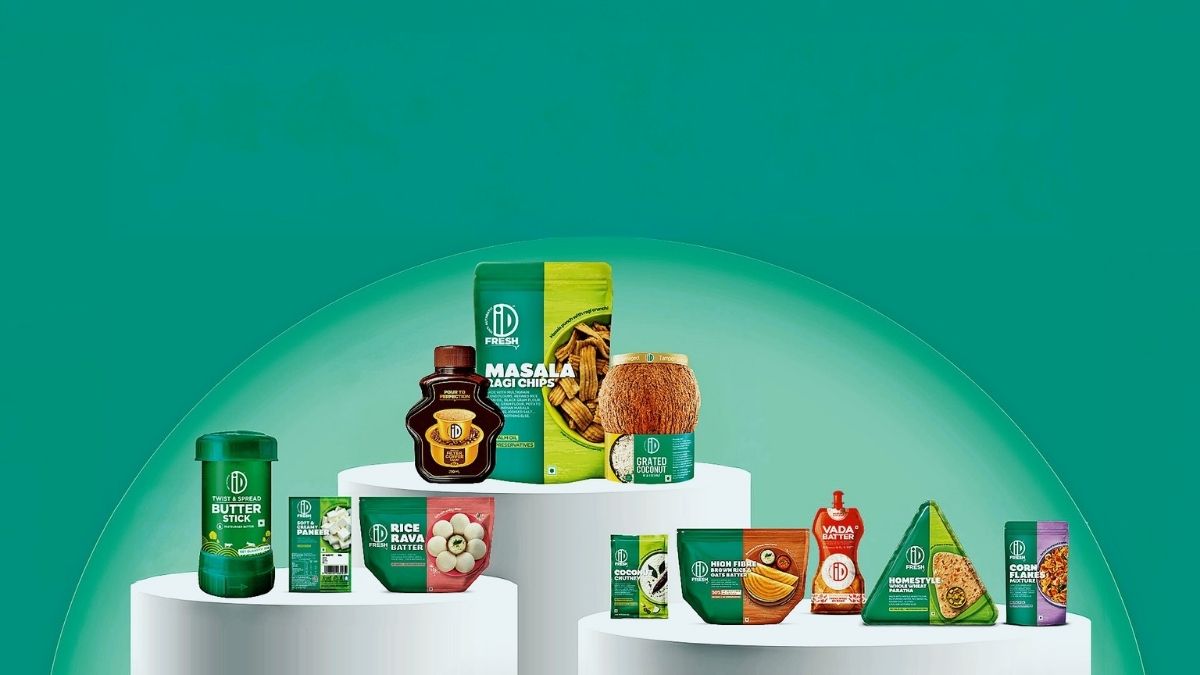
Bangalore-based iD Fresh has done two things in the recent past that it had been resisting. First, it has set foot in the ready-to-eat market with a range of snack foods. The range includes eatables like masala ragi chips, pudina ragi bhujia, masala oats chips, pudina oats bhujia, corn flakes mixture and butter murukku. Second, it has decided to bypass quick commerce platforms for the new range of products and focus its energy entirely on general trade.
According to Satish Meena, founder, Datum Intelligence, a market intelligence and consumer research platform, 70% of iD Fresh’s revenue comes from its core categories like idli and dosa batters and the parotas. With the company looking to achieve a top line of Rs 2,500 crore by FY30, expanding its portfolio and diversifying its footprint are imperative. “The company will have to expand its portfolio much wider to achieve the target and create value for investors,” adds Meena.
But while the opportunity in the Rs 50,000 crore packaged snack food market is immense, the challenges are much bigger. First, entrenched domestic and multinational players such as ITC, Haldiram’s, and PepsiCo control prime retail shelf space and command high consumer trust. Second, reaching millions of fragmented mom-and-pop (read kirana) stores across urban and rural India requires extensive, costly distribution channels. Third, consumers expect mass-market snacks at low price points (Rs 5 to Rs 20 packs). But at Rs 45 for a 75-gm masala (marked down from Rs 60 on BigBasket) oats chips or cornflakes mixture, iD Fresh will be deemed “expensive.” Being price competitive requires scale since margin in the business is thin.
So what is iD Fresh’s masterplan? More importantly, with input costs including that of edible oils, flour, potatoes and spices shooting up, is this the right time for a player without long-term supplier contracts in place to enter the segment?
Taste of success
In the new foray, iD Fresh has decided to be cautious to say the least. As of now, the availability of ID Fresh’s snacking range on quick commerce platforms is limited as the company is banking on general trade, its strong point from the beginning. This move allows the brand the luxury to fail. “The cost of experimentation on quick commerce is very high,” says Vinay Singh, co-founder and partner, Fireside Ventures. “Since the company has already established a distribution network on general trade, it has a ready asset that allows them to do experiments at lower cost.”
According to Datum’s Meena, general trade contributes about 65-70% of the iD Fresh’s revenue. The brand’s promise to offer healthy snacks with no palm oil or preservatives might also give it an edge as consumers are increasingly looking for healthier products for daily snacking.
The main differentiator, however, would be taste. “A brand can attract a consumer with its “healthy snacking” positioning for the first time, but for repeat consumption it has to get the taste right,” adds Meena. Unorganised and regional players already cater deeply to hyper-local taste and flavour profiles, making it difficult for new national brands to win loyalty, say experts.
Above everything else, iD Fresh might face what experts call an ‘identity challenge’. According to Sachin Bobde, head of research, Monarch Networth Capital, brands in the snacking space mostly target kids and young adults who are prone to experimentation and rarely display strong loyalty towards any one. For its part, iD Fresh has always spoken to home makers and women — its core consumer group. “Breaking into the snacking category will be challenging for the brand,” says Bobde.
Experts say, rather than venturing into unrelated categories, the brand should focus on launching products that complement its core portfolio. For instance, it can offer a side to its ready-to-eat sambhar, or even other ready to cook batters so as not to alienate its existing consumer base.
The company says it is on the right track. “We are seeing healthy demand across our core portfolio, while also witnessing encouraging consumer response to our newer offerings,” says Rajat Diwakar, CEO India, iD Fresh. “The broader shift towards convenient, clean label foods, rising household penetration across geographies and expansion into newer markets have all contributed to this growth.”