



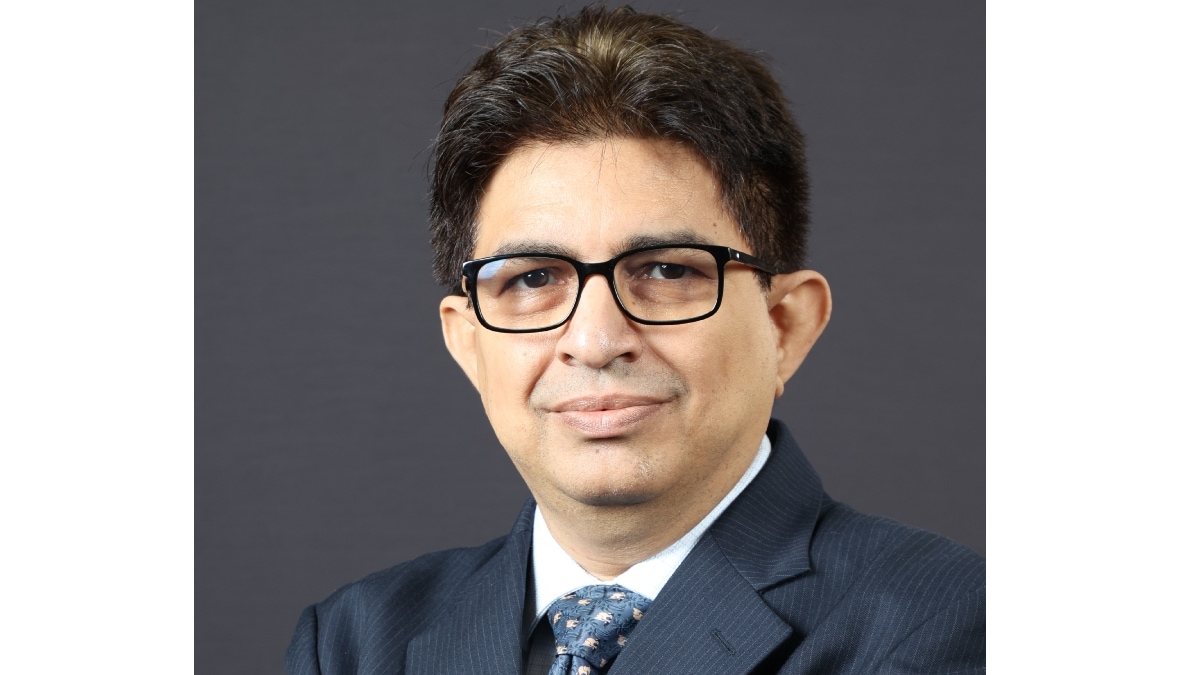
The sudden tariff announcement caught Arup Rakshit, Group Head Treasury at HDFC Bank, off guard, but the rupee’s appreciation did not. In a conversation with Christina Titus and Mahesh Nayak, Rakshit said it was too early to draw conclusions from the Indo–US deal, noting that the devil lies in the details. He added that foreign portfolio investors are unlikely to return to India until the currency stabilises — and he does not expect the rupee to appreciate meaningfully beyond current levels.
Excerpts:
Were you surprised by the way the rupee moved today? Was it a knee jerk reaction?
I wouldn’t call it a knee jerk reaction. The timing of the announcement surprised me, yes, because it came suddenly. But the move was as per expectation basis the tariff reduction. If tariffs were going to be cut—and cut so sharply in India’s favour—the rupee had to react. I expected it to open around Rs 90.40, which it did. I don’t see it appreciating too much beyond this. My sense was that the day would close around Rs 90.30–35, and that’s broadly where it seems to be settling.
Any thoughts on the Indo-US tariff deal?
It’s too early to draw conclusions. The devil is in the details. We will know more once the full trade agreement is released.
What levels do you see for the rupee going ahead?
The real effective exchange rate (REER) was already around 94, so some appreciation was inevitable. Theoretically, the rupee could move to Rs 86–87, but I don’t think that will happen. Realistically, Rs 89.80–90 looks like the zone where RBI may step in—not to defend a level, but to curb extreme volatility. Any intervention will also add liquidity to the system.
Does this change RBI’s strategy? They always say they don’t target levels.
Correct—they (RBI) don’t target levels. But they do curb excessive volatility. RBI has spent a lot of dollars smoothing the depreciation when INR was amongst the underperforming currencies in Asia. If flows come in bunched up, I think RBI may absorb some inflows to smoothen any sharp appreciation. If flows are smooth, they may allow gradual appreciation. REER is at 94–95 and INR is undervalued, it (REER) has a scope to move towards 100.
The US announcement on tariffs and the $500 billion trade target—were you surprised?
With regards to the specifics in the statement, we will have to wait to see the details. News reports, as you would be aware, refer to the reduction in reciprocal tariffs on Indian good from earlier higher levels to 18%
Why did markets react so sharply to this deal?
The suddenness of the tariff reduction news led to the markets reaction. Here, sectors like textiles, gems & jewellery, and chemicals can start benefiting right away. That’s why I believe, the reaction is sharper.
Was this episode a big learning for India?
The world order has changed. Geopolitics today is nothing like what it used to be. I wouldn’t call it a learning per se. India has navigated the tariff challenges well. But volatility is now not an unusual occurrence. Since the 2008 GFC, we have had many, so called, once in a lifetime events.
Should corporates adopt more disciplined hedging now?
Hedging discipline is always advisable. Not hedging is also a decision—but it must be conscious. Trade transactions are short cycle (90–120 days), and costs can often be passed on. Long term exposures must be hedged unless you have natural foreign currency inflows. Boards should have a hedging policy and follow it.
Bond markets didn’t react to the tariff news but reacted sharply to the Budget. Why?
Because gross borrowing at Rs 17.5 lakh crore was higher than expected—about Rs 1 lakh crore more. That pushed yields up by 8–9 bps. Buybacks—like the Rs 86,000 crore done this year—are never announced in the Budget. So the market will wait to see how the government manages it.
Where do you see yields settling?
Yields are a local story—driven by liquidity. If liquidity improves, yields can come down.
We touched 6.72% yesterday. The top could be 6.80–6.85%. With adequate liquidity, yields can ease to 6.50%, if the liquidity support continues —through OMOs, VRRs, swaps. If the rupee appreciates and the RBI does not need to intervene to manage volatility, the INR liquidity will also not be needed.
Will RBI need to cut CRR again?
They’ve already cut CRR. In my view, another cut would only be temporary. OMOs, swaps, and VRRs are sufficient. CRR gives durable liquidity, but may not be needed if other tools work.
Will RBI change its MPC stance?
We expect a pause. Given the geopolitical environment, a rate cut is unlikely.
Whether they change the stance or not is immaterial—they are providing liquidity, and that’s what matters.
Do you see FIIs returning to the bond market?
It depends on the rupee. A 6.5–6.75% yield is attractive, but if the rupee depreciates, dollar returns don’t work. If the rupee stabilises post tariff clarity, FIIs may return.
What will drive the rupee now?
Fundamentals. FII outflows have been an occurrence for three years. Budget measures—like tax holidays for data centres and semiconductor incentives—will attract capital over time. I believe these positives will play out gradually.
What’s your view on commodities?
Parabolic rises always correct. Silver’s speculative spike had to unwind. Eventually, fundamentals—physical demand and supply—take over. Gold has its own drivers.
And crude oil?
Despite talk of war escalation or de-escalation, oil has stayed in a 4–5% band. I believe that the country has managed it well. It’s not going to $100 or $130 suddenly. A 4–5% move is manageable.
What about importers? Will they hedge now that the rupee has stabilised?
Importers and exporters both operate on short cycles—90 to 120 days. If they can pass on costs, they do. Sometimes they gain, sometimes they lose, depending on where the currency settles. It evens out over the cycle.